Understand any stock in simple English
Enter a ticker to learn what the company does and how it makes money.
Rainbow Robotics Co., Ltd.
Rainbow Robotics builds collaborative, logistics, and humanoid robots, plus the parts and software that make them work, for factories and industry.
Rainbow Robotics makes robots that work alongside people. Its main business is collaborative robots — "cobots" — that are designed to share a factory floor with human workers safely, without the cages that normally keep people away from heavy industrial machines. Factories buy them to do repetitive tasks like moving parts, tightening screws, or tending machines. The company also sells logistics robots that carry things around warehouses, robot parts like arms and controllers, and the software that ties it all together. It is based in Daejeon, South Korea, a city known for its research institutes.
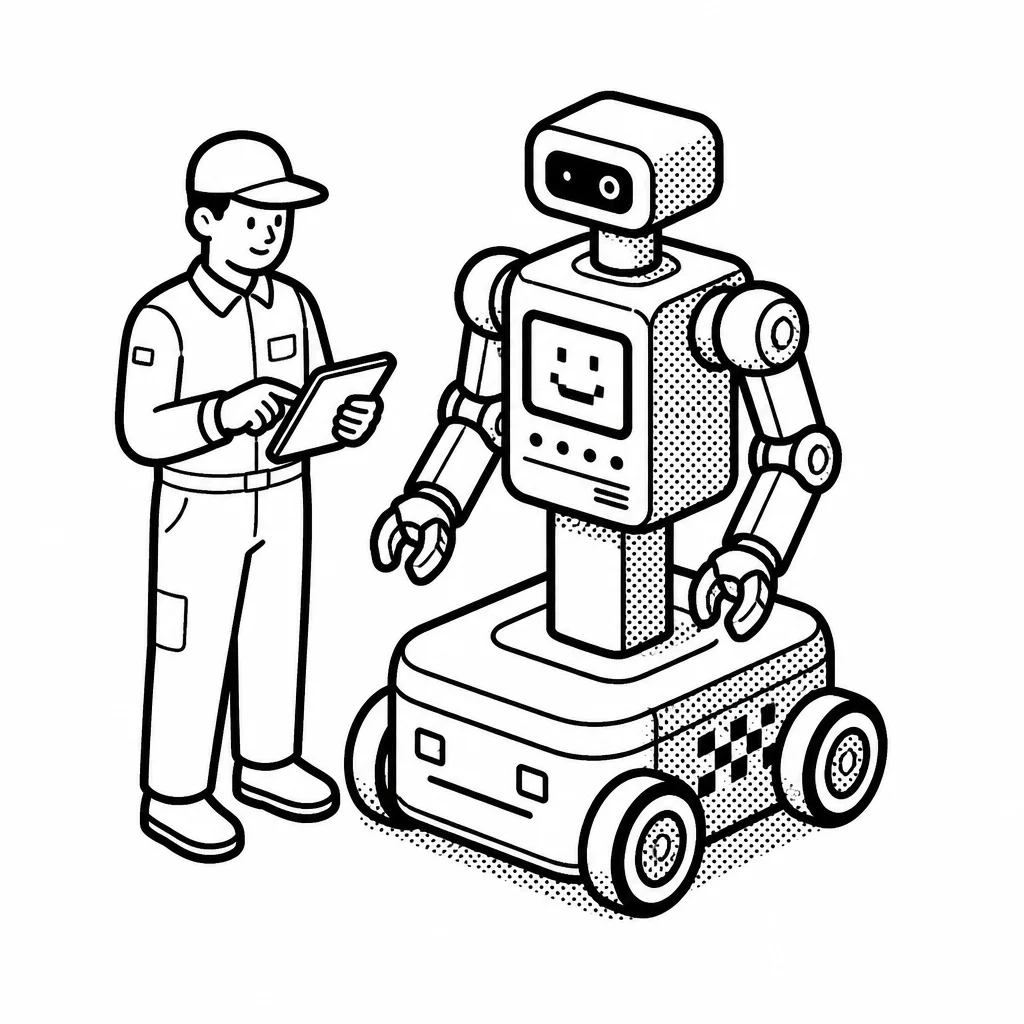
What makes Rainbow interesting is its push into humanoid and bipedal robots — machines that walk on two legs and are meant to do human-shaped work in human-shaped spaces. Rainbow spun out of the Korea Advanced Institute of Science and Technology, and its best-known achievement is building HUBO, a humanoid that won the DARPA Robotics Challenge in 2015. That win put a small Korean company on the global robotics map. Today the humanoid work is the exciting part investors watch, even though collaborative robots are what actually pay the bills. The business got a big vote of confidence when Samsung Electronics took a sizeable stake in Rainbow, making it the second-largest shareholder. Samsung's money and manufacturing muscle give Rainbow a powerful partner, though it also means Samsung's own priorities can shape Rainbow's direction. The company sells to industrial customers and research institutions, and it faces competition from bigger, established robot makers in Europe and Japan. Robotics is a crowded, fast-moving field, and a small company has to keep proving its machines are worth buying.
Rainbow is a growth story more than a profit machine. It spends heavily on research and development, especially on humanoids, and its revenue is modest compared with the giant automation firms. The bet is that collaborative robots keep growing as factories face labor shortages, and that humanoid robots eventually become a real market. That is a long game. For now, investors are paying for the promise of a future where robots that walk and work beside us are ordinary — and Rainbow wants to be one of the companies that builds them.
Saved answer · last researched 12 Nov 2026