Understand any stock in simple English
Enter a ticker to learn what the company does and how it makes money.
Industrial Bank of Korea
It is a state-backed bank that lends money mainly to small and medium-sized businesses in Korea.
Industrial Bank of Korea is a bank built around one big idea: small businesses need a lender that actually shows up for them. In Korea, giant companies like Samsung Electronics get plenty of attention from big banks, but the little shops, factories, and startups that employ most workers have a harder time getting loans. IBK exists to fill that gap, lending mostly to small and medium-sized enterprises, or SMEs, and it has done so since the Korean government founded it in 1961 to help rebuild the country's economy.
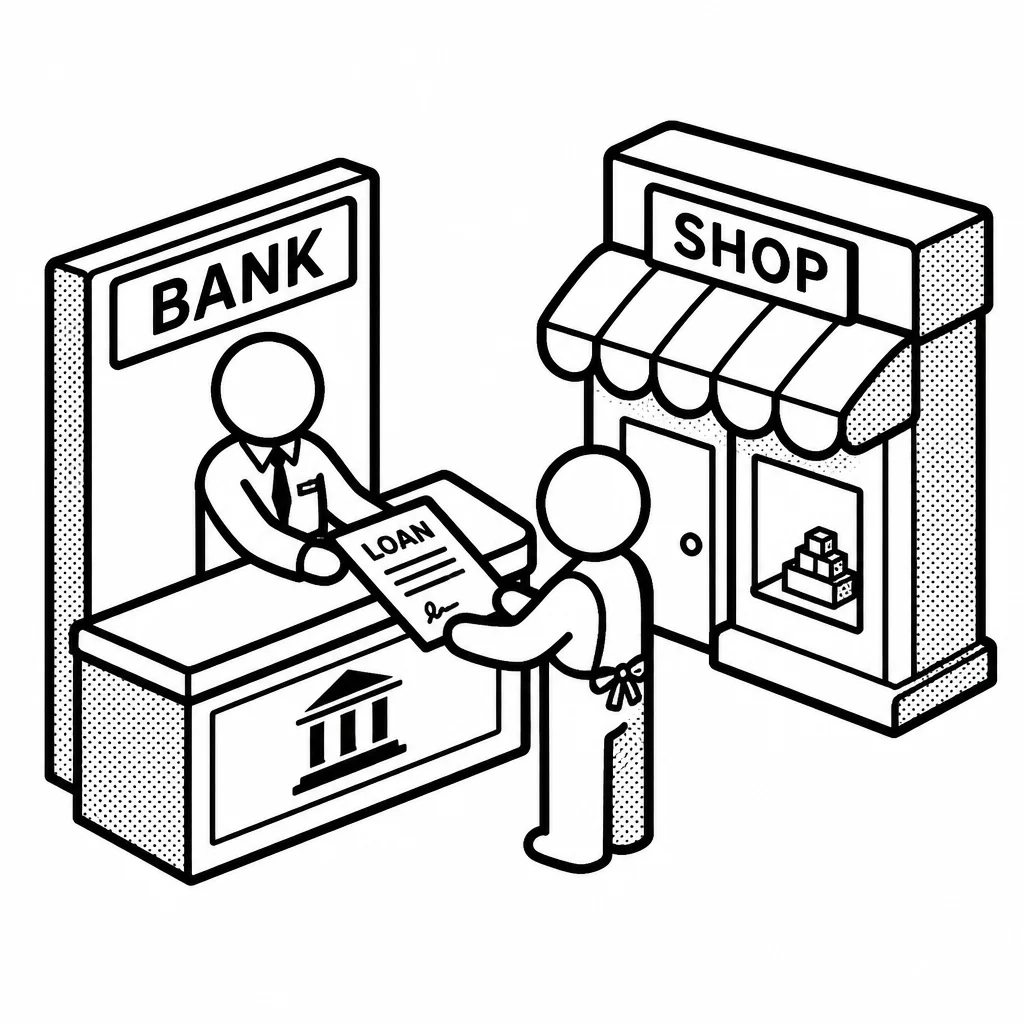
Here is the basic problem it solves. A small bakery or machine shop usually has no fancy credit rating and no shares to sell, so raising money is hard. IBK takes deposits from ordinary people and companies, then turns around and lends that money to these smaller businesses. It also offers the usual banking extras — checking accounts, cards, foreign exchange, and loans for households too. The government still owns a large stake, which gives the bank a special role: it acts as a policy tool, stepping in to support small firms when times are tough, like during the pandemic. That close government tie is both its superpower and its weak spot. On the plus side, IBK gets support and a mission that big private rivals like KB Financial Group and Shinhan Financial Group don't have, plus a huge base of loyal small-business customers. The downside is that lending to small firms is riskier than lending to giant corporations, so losses can rise when the economy sours. The bank also faces constant political pressure to lend generously, which can squeeze profits.
The bank earns most of its money the old-fashioned way: the gap between the interest it pays depositors and the interest it charges borrowers, plus fees for services. It is a steady, unglamorous business, and the bank returns a chunk of its profits to shareholders through dividends and share buybacks. For anyone watching Korea's economy, IBK is a useful gauge — when small businesses are healthy, this bank tends to feel it first.
Saved answer · last researched 12 Nov 2026