Understand any stock in simple English
Enter a ticker to learn what the company does and how it makes money.
S-Oil Corporation
S-Oil buys crude oil, turns it into gasoline, diesel, jet fuel, plastics ingredients, and lubricants, and sells those products to drivers, airlines, and factories.
S-Oil is one of South Korea's big oil refiners. It buys crude oil — the thick black stuff pulled out of the ground — and runs it through huge refineries to make the fuels people actually use: gasoline for cars, diesel for trucks, and jet fuel for planes. It also makes the building blocks for plastics and sells lubricants that keep engines running smoothly. Most of its products go to industrial and consumer markets, both inside Korea and abroad.
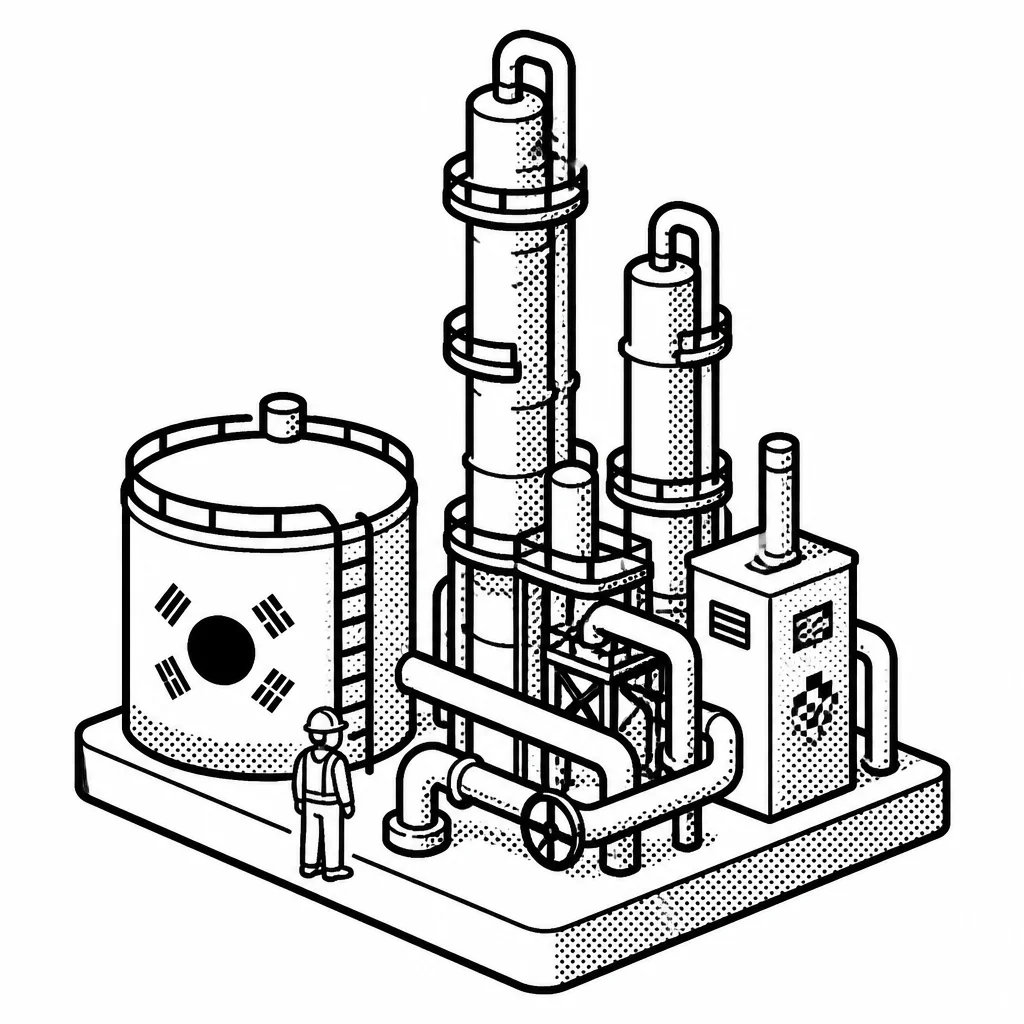
The business runs on a simple but brutal math: buy crude, sell refined products, and try to earn a spread between the two. That spread, called the refining margin, moves around constantly with oil prices and global demand, so profits can swing hard from year to year. S-Oil is majority-owned by Saudi Aramco, the giant state oil company of Saudi Arabia, which gives it a stable crude supply and a deep-pocketed parent. Its main rivals at home are SK Innovation and GS Holdings, which own Korea's other big refineries. S-Oil has been spending heavily on its second big act: petrochemicals. It built a large plant in Ulsan that turns crude directly into plastics feedstock, reducing its dependence on the volatile refining spread. That project was a big bet, and it made the company more sensitive to petrochemical prices and global economic cycles. When plastics demand is strong, the extra business pays off; when it is weak, the added capacity can weigh on results.
A chunk of the cash the company generates goes back to shareholders through dividends, and it has also bought back shares over the years to shrink the share count. But the honest picture is this: S-Oil is a cyclical, capital-hungry business whose profits rise and fall with oil prices, refining margins, and the health of the global economy. It is a steady supplier of the fuels and materials modern life runs on, but not a business that grows smoothly.
Saved answer · last researched 12 Nov 2026