Understand any stock in simple English
Enter a ticker to learn what the company does and how it makes money.
GS Holdings Corp.
GS Holdings is a South Korean holding company that owns and runs businesses in energy, power, retail, construction, and services.
GS Holdings is a South Korean holding company, which means it doesn't really make or sell things itself. Instead, it owns big stakes in a family of operating companies and collects a share of their profits. Think of it as the parent at the head of the table: the subsidiaries do the actual work, and GS Holdings oversees the group, allocates capital, and decides where the next won should go.
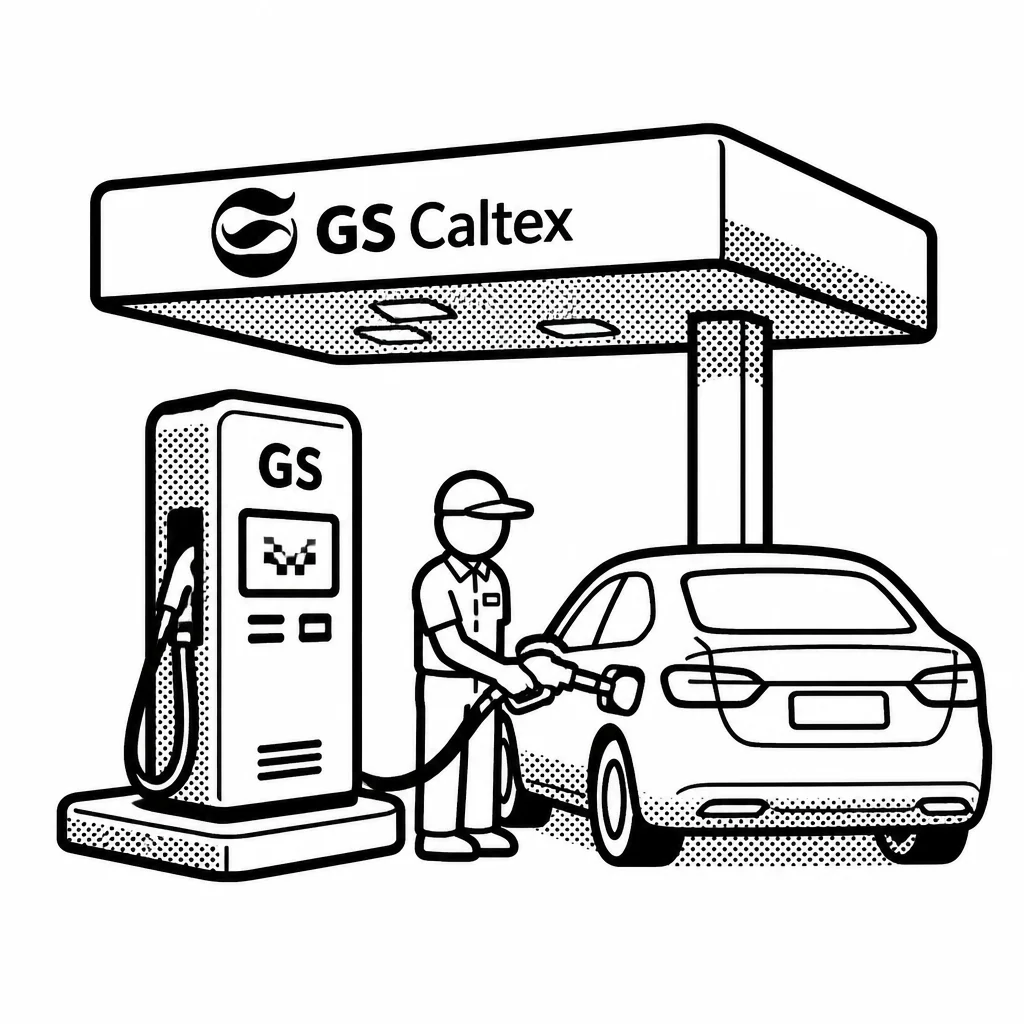
The crown jewel is GS Caltex, an oil refiner and petrochemicals producer that turns crude oil into gasoline, diesel, jet fuel, and the building blocks for plastics. Korea has no oil of its own, so refiners like this one buy crude on global markets, process it at huge coastal plants, and sell the products to drivers, airlines, and chemical makers. Margins swing wildly with crude prices and the "crack spread"—the gap between what a barrel of crude costs and what the refined products sell for—so this business is cyclical and very sensitive to global energy markets. The group also runs power generation, a retail arm best known for GS25 convenience stores, construction through GS E&C, and smaller service businesses. The retail side is the part ordinary Koreans actually touch. GS25 is one of the country's biggest convenience store chains, a dense network of small shops selling snacks, drinks, and quick meals, often franchised to individual owners. It's a low-margin, high-volume business that grows by adding stores and selling more per visit. Construction, meanwhile, is lumpier: GS E&C builds apartments, plants, and infrastructure, and its results depend on winning projects and managing costs—a segment that can swing the group's profits sharply in either direction.
For investors, GS Holdings is essentially a diversified bet on Korean energy and consumer spending, with a steady stream of dividends from its subsidiaries flowing up to the parent. The company has historically used that cash to pay dividends and buy back its own shares, which can support the stock price. The catch is that holding companies often trade at a "discount" to the value of the businesses they own, because investors worry about complexity and control. When refining margins are fat, the group shines; when crude prices whipsaw or construction projects go bad, the shine fades fast.
Saved answer · last researched 12 Nov 2026