Understand any stock in simple English
Yutaka Giken Co., Ltd.
Yutaka Giken makes car parts — mainly torque converters and exhaust systems — and sells them to automakers around the world.
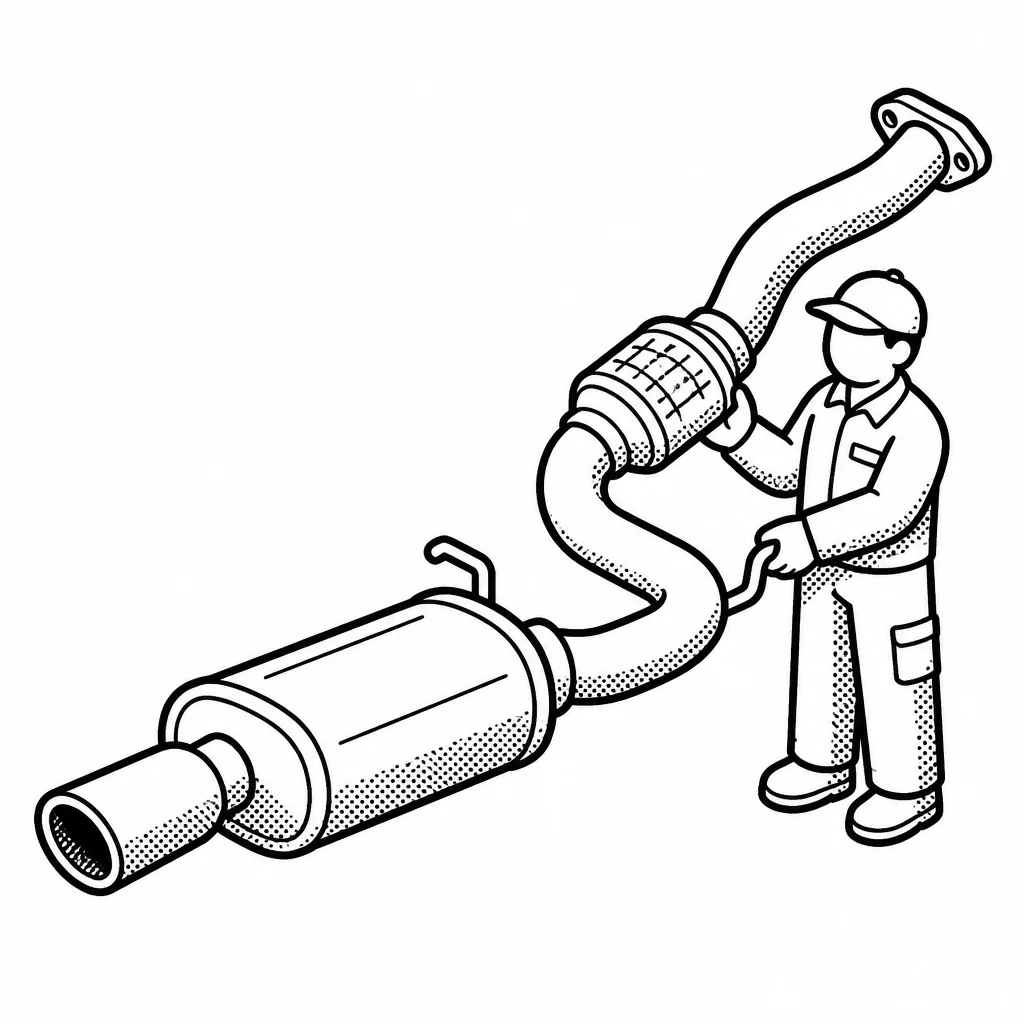
Yutaka Giken is a Japanese auto parts maker that builds the parts car companies don't want to make themselves. Its two big products are torque converters — the donut-shaped metal piece that sits between a car's engine and its transmission and lets the engine keep spinning while the wheels are stopped — and exhaust systems, the pipes and mufflers that carry burnt gases away from the engine and quiet them down. It sells these to automakers, not to you, and it makes them in factories spread across Japan, Asia, North America, and Europe so it can supply car plants wherever they are.
The torque converter is the heart of the business and the reason the company matters. A torque converter is a clever bit of fluid engineering: two fans facing each other inside a sealed case, with transmission fluid doing the work that a clutch would do in a manual car. It lets an automatic car sit at a red light with the engine running, then pull away smoothly without a jolt. Building one that is cheap, quiet, and reliable at millions of units a year is harder than it looks, and only a handful of companies do it well. That is why automakers keep coming back to suppliers like Yutaka Giken rather than making the part in-house. Yutaka Giken was long a listed company on the Tokyo Stock Exchange, with Honda as its biggest shareholder and its biggest customer. Honda has been the anchor of the business for decades, and that relationship cuts both ways: it gives the company steady volume and deep engineering trust, but it also means Honda's ups and downs flow straight through to Yutaka Giken's sales. In 2024, Honda moved to take full ownership and make the company a wholly owned subsidiary, which is why the shares no longer trade. The company is now owned by Honda, the automaker, rather than by public shareholders.
That change matters for how the business works. As a private subsidiary of Honda, Yutaka Giken no longer has to answer to outside investors or worry about its share price. It can focus on supplying Honda and other automakers with parts, and it can make long-term investments in factories and technology without the quarterly pressure of a public company. The trade-off is that its fate is now tied even more tightly to Honda's. When Honda sells more cars, Yutaka Giken makes more parts; when Honda struggles, so does its parts maker.
Saved answer · last researched 23 Nov 2026