Understand any stock in simple English
Enter a ticker to learn what the company does and how it makes money.
Y Combinator, LLC
Y Combinator is a startup accelerator that gives early-stage companies money and advice in exchange for a small slice of ownership.
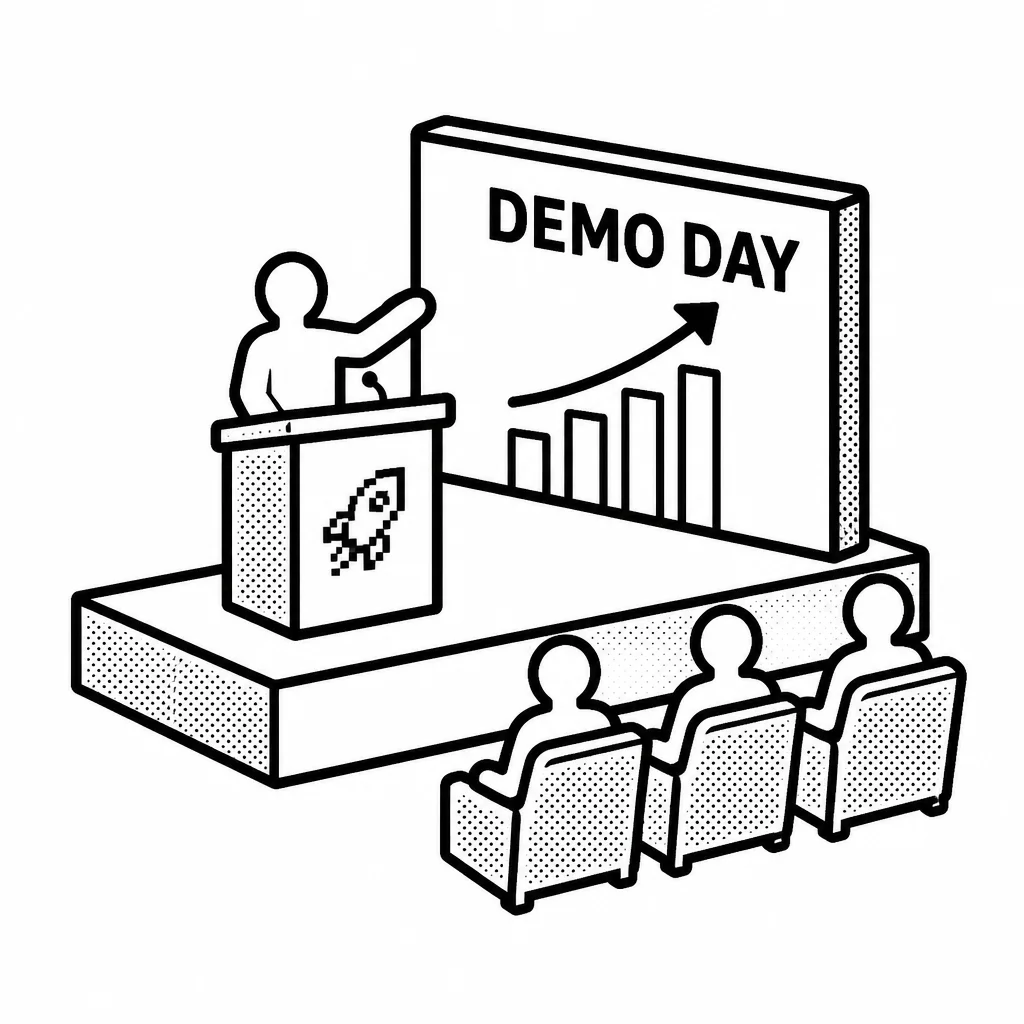
Y Combinator is a startup accelerator, which is a fancy way of saying it runs a boot camp for brand-new companies. Twice a year, it picks a few hundred founders — mostly tiny teams with an idea and maybe a rough product — and gives each one a standard check, currently $500,000, in exchange for a small ownership stake. The founders then spend about three months getting intense advice, weekly check-ins, and access to a network of past founders and investors, all building toward a demo day where they pitch to investors.
The money math is simple and unusual: YC takes the same deal from everyone rather than negotiating, and it makes its real return when its portfolio companies grow valuable and get acquired or go public. Its alumni list is a who's who of tech — Airbnb, Stripe, DoorDash, Coinbase, and Reddit all went through the program. That track record is the product. Founders apply in huge numbers less for the cash than for the signal and the network, because getting into YC tells investors and customers that smart people already bet on you. The economics are lopsided in a way that suits the business. Most startups fail, so YC's returns come from a handful of enormous winners that swamp the losses. It doesn't need to pick perfectly; it just needs to be in the room with enough of the future giants. The accelerator model only works because YC's brand is so strong that the best founders want in, which keeps the quality of the applicant pool high and the flywheel spinning.
Y Combinator was founded in 2005 by Paul Graham, Jessica Livingston, Robert Morris, and Trevor Blackwell, and it started as a scrappy experiment that practically invented the modern startup accelerator. It is a private company, headquartered in San Francisco, and it has expanded beyond the core batch program into things like a startup school and a fund that invests in later rounds of its alumni companies. The simple version: YC sells a launchpad, and the best founders line up to buy it.
Saved answer · last researched 7 Nov 2026
BIG PICTURE
One in five YC startups now has a solo founder, the highest share in five years
- 19% S26 companies with a single founder
- 81% S26 companies with two or more founders
For years Y Combinator warned against going it alone, and its five-year average was about 8% solo teams. In the summer 2026 batch, 19% of companies launched with one founder. YC makes money by owning a slice of the startups it admits, so that jump changes who it is betting on. Most of these solo founders, 64%, are building software. Source: Medium · Jared Heyman, data from 2026
Timeline
A Summer Experiment in Cambridge
In 2005, Paul Graham and Jessica Livingston noticed a gap: between money from friends and family and big venture capital, there was no standard, branded source of seed funding. So they tried an experiment in Cambridge, funding a whole batch of startups at once over a summer, partly to learn how angel investing worked. People dismissed Y Combinator as a toy at first, and that stung in a useful way: it taught the founders to look for good ideas that everyone else was laughing at.
Cambridge Seed Becomes Y Combinator
The fund started out as Cambridge Seed, but that name made it sound local, and the point was to fund startups anywhere. So it was renamed Y Combinator almost right away.
One Home in Silicon Valley
Running two programs at the same time turned out to be a logistical headache, so YC shut down the Cambridge side and gathered everything in Silicon Valley. That decision planted the company in the middle of the Bay Area startup world, where it has stayed ever since.
Sam Altman Takes Over
In 2014, Paul Graham handed the presidency to Sam Altman, a founder from YC's very first batch. Altman then rewrote the standard deal to $150,000 for a 7% stake, which reset the terms every new batch would get.
The Glitch That Accepted Everyone
A software bug accepted all 15,000 Startup School applicants, then told them hours later they were rejected. The outcry was loud enough that YC reversed course and took all 15,000 companies. The same year, YC briefly launched a China program under Qi Lu, then pulled out and shut it down.
A Bigger Deal and a Smaller Batch
YC raised its standard deal to $500,000: part of it for equity, the rest as a simple loan-like investment that converts later. At the same time it deliberately shrank its intake by about 40%, from over 400 companies to 250, pointing to the downturn and the tough funding market.
Garry Tan Moves YC to San Francisco
Garry Tan became president and CEO, taking over from Geoff Ralston. Under his leadership YC shut down its Continuity growth fund and laid off staff, and in spring the headquarters moved from Mountain View to San Francisco.
Jared Friedman Replaces Michael Seibel
Michael Seibel stepped down as managing director, and Jared Friedman took his place.
YC Turns Into an AI Factory
After ChatGPT took off, YC's batches became almost entirely AI companies, around nine in ten. The program also shrank from 12 weeks to 9 and now runs four times a year instead of two, making AI the core of how YC works.
Starcloud, YC's Fastest Unicorn
YC announced its fastest unicorn ever: Starcloud, which went through the summer 2024 batch and reached a billion-dollar valuation just 17 months after Demo Day. It was a fitting capstone: YC had shifted hard toward space, hard tech and AI-powered physical industries.