Understand any stock in simple English
Enter a ticker to learn what the company does and how it makes money.
Wayve Technologies Ltd
Wayve builds self-driving software that uses artificial intelligence to let cars drive themselves without relying on detailed maps.
Wayve is a British self-driving software company. It doesn't build cars. Instead, it builds the "brain" that lets a car drive itself, and it sells that technology to carmakers who want to offer driver-assistance or fully self-driving features without spending years building the software themselves.
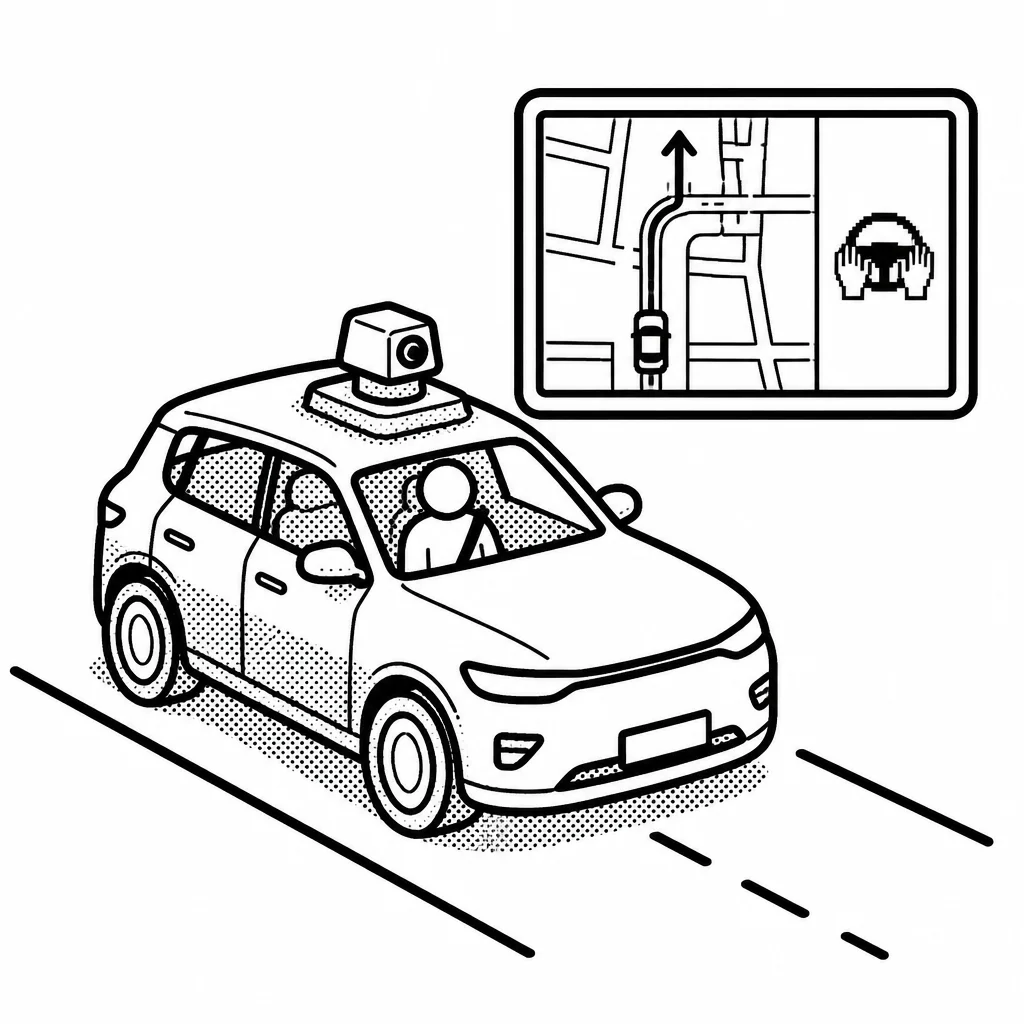
Most self-driving systems today lean on heavy sensor suites and painstakingly detailed maps of every road. Wayve's bet is different: it uses something called end-to-end machine learning, where a single AI model learns to drive by watching human drivers and lots of camera footage, more like how a person learns. The pitch is that this approach can handle roads it has never seen before, including cities where nobody has pre-mapped every lane and intersection. The company calls this "mapless" driving, and it's the core of why investors got excited. Wayve was founded in 2017 in Cambridge by Alex Kendall and Amar Shah, and it has grown into one of Europe's most closely watched AI companies. In 2024 it raised over $1 billion in a funding round led by SoftBank, with Nvidia and Microsoft also participating — a huge vote of confidence for a company that still wasn't generating meaningful revenue. That cash is being spent on compute, testing, and hiring researchers, because training driving AI is expensive.
The hard part is turning impressive demos into cars people can actually buy. Wayve has partnered with Nissan to bring its software into production vehicles, and it's working with other automakers too. But it faces tough competition from Tesla, which is pursuing a similar camera-and-AI approach, and from well-funded players building robotaxis. Wayve's future depends on whether carmakers decide it's cheaper and faster to license its brain than to build their own.
Saved answer · last researched 10 Nov 2026
BIG PICTURE
73% of Brits say they feel uneasy about driverless cars sharing their roads
- 73% Brits uncomfortable with driverless cars on UK roads
- 27% Brits comfortable with driverless cars on UK roads
Wayve's home market is also its hardest sell. Nearly three in four Brits told YouGov they feel uncomfortable about driverless cars being allowed on UK roads, even as licences were granted in August 2026. Wayve earns money by licensing its driving software to carmakers and ride-hailing partners, so public wariness in the streets where it first runs shapes how fast those deals can turn into paying rides. Source: YouGov (reported by Auto Express), data from 2026
Timeline
Two Students Start Wayve
In 2017, two machine learning students at Cambridge, Amar Shah and Alex Kendall, looked at self-driving cars and thought everyone was doing it the hard way. The standard recipe was detailed 3D maps and hand-written rules for every situation, which is slow and brittle. Their bet was to let machine learning handle the whole driving task, from camera pixels to steering, so the car could learn like a person instead of following a script. That idea sounded odd at the time, but it became the seed of everything that followed.
A Car Drives Roads It Never Saw
Two years later, the pair proved the idea on real public roads the car had never seen before, using only cameras, a basic GPS map and their end-to-end learning system. That caught attention, and the company moved to London and raised a $20 million early funding round, unusual for a European self-driving startup at the time. The money paid for a small fleet of electric test cars in central London.
A Founder Leaves and Kendall Takes Over
In 2020, co-founder Amar Shah left the company. Alex Kendall, who had been the technical chief, stepped up to run the business as CEO.
Grocery Vans Become the Test Bed
The next year, Wayve started trials with big UK retailers, including a year-long autonomous delivery test with Asda. Ocado, the online grocer, put in £10 million and partnered with Wayve to build self-driving grocery vans, which handed the startup a fleet of vans and a stream of real urban traffic to learn from.
One Model, Many Cities
By 2022, Wayve had built a driving model that could handle different cities and different vehicles, not just one car on one route. It raised $200 million and opened a second office in Mountain View, California, then widened testing into the United States and mainland Europe.
SoftBank Leads a Billion-Dollar Round
In 2024, SoftBank led a $1.05 billion funding round, the largest ever for a UK AI company, with Nvidia and Microsoft joining in. The money pushed Wayve into unicorn territory and brought total funding to about $1.3 billion. Uber also came on board as a partner and investor to build autonomous ride-hailing together, a hint of where the company was headed.
Wayve Buys Quality Match
In 2025, Wayve bought Quality Match, a small German startup that checks whether AI training data is any good, adding about 20 specialists and a base in Germany. It was a quiet deal, but it mattered: to sell self-driving software, you need data you can prove is clean and auditable.
A $1.2 Billion Series D
The following year, Wayve raised another $1.2 billion, with investors including Microsoft, Nvidia, Uber, and carmakers Mercedes-Benz, Nissan and Stellantis. That valued the company at $8.6 billion and marked the turn from research shop to commercial rollout, with robotaxi trials planned and supervised autonomy in consumer cars on the horizon.
Robotaxis Launch in London
Then, in September 2026, Uber and Wayve launched autonomous Uber robotaxis on London streets using Wayve's software. It was the first commercial use of Wayve's AI Driver in a ride-hailing service, and the clearest sign yet that the student project had become an operating autonomy platform.