Understand any stock in simple English
Enter a ticker to learn what the company does and how it makes money.
TINE SA
Tine is a Norwegian dairy cooperative that turns milk from thousands of Norwegian farms into cheese, butter, and yogurt and sells it across Norway.
Tine is Norway's dairy giant. It is a cooperative owned by the farmers who supply the milk, and it makes the everyday dairy products Norwegians reach for: the brown cheese on their breakfast bread, the butter in their pan, the yogurt in their lunchbox, and the milk in their coffee. If you live in Norway, Tine is probably already in your fridge.
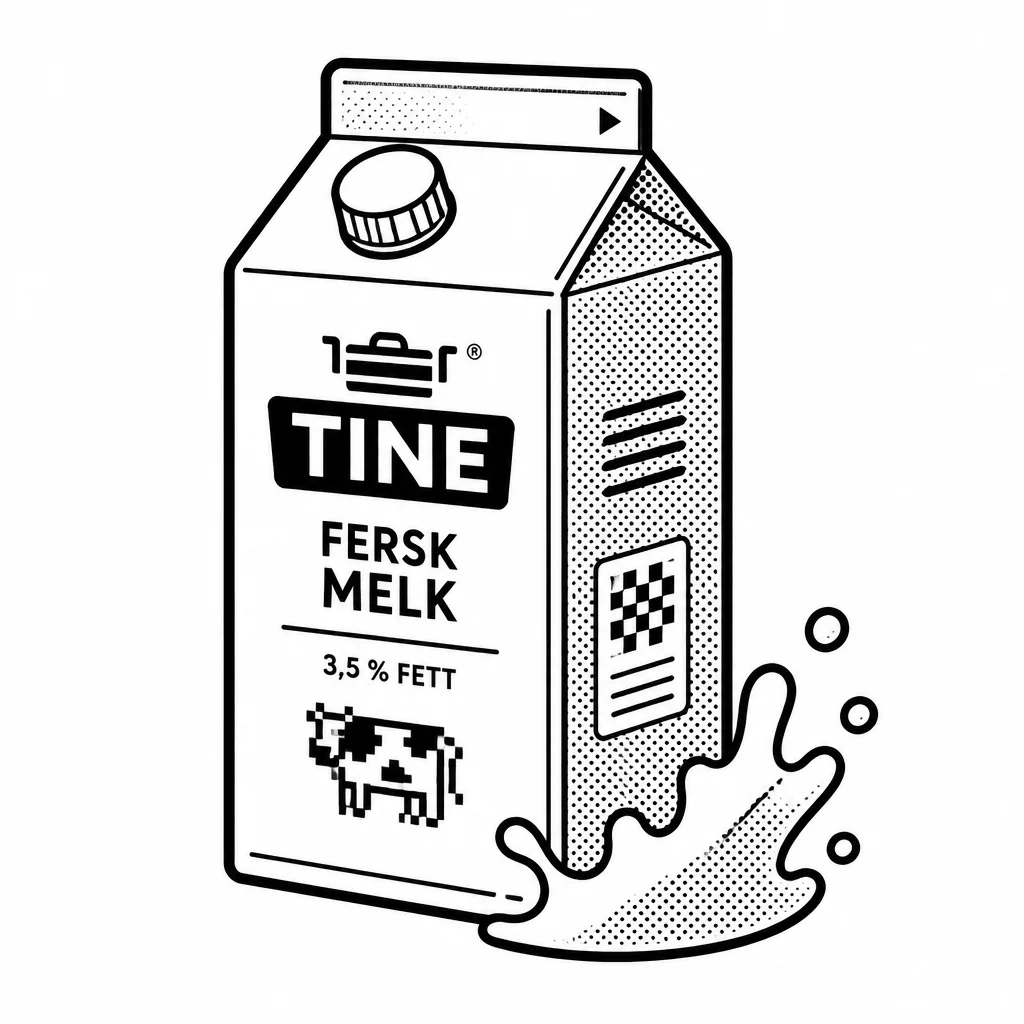
The company is organized as a cooperative, which means the farmers are not just suppliers but owners. Roughly 8,000 or so Norwegian dairy farms hold shares, and Tine is obligated to buy their milk and pay them for it. That arrangement gives Tine a remarkably stable supply — the farmers have a guaranteed buyer, and Tine has a guaranteed source. The trade-off is that Tine is not built to chase maximum profit; it is built to keep Norwegian dairy farming alive and to keep dairy on Norwegian tables. Tine's best-known product is probably brunost, the caramel-colored brown cheese that is a Norwegian staple and a frequent source of confusion for visitors. But the bigger business is the everyday stuff: white cheese, butter, milk, and yogurt sold under brands like Norvegia and Tine. Tine also owns Norseland, which markets and sells Norwegian cheeses such as Jarlsberg abroad. Competition at home comes mainly from Q-Meieriene, owned by the Danish dairy group Arla Foods, and from Synnøve Finden, a smaller Norwegian rival.
The cooperative structure cuts both ways. It gives Tine scale, a trusted brand, and a captive milk supply that no competitor can easily match. But it also means Tine carries the cost of collecting milk from small farms scattered across a long, mountainous country — an expensive logistics problem that a purely profit-driven company might solve by shutting farms down. Tine's job is partly to keep those farms going, which is why it sits at the intersection of business and national policy. Norwegian agriculture is heavily protected by tariffs and subsidies, and Tine's position as the dominant dairy player is closely watched by regulators who want to make sure the cooperative's power does not squeeze out rivals or consumers.
Saved answer · last researched 10 Nov 2026