Understand any stock in simple English
Enter a ticker to learn what the company does and how it makes money.
Tabby FZ-LLC
Tabby lets shoppers split purchases into instalments and pay later, both online and in stores, and makes money from merchants and interest-free fees.
Tabby is a buy-now-pay-later company in the Middle East. When you shop at a store or website that accepts Tabby, you can pay for your purchase in a few small instalments instead of all at once. It works something like Klarna does in Europe and America, but Tabby built its business around shoppers in the Gulf, especially Saudi Arabia and the United Arab Emirates.
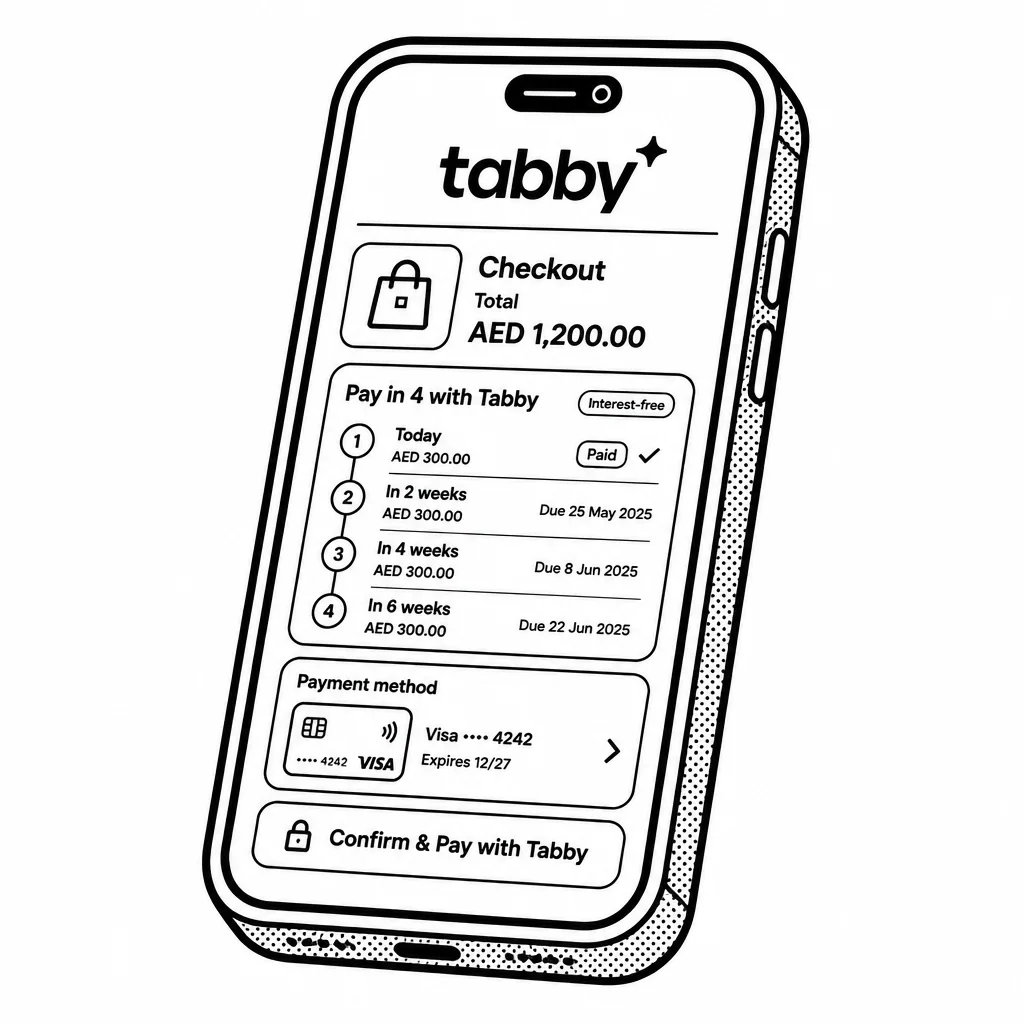
Here's the basic problem it solves. Many people want to buy something now but don't want the full cost hitting their bank account today. Stores, meanwhile, want those people to buy. Tabby sits between them. At checkout, the shopper picks Tabby, gets approved in seconds (there's usually no interest and no fee for the shopper), and pays in instalments over a few weeks. The store gets paid right away and pays Tabby a cut of the sale, often around 4% to 6%. Tabby also runs a card and a shopping app, and it makes money from those merchant fees plus late fees and some interest-bearing products. The company was founded in 2019 and is based in Dubai. It grew fast because it got in early in a region where credit cards were less common and many shoppers preferred paying in instalments. It now works with tens of thousands of merchants, including big names like Amazon and SHEIN (the fast-fashion retailer, whose parent is unlisted), and it has expanded into cards and rewards. It has raised large amounts of venture money and became one of the Middle East's rare "unicorns," valued above a billion dollars. In early 2025 it raised $160 million at a reported $3.3 billion valuation. It has also been working toward a possible IPO in Saudi Arabia, a listing that would make it one of the region's biggest fintech debuts.
The appeal for stores is simple: customers who use Tabby tend to spend more and come back. The risk is the mirror image. Tabby is lending money to shoppers, and if too many of them fail to pay, the losses pile up. It manages this with quick automated credit checks, but rising defaults or new rules on consumer lending in its core markets could squeeze it. Its biggest competitors are other regional pay-later players like Tamara (private) and the banks themselves offering instalment cards. For now, though, Tabby is the loudest name in Gulf shopping, turning a small slice of millions of purchases into a fast-growing business.
Saved answer · last researched 10 Nov 2026