Understand any stock in simple English
Enter a ticker to learn what the company does and how it makes money.
Starling Bank Limited
Starling Bank is a UK digital bank that takes deposits, lends money, and runs business and personal accounts through a mobile app.
Starling Bank is a British digital bank that runs almost entirely from a phone. Customers open an account in minutes, get a debit card, and manage their money through an app instead of a branch. It serves two big groups: everyday people who want a personal or joint account, and small businesses that need a business account. The bank makes money the old-fashioned way — it earns interest on the money customers deposit and on the loans it makes — plus a slice of fees from card payments and business banking services.
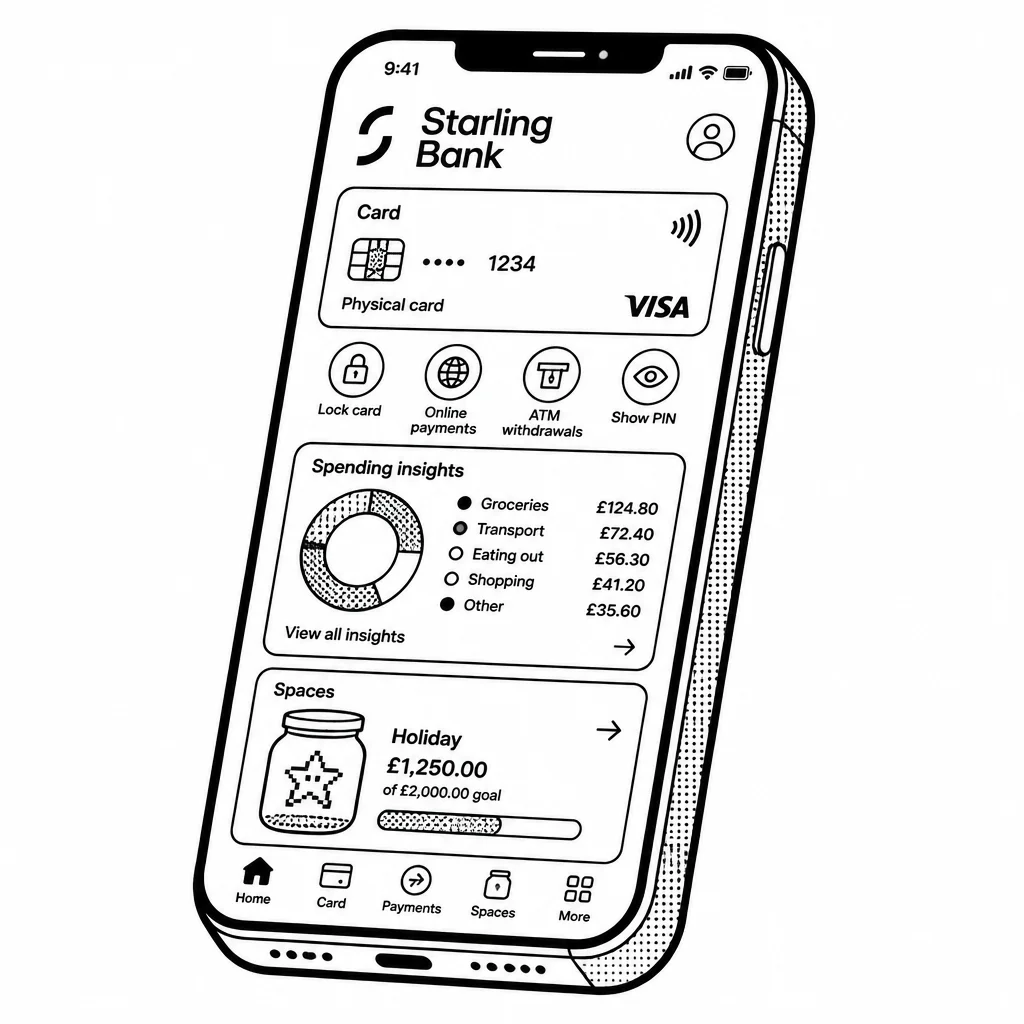
The bank's real edge is that it built its own core banking software from scratch instead of renting a creaky system from a big tech vendor. That means it can launch new features fast and run cheaply. It also sells that same software to other banks and financial firms through a subsidiary called Engine, which is a quieter but clever side bet. Starling holds a full UK banking licence, so deposits are protected the same way as at any high-street bank, and it does not rely on a branch network at all. Starling's lending is mostly plain and careful: mortgages, small business loans, and overdrafts. That matters because a bank's profits depend on the gap between what it pays savers and what it charges borrowers. When interest rates rose sharply in 2022 and 2023, that gap widened and Starling made large profits. It has been profitable on a sustained basis, which is unusual for a young digital bank — many rivals burned cash for years. Competitors include the other big UK app-based banks, Lloyds Banking Group, and the old high-street giants that are now copying the app model.
The bank was founded by Anne Boden, a career banker who started it in 2014 and spent years fighting sceptics who said a phone-only bank could never work. She stepped back from the CEO role in 2023 after a public clash with the board, a rare piece of corporate drama in a sector that usually stays quiet. Starling has stayed private and has not listed its shares, so there is no buyback or dividend story yet. Its future hinges on how far it can push into lending and business banking before the big incumbents close the app gap.
Saved answer · last researched 10 Nov 2026
Timeline
A Banker Starts a Bank
Anne Boden had spent 30 years building computer systems and working inside banks, and she came to a simple conclusion: banks were built around themselves, not around the people using them. So in 2014 she started Starling to build a digital bank around the customer from the ground up. She funded it with her own money at first, before outside investors came in.
Starling Gets Its Licence
Starting a bank is not like starting an app. You need permission from regulators, and Starling got its banking licence in 2016, clearing the way to launch its app-based current account.
The App Goes Live
In 2017 Starling opened a beta version of its personal current account to real customers. It also claimed a small first: letting people set up Apple Pay right inside the app, no branch visit needed.
A Grant and a Million Accounts
A £100 million grant from the Capability and Innovation Fund gave Starling a serious push into small business banking. The bet worked: later that year the bank opened its millionth account.
Starling Buys a Mortgage Lender
Starling had piles of customer deposits and nowhere to put them to work. Buying Fleet Mortgages, a specialist buy-to-let lender, for £50 million solved that: it gave the bank a way to earn money on its deposits and marked its entry into mortgages.
Starling Sells Its Engine
Starling built its own banking technology, and in 2022 it realized other companies might want it too. It created a subsidiary called Engine, which lets other firms use Starling's tech — payments, cards, account opening — under their own brand.
A Fine for Lax Controls
The good years hit a wall in 2024 when the FCA fined Starling £29 million over weak anti-money-laundering controls and sanctions screening going back to 2017. The regulator called the controls shockingly lax; the bank apologized and spent money to fix them.
Starling Drops the Word Bank
In 2025 Starling took the word Bank out of its name and rebranded simply as Starling. The move was a signal: the tech platform, Engine, was now the heart of the business, not just the bank account.
A Reset Around AI
Starling announced a restructuring in 2026 to cut duplicate roles and lean more on AI. With revenue falling, it doubled down on the plan to take Engine abroad, especially to North America.