Understand any stock in simple English
Enter a ticker to learn what the company does and how it makes money.
Raising Cane's Restaurants, LLC
Raising Cane's is a fast-food restaurant chain that sells chicken fingers, fries, toast, and a tangy dipping sauce.
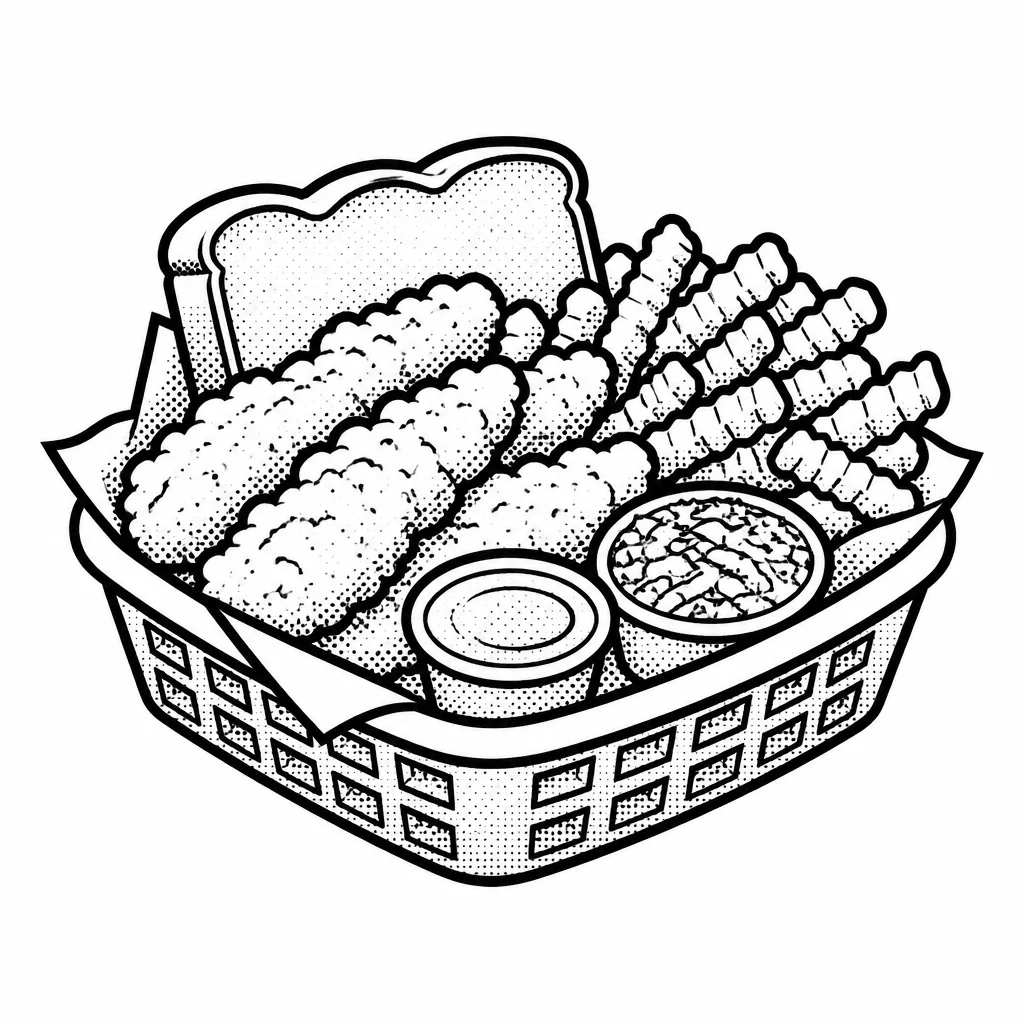
Raising Cane's is a fast-food chain that does one thing and does it well: chicken fingers. Its menu is famously tiny. You can get a box of crispy chicken tenders with crinkle-cut fries, a slice of Texas toast, coleslaw, and the chain's signature Cane's Sauce, a tangy mayo-and-ketchup-style dip. There are no burgers, no salads, no chicken sandwiches. That focus is the whole point.
The company was founded in 1996 by Todd Graves in Baton Rouge, Louisiana, where it is still headquartered. Graves started with a single restaurant near the Louisiana State University campus and built it into a national brand. Today Raising Cane's operates well over 800 locations across the United States and has expanded into the Middle East and other international markets. The company remains privately held and tightly controlled by its founder. Customers choose Raising Cane's for consistency and speed. Because the menu is so small, the kitchen is built around a single production line: fry the chicken, drop the fries, toast the bread. That makes service fast and operations simple. The chain competes with other chicken-focused fast-food brands like Chick-fil-A, Popeyes, and KFC, though its narrow menu sets it apart from those broader competitors.
Raising Cane's makes money by selling its limited menu at high volume through company-owned restaurants. It does not franchise most of its locations, which gives it tight control over quality and operations. That strategy has fueled steady growth: the chain has been opening new restaurants aggressively and has become one of the fastest-growing fast-food brands in the country. Its simple formula — one product done consistently well — has proven remarkably durable.
Saved answer · last researched 10 Nov 2026
Timeline
One Idea, One Grade
Todd Graves had one idea: a restaurant that sold nothing but chicken finger meals. Bankers and investors turned it down, and a professor gave his business plan the lowest grade in the class. So he raised the money himself, working at an oil refinery and on an Alaskan fishing boat. The rejection became the founding story of the whole company.
The Mothership Opens
The first Raising Cane's opened near Louisiana State University in Baton Rouge. It was nicknamed "The Mothership," and it stuck to that one simple menu of chicken finger meals. A tiny menu in a college town, run by the guy who couldn't get a loan.
Graves Buys Out His Partner
Co-founder Craig Silvey sold his share to Todd Graves, making Graves majority owner and CEO. He kept the company private and never took private equity money, so he answered to customers and his crew rather than outside investors. That choice would shape everything that followed.
Katrina Nearly Breaks the Company
Hurricane Katrina shut down 21 of the 28 Baton Rouge-area restaurants. Graves had borrowed heavily to grow, and the debt nearly cost him the business. It taught him a hard lesson about balance: grow fast, yes, but don't bet the company on it.
Overseas and a New Operating Chief
Raising Cane's opened its first international restaurant in Kuwait and hired AJ Kumaran as chief operating officer. Kumaran had run international restaurant franchises, and he brought a professional operator's eye to a company built by a founder.
Beyond the South
With roughly 200 locations, Raising Cane's launched a nationwide expansion, moving past its Southern roots. The plan echoed how Chick-fil-A had grown from a regional chain into a national one. The chicken-finger shop was aiming for the whole country.
Two CEOs
AJ Kumaran was promoted to co-CEO alongside founder Todd Graves. A founder who handed real power to a hired operator was unusual, and it let Graves focus on the brand while Kumaran ran the machine.
Times Square
Raising Cane's opened a global flagship in Times Square, its first New York location. The brand born near a college campus now had a spot in the middle of the world's media capital.
Ahead of KFC
Raising Cane's passed KFC in annual U.S. sales to become the third-largest quick-serve chicken chain, behind only Chick-fil-A and Popeyes. It had reached nearly a thousand locations in 43 states, with average sales per store of about $6.6 million. KFC responded by rebuilding its menu around chicken tenders, copying the strategy. The rejected business plan had become a threat to an industry giant.
The Next Map
Raising Cane's announced plans to enter the United Kingdom and Mexico, with a London flagship planned for 2026. It aims to open about 100 new U.S. locations a year, building toward a long-term goal of 1,600 restaurants. The little chicken-finger chain was now plotting a global map.