Understand any stock in simple English
Enter a ticker to learn what the company does and how it makes money.
Rain (Pty) Ltd
Rain is a South African telecoms company that sells mobile data, voice, and home internet over its own 4G and 5G network.
Rain is a South African phone and internet company that built its own mobile network and sells one thing above all: data. It has no shops, no call centre queues you wait in for hours, and no handset bundles with glossy posters. You buy a SIM or a router, activate it online, and pay for data or unlimited home internet. That no-frills, online-only approach is the whole point — it lets Rain undercut the big networks on price.
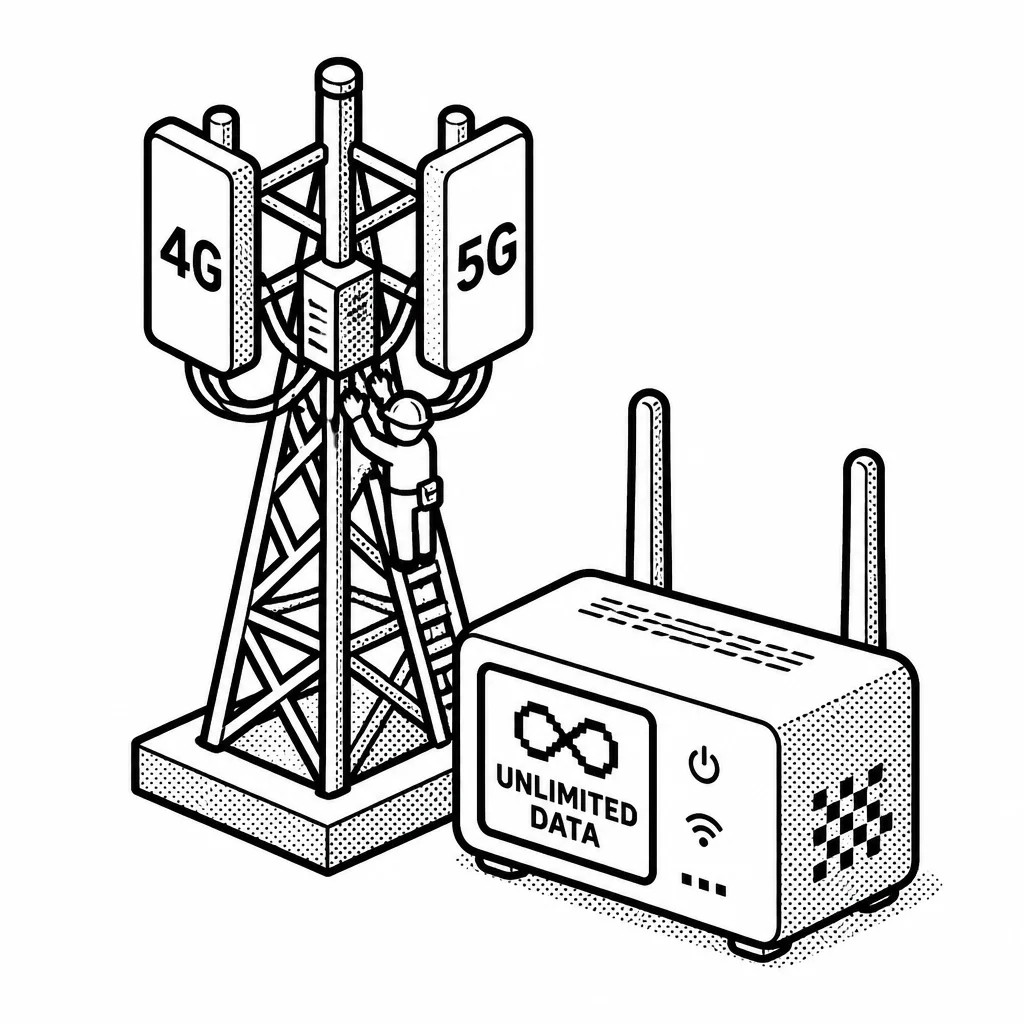
The important twist is how Rain got here. South Africa's three big operators — Vodacom, MTN and Telkom — were already fighting over voice calls and SMS revenue when Rain launched in 2018. Rain skipped that fight. It sold data-only SIMs and, later, 5G home internet to people who were tired of expensive, slow connections. Building a network from scratch is brutally expensive, so Rain leaned on a partner: much of its early 4G network was built and run through a joint venture with Vodacom, which let it cover the country without paying for every tower itself. Its biggest bet is 5G home broadband. Instead of digging fibre into every street, Rain sells a router that picks up its 5G signal and turns it into wi-fi — internet through the air, no trenches, no installation visit. That is cheap and fast to roll out, and it competes directly with fibre providers. Rain also runs a growing mobile business and a "shop" that is really just a website and an app. The weaknesses are real. Customers complain about network speed dipping at busy times and about billing problems, and Rain has been slow to turn a profit because it keeps pouring money into covering more of the country and upgrading from 4G to 5G. It is privately held, and it has been funded by a mix of its founders and outside investors including African Rainbow Energy and Power.
Rain's story is a bet that a lean, online-only network can grab customers from giants that are weighed down by legacy systems and massive cost bases. So far the bet has bought it millions of customers and a national footprint — but in telecoms, the bill for building keeps arriving long after the customers do.
Saved answer · last researched 10 Nov 2026