Understand any stock in simple English
Patreon, Inc.
Patreon runs a membership platform where fans pay creators a recurring monthly fee in exchange for exclusive content and perks.
Patreon is a membership platform that lets creators get paid directly by their fans. Instead of relying on unpredictable ad money or one-off tips, a musician, illustrator, podcaster, or video maker sets up a page where supporters sign up to pay a small amount each month. In return, those fans get something special — early access to new work, behind-the-scenes posts, bonus episodes, shoutouts, or private messages. It is essentially a way for creators to turn their audience into a steady, subscribing customer base.
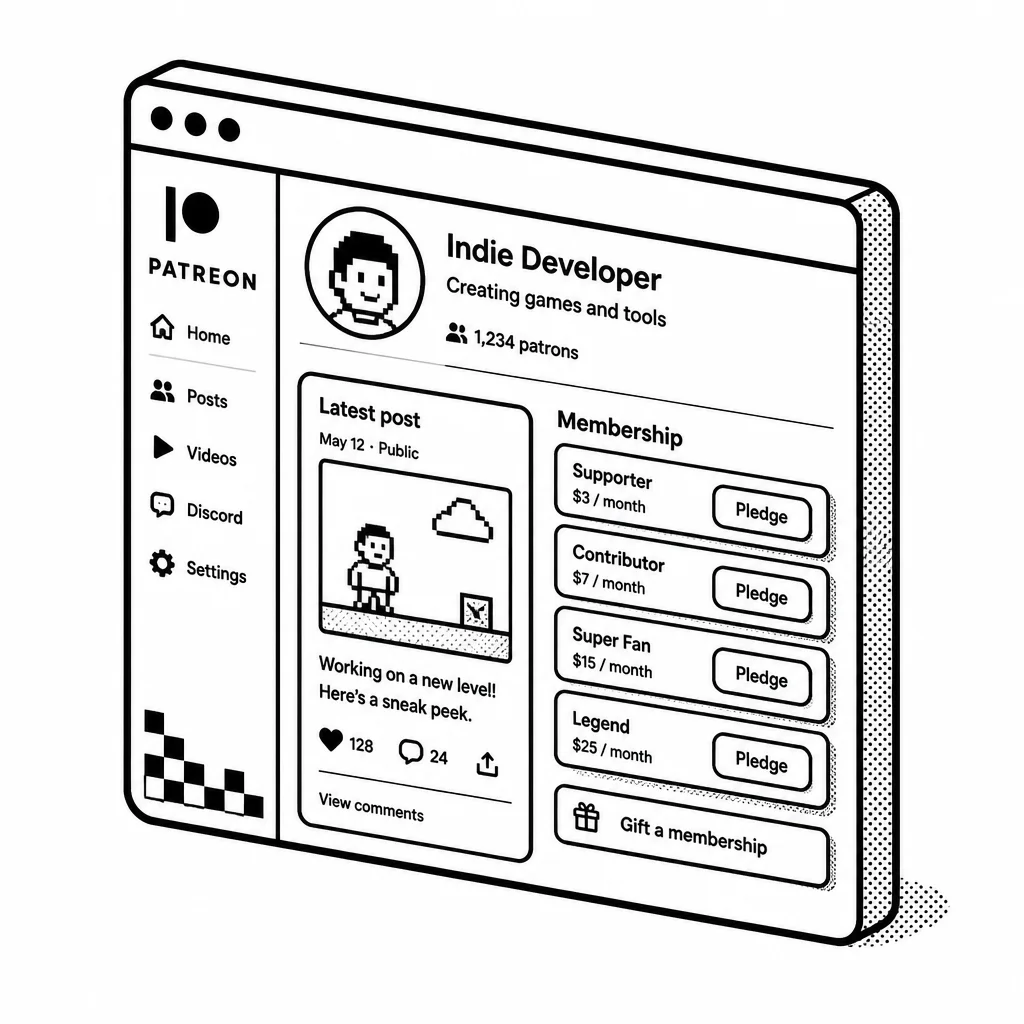
The creator decides the tiers and the perks, and Patreon handles the plumbing: collecting payments, managing subscriptions, and paying the creator out. Patreon makes its money by taking a cut of the money that flows through the platform, so its revenue grows as creators grow. That alignment matters — the company does well only when the people using it do well. The pitch to a creator is simple: keep your independence and get paid by the people who actually care, rather than chasing algorithms and sponsors. The pitch to a fan is equally simple: pay a few dollars a month and get closer to the work you love. The business has real strengths and real vulnerabilities. On the strong side, recurring subscriptions are predictable, and fans who pay tend to be far more loyal than casual viewers. Switching costs help too — once a creator has built a paying community on Patreon, moving that audience elsewhere is a hassle. The weakness is that Patreon sits between creators and their fans, and creators are restless. Competitors keep appearing, from YouTube's own membership tools and YouTube's built-in monetization to direct tools like Ko-fi and Gumroad, and some creators prefer to own their audience outright through email lists and their own payment systems. Patreon's job is to stay useful enough that leaving isn't worth it.
Patreon was founded in 2013 by Sam Yam and Jack Conte, a musician whose video channel was getting millions of views but earning almost nothing from ads — a frustration that became the company's whole reason to exist. The company is private, backed by venture investors including Index Ventures and New Enterprise Associates, and it has never gone public, so there is no stock ticker to track. It has grown into one of the best-known homes for the creator economy, with millions of paying members and creators across art, music, podcasts, and video.
Saved answer · last researched 20 Nov 2026
BIG PICTURE
Patreon's own survey finds 81% of creators want a direct line to fans, not an algorithm
- 81% Creators who want a direct channel to fans
- 19% Creators who did not say this
Patreon asked more than 1,000 creators what they want, and 81% said they want a way to reach fans directly. That is the business Patreon sells: fans pay a monthly fee, and the creator talks to them without a feed deciding who sees it. The company keeps a cut of each payment, so every creator who gives up on algorithms is a potential customer. Source: Patreon State of Create report, data from 2025
Timeline
Jack Conte Starts Patreon
Jack Conte was a musician whose videos got millions of views on YouTube, but only a few hundred dollars ever showed up in his bank account. The views were real, the money was not. So he called his friend Sam Yam, and together they built Patreon: a way for people who make things to connect directly with people who want to pay for them. The mission was simple — put creators in control of their work and their futures by strengthening the bond with their communities.
Patreon Buys Subbable
Patreon bought Subbable, a subscription-based funding platform for artists, and used the deal to beef up the subscription model it had started with. The idea at the core of the company — fans paying creators on a regular basis — was getting sharper.
A Four Billion Dollar Valuation
Investors piled in: a big funding round led by Tiger Global valued Patreon at $4 billion, a stunning number for a company built on small monthly payments from fans. Patreon had also been approached by SPACs and was thinking about going public. It was the peak of the easy-money era, and Patreon stood near the top of it.
The Valuation Falls
Then the music stopped. Patreon's internal valuation fell about 70% in a year, from a peak share price near $39 to about $12 — a brutal markdown. The company shelved its IPO plans to preserve cash as the tech IPO market had its worst stretch since 2008, and soon after it laid off 17% of its workforce.
Crypto and TikTok Star Plans Dropped
Patreon scrapped plans to add cryptocurrency payments and pushed back its stock market listing. Its product chief said the economic environment had changed drastically and the company had to change how it operates. Its expensive deals to bring TikTok stars like Larray onto the platform had failed to bring in the revenue everyone expected — a reminder that paying big money for famous names does not automatically build a business.
Patreon Buys Moment
Patreon acquired Moment, a Los Angeles live streaming startup formerly known as Moment House, after a rebrand, a new mobile app and a fresh set of creator tools. The plan was to bring memberships, digital commerce and digital events together in one place, so creators could host premium live experiences for their fans. It was a bet that the platform should be more than a tip jar.
An IPO Path Returns
Patreon was reported to be well-positioned to pursue an IPO by late 2025, with annual revenue estimated above $200 million. But its value was estimated around $1.4 billion — far below the $4 billion peak. And one investor warned that the core money-making model faced cannibalization risk from generative AI and other platforms.
Ten Billion Dollars to Creators
Patreon crossed $10 billion in lifetime payouts, with more than $2 billion a year flowing to creators and over 25 million paid memberships across 100 million total free and paid memberships and over 300,000 active creators. Podcasting became its highest-earning category, with creators earning $472 million in 2024. Whatever the stock market thought of it, the machine that sent money from fans to creators was working at a scale that would have stunned the musician who started it.
Layoffs and a Co-Founder's Exit
Patreon laid off 93 people, about 20% of its staff, with CEO Jack Conte citing severe market changes and the need to adjust its cost structure. Co-founder and CTO Sam Yam left after 13 years to lead OpenAI's new creator product division — and took other senior leaders with him. The message was hard to miss: the biggest AI companies were now competing for the creator economy, and that was a real risk for a company whose creators depend on one platform.