Understand any stock in simple English
Olo Inc.
Olo sells software that lets restaurant brands take orders and payments and stay connected with their guests.
Olo is a software company for restaurants. It provides the digital plumbing that lets a restaurant brand accept online orders, process payments, and keep in touch with its customers. Its customers are restaurant brands — chains and multi-location groups — not the person ordering a burrito on their phone.
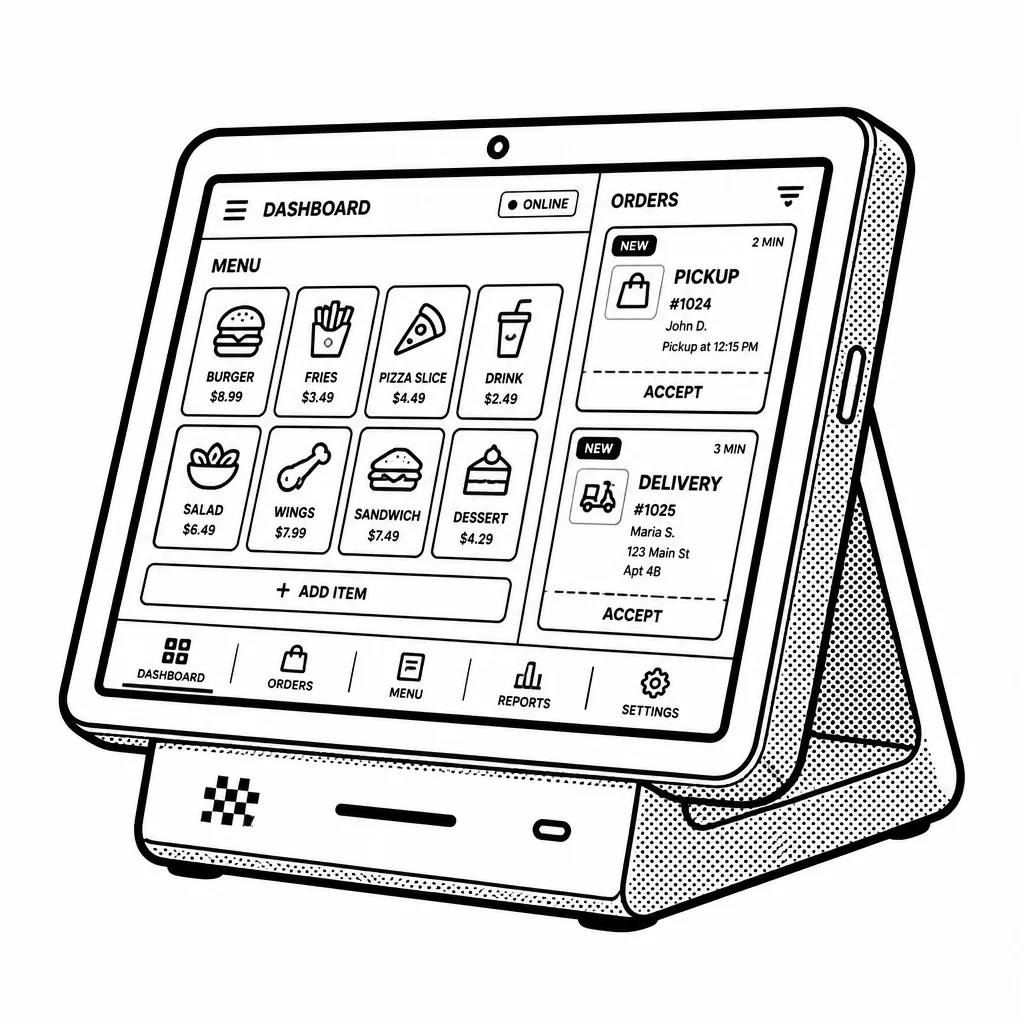
The problem Olo solves is that restaurants want to sell through many channels: their own websites, mobile apps, delivery apps, and drive-thru lanes. Each channel has its own technology, and stitching them together is a mess. Olo sits in the middle as one platform, so a chain can plug in once and take orders and payments across all of them. That is why brands choose it over building their own system or juggling several vendors. Olo was formerly listed on the New York Stock Exchange under the ticker OLO, but today its shares no longer trade publicly. It is now owned by the private equity firm Thoma Bravo. Thoma Bravo focuses on software companies and took Olo private, so the business is now privately held rather than a public stock.
The core tension in the business is straightforward. Restaurant margins are thin, and they lean on digital ordering more than ever. Olo wants to be the dependable layer underneath that ordering. Its rivals include other restaurant-tech platforms and homegrown systems, and it earns money by charging restaurant brands subscription fees plus fees tied to order volume. If Olo keeps adding brands and handles more of their digital orders, it grows — but it depends on restaurant chains keeping their customers and choosing to expand their digital sales.
Saved answer · last researched 17 Nov 2026