Understand any stock in simple English
Masimo Corporation
Masimo makes patient-monitoring devices and hospital connectivity systems that track things like blood oxygen and pulse, and it also sells consumer audio products.
Masimo is a medical technology company whose machines sit at the hospital bedside, quietly watching over patients. Its best-known product is a pulse oximeter, a small sensor clipped to a finger that measures how much oxygen is in your blood and how fast your heart is beating. Doctors and nurses rely on these readings to catch problems early, and hospitals buy Masimo's devices, sensors, and the software that connects them all together.
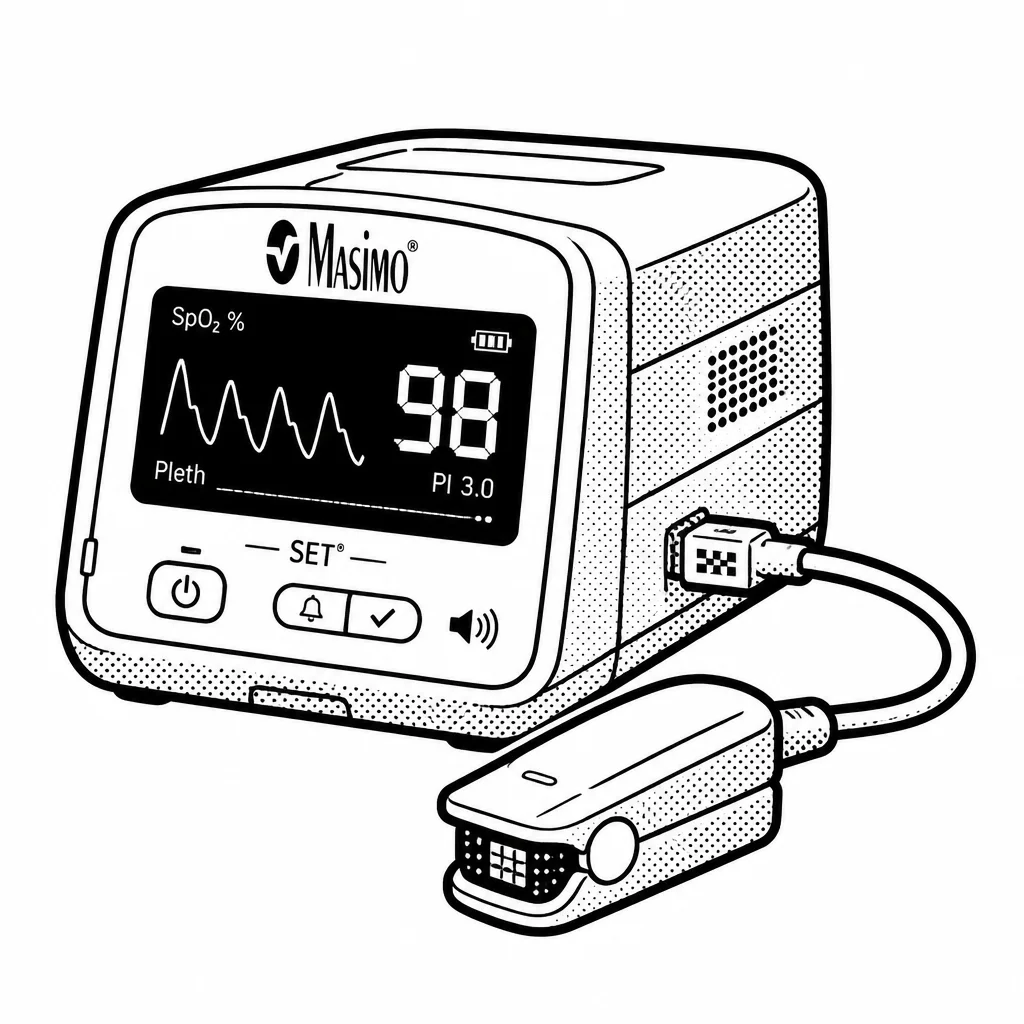
The business works like a razor-and-blade model. The hospital buys the monitor once, then keeps buying disposable sensors for every patient, every day. That recurring sensor revenue is the steady engine. Masimo's pitch is that its readings are more accurate and less prone to false alarms than older technology, which matters because a false alarm sends nurses running and a missed one can be deadly. Its main rival in pulse oximetry is Medtronic, and it also competes with other monitoring players in the wider hospital market. In 2022 the company made a surprising and controversial move: it bought Sound United, a consumer audio business that owns brands like Bowers & Wilkins, Denon, and Marantz. That took a hospital-tech company into the world of high-end speakers and headphones, a bet many investors disliked. A bitter fight with activist investor Politan Capital followed, and the founder, Joe Kiani, was ousted as CEO in 2024 after a shareholder vote. The company has since been reshaping itself, and its ownership status has changed—reliable sources now indicate its shares no longer trade publicly, so it is no longer a listed stock.
For a company built on trust and precision, Masimo's recent story has been messy: strong technology, a strange acquisition detour, and a boardroom war. The core hospital business still matters, because every surgery and every intensive-care bed needs to know whether the patient is getting enough oxygen.
Saved answer · last researched 17 Nov 2026