Understand any stock in simple English
Enter a ticker to learn what the company does and how it makes money.
Mach Industries Inc.
Mach Industries builds weapons and defense hardware, including autonomous systems and drones, for military customers.
Mach Industries is a defense startup that designs and builds weapons for the U.S. military and its allies, with a focus on autonomous systems like drones and the launch vehicles that get them into the air. The company's pitch is speed and cost: it wants to make defense hardware the way software companies ship products, iterating fast and keeping prices low instead of building a handful of exquisite, decades-long programs.
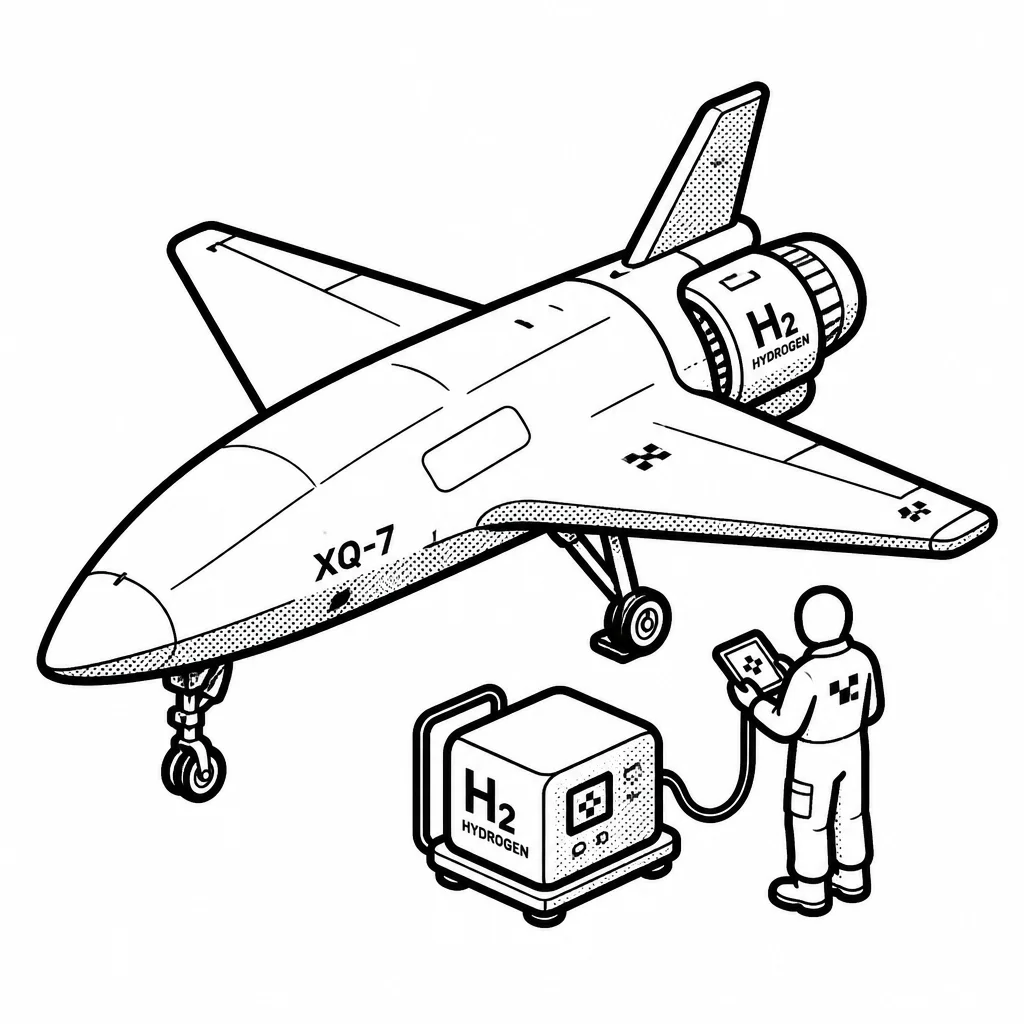
The company was founded in 2023 by Ethan Thornton, who started it while he was still a student at MIT, and it quickly became one of the most talked-about names in the new wave of defense tech. Its flagship concept is a family of unmanned systems, including hydrogen-powered drones that can fly farther and longer than battery-powered ones, and a "vertical launch" system that can fling drones into the sky from small, cheap platforms. The idea is to give soldiers on the ground eyes and reach without needing a runway or a billion-dollar aircraft. Mach's customers are governments, above all the U.S. Department of Defense, which has been pushing hard to buy more from startups and less from the handful of giant contractors that have dominated for decades. That shift is Mach's whole opportunity — the Pentagon wants cheap, autonomous weapons it can buy in bulk, and Mach is trying to be the company that supplies them. The company raised money from venture investors including Sequoia Capital, and in 2025 it won a contract from the U.S. Army. It has also drawn attention for a plan to build a factory in the Los Angeles area and for a strategy that leans on commercial supply chains rather than slow, bespoke defense manufacturing.
The risks are real and worth saying plainly. Mach is young and small, and defense procurement is slow, political, and full of hurdles even for established players. Its products are still largely early-stage, and a lot of its valuation rests on the bet that the Pentagon will actually buy from newcomers at scale. If that bet pays off, Mach could become a significant supplier of the next generation of military drones; if the money and contracts dry up, it is a startup with ambitious prototypes and not much revenue yet.
Saved answer · last researched 9 Nov 2026
Timeline
Thornton Starts Mach
Ethan Thornton dropped out of MIT after one semester and used a $100,000 Thiel Fellowship grant to start a company. He had spent years thinking about a problem the Pentagon kept running into: in war games against China, the US military kept losing. His idea was that hydrogen could power tactical weapons if it could be stabilized for the field. In 2023, he and Ashton Bennett founded Mach Industries on that belief.
Sequoia Backs the Seed Round
Sequoia's Stephanie Zhan and Shaun Maguire came on as investors in a small seed round that year. For a young founder with a big idea, having a famous venture firm on board was a signal to everyone else that Mach was worth watching.
Mach Switches to Strike Drones
The hydrogen weapon idea did not stay the plan. Mach pivoted to conventional strike drones, and the Army Applications Laboratory gave the company a contract for Strategic Strike, a missile that takes off straight up and cruises to its target.
Big Series A and a Move to California
A few months later, Mach raised a large Series A led by Bedrock Capital and Sequoia, bringing its total to nearly $100 million. The company then moved its headquarters from Texas to Huntington Beach, California, to be closer to engineering talent.
A $100 Million Series B
In June 2025, Mach closed another $100 million, led by Khosla Ventures and Bedrock, at a $470 million valuation. The money went toward expanding its Forge Huntington factory and scaling Mach Propulsion, its engine arm. The company had grown from about 20 employees to 140 in a year.
Viper Flies on Its Own
The payoff from that work came in January 2025: a drone called Viper flew a fully autonomous demonstration just six months after the contract was awarded. Army observers watched it hit with the range of HIMARS artillery and the punch of a Hellfire missile. It needs no runway, no launcher, no GPS, and no live communications to do it.
Forbes Questions Mach's Execution
Then came a harder moment. Forbes published a critical article questioning whether Mach could actually deliver, pointing to technical problems and safety hazards. Thornton responded in a company note, admitting mistakes and saying the company works to fix them and keep improving.
Mach Buys Exquadrum
In 2026, Mach paid $50 million in cash and stock for Exquadrum, a maker of solid rocket motors, beating out more than eight rival bidders. The reason was simple: America had only two main suppliers of these motors, and the supply could not keep up with demand. The deal brought 85 workers, the company's technology, and a large facility in Victorville, rebranded Mach Energetics, pushing headcount to about 350.
A Retired Colonel Joins
That February, Nathan Diller, a former Air Force Colonel, joined as President and Chief Strategy Officer. Thornton said his experience across flight operations, engineering, and acquisition would matter as Mach scaled up manufacturing.
A $300 Million Series C
By June 2026, Mach raised $300 million at a $1.8 billion valuation, led by Infinite Capital and Ribbit Capital. The money was earmarked for expanding Forge and Mach Propulsion and for second-generation systems. The company now ran five vehicle programs: Viper, Glide, Stratos, Dart, and Pike, with at least three expected to start production.
Valuation Doubles Again
Just three months later, in September 2026, Mach raised another $600 million as an extension of that round, doubling its valuation to $3.7 billion. The prior round had already quadrupled the valuation from the $470 million mark of June 2025. The new money went toward scaling production of long-range strike, counter-drone, and propulsion systems.