Understand any stock in simple English
Enter a ticker to learn what the company does and how it makes money.
M-KOPA Holdings Limited
M-KOPA sells smartphones and solar power kits to people in Africa on small daily payments, using the phone itself as collateral until it is paid off.
M-KOPA is a company that gets modern gadgets into the hands of people who usually can't buy them outright. Its biggest business today is smartphones. A customer in Kenya, Nigeria, Ghana, Uganda, or South Africa walks into a shop, puts down a small deposit, and takes home a phone. Then they pay a little bit every day — often just a few cents — through mobile money until the phone is fully theirs.
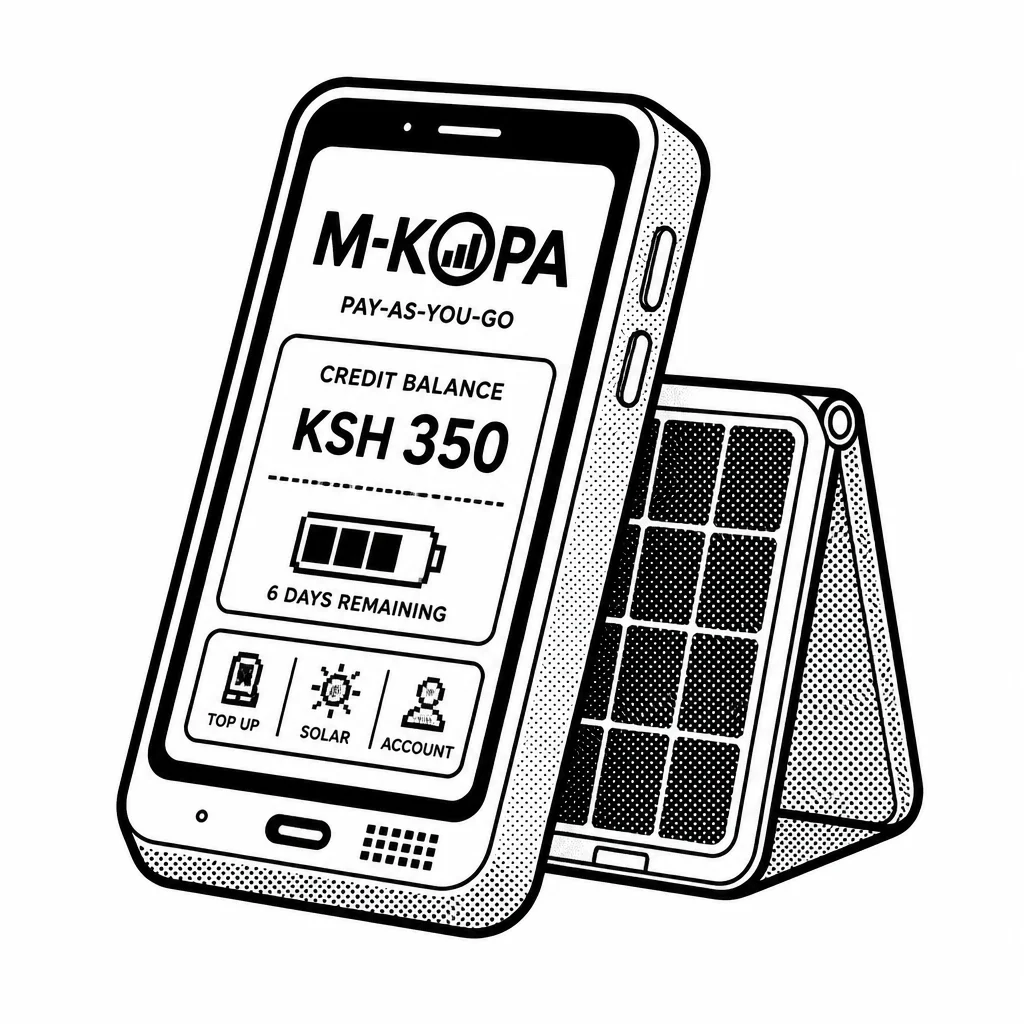
The clever part is how M-KOPA handles the risk. The phone comes with software that lets the company lock it remotely if payments stop. That means M-KOPA can sell to people with no credit history, no bank account, and no formal job, because the phone itself acts as collateral. Once the device is paid off, the lock is removed for good. This same pay-as-you-go model is what M-KOPA first used to sell solar home systems — a solar panel, battery, lights, and a phone charger — to families living off the electric grid. Solar is still part of the business, but phones have become the growth engine. M-KOPA doesn't just sell hardware. It also sells the financing that makes the hardware affordable, and it earns money on the daily payments over time. It has built its own software and payment systems, and it partners with mobile network operators and banks to reach customers. The company says it has served millions of customers since it launched in 2011, and it has raised hundreds of millions of dollars in debt and equity to fund the phones it finances. Its backers have included Standard Bank, which is listed in South Africa, and various development finance institutions and venture investors.
The business is a bet on a huge, underserved market: hundreds of millions of adults in Africa who have income but no access to credit. Competitors include other phone-financing outfits and, indirectly, the informal credit arrangements people already use. The risks are real too. Customers can default, currencies can swing, and governments can tighten rules on lending or on device locking. But if M-KOPA keeps signing up customers and collecting those small daily payments reliably, it turns a trickle of coins into a very large business.
Saved answer · last researched 10 Nov 2026