Understand any stock in simple English
Enter a ticker to learn what the company does and how it makes money.
Lovable AB
Lovable sells an AI-powered tool that lets anyone build a working web app by describing what they want in plain language.
Lovable is a Swedish software company behind a tool that turns a plain-English description into a working web app. You type what you want — a dashboard, a booking page, a small internal tool — and its AI writes the code, sets up the database, and gives you a live link you can share. It is aimed at people who have an idea but not the technical skills to build it: founders testing a concept, small businesses, and teams that want to skip the slow back-and-forth with engineers.
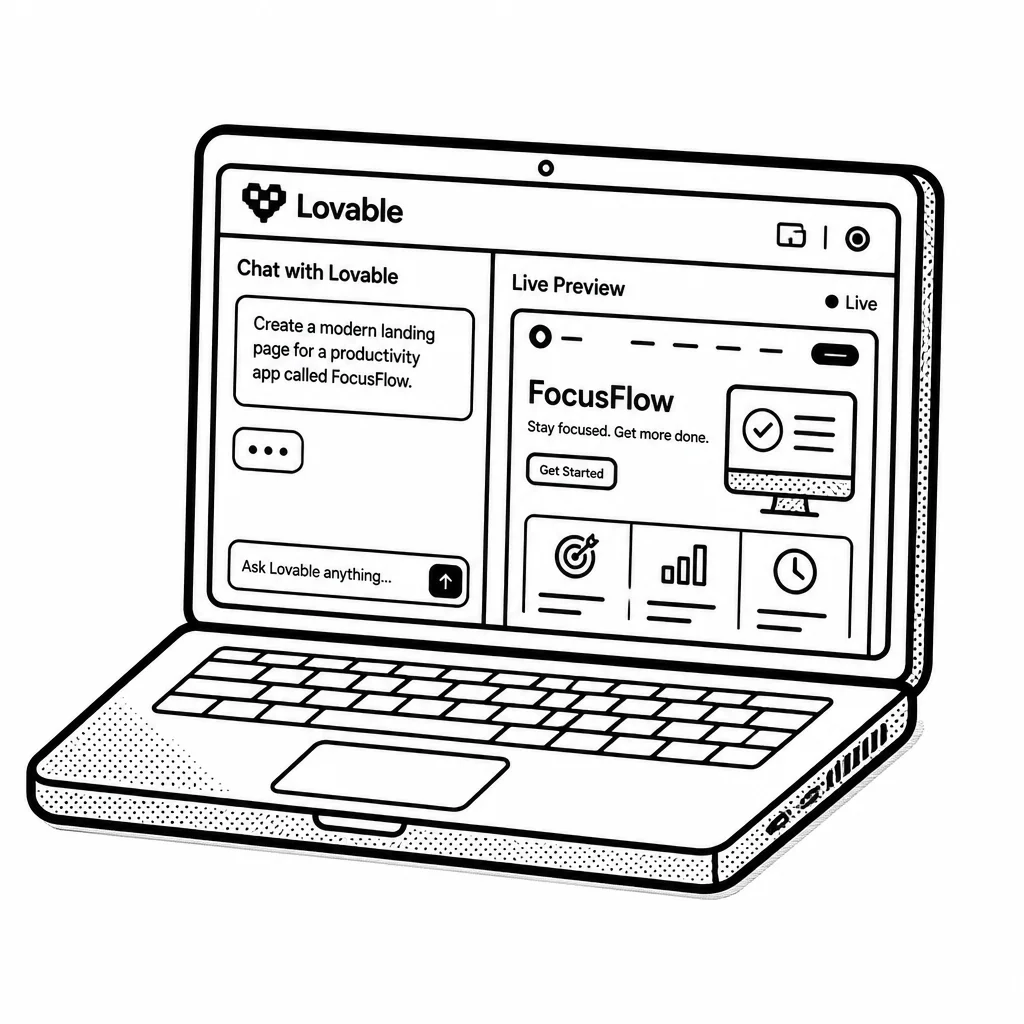
The core pitch is speed and access. Instead of hiring a developer or learning to code, a customer pays a monthly subscription and gets a "vibe coding" workspace where they can keep refining the app in conversation. The bet is that most software people want is simple enough that an AI can build most of it, and the human just needs to steer. Lovable makes money from those subscriptions, with paid tiers that add more usage and features on top of a free starting point. Lovable became one of the fastest-growing software startups in Europe, riding the 2024–2025 boom in AI coding tools. It raised serious venture money at a multibillion-dollar valuation and reached tens of millions of dollars in annual recurring revenue within roughly a year of launch — a pace that stunned investors. Its rivals include other AI app builders and the big coding assistants from Microsoft and Alphabet, plus fast-moving startups in the same space.
The honest risks are real. The AI-generated apps can be messy, hard to maintain, and sometimes insecure, which matters more as customers move from prototypes to real products. Churn is a worry: many users try it, build one thing, and leave. And the big platform players keep folding similar features into their own tools. Lovable's job is to stay good enough and cheap enough that people keep paying as the novelty fades — a classic race in a young, crowded market.
Saved answer · last researched 9 Nov 2026
BIG PICTURE
Most people building apps on Lovable still aren't making a penny from them
- 60.5% Users not yet earning from their projects
- 39.5% Users already earning from their projects
Lovable sells the dream of turning a plain-language idea into a working app, and plenty of people buy it: six in ten of its surveyed users say they are building a business or a side project. Yet 60.5% say those projects have not made them any money. The company earns from subscriptions, so it gets paid whether or not its users ever do. Source: Business Insider, data from 2026
Timeline
A Tool That Writes Code
Anton Osika had wanted to build things since he was a kid, and he learned to program in high school. In Stockholm he met Fabian Hedin, and together they made GPT Engineer, open-source software that used large language models to write applications. Then they built a commercial version, GPT Engineer App, for people who could not code at all.
Renamed Lovable and Opened to All
Before opening the app to everyone in December 2024, the founders renamed it Lovable. The name change was more than a name change: it turned a tool for developers into a product for ordinary people. And it gave them a head start, because the open-source project had already drawn a big crowd of developers who could now become paying customers.
The Fastest-Growing Software Startup
Eight months after launch, Lovable was pulling in $100 million a year in subscriptions, which people called the fastest growth in software history. The engine behind it was "vibe coding": you describe the app you want, and the AI writes the code. Suddenly people who had never programmed could make software.
A $1.8 Billion Series A
In July 2025, Accel led a $200 million funding round that valued Lovable at $1.8 billion. That made it one of Europe's newest unicorns and Sweden's largest Series A at the time. The money was meant to turn a viral hit into a real platform.
A Security Flaw in Lovable Sites
Then came a warning. A Replit employee found a security hole in websites built with Lovable: many sites had their database access set up wrong when they connected to Supabase, so private data was sitting out in the open. Lovable added automatic checks for access controls, but the checks did not confirm the controls actually worked, and critics said that was not good enough.
Revenue Doubles to $200 Million
By November 2025, Lovable's yearly recurring revenue had doubled to $200 million. It had about 320,000 paying customers and around eight million users, and more than half of the Fortune 500 were already using it. The tool built for non-coders was quietly becoming a corporate staple.
Triple the Value in Five Months
In December 2025, CapitalG and Menlo Ventures led a $330 million round at a $6.6 billion valuation, more than triple the price set just five months earlier. Lovable said it would connect with payment and document tools and improve its engineering so customers could launch full products, not just prototypes.
A $13.3 Billion Valuation
By August 2026, Lovable raised $400 million at a $13.3 billion valuation, more than doubling its value in eight months. Menlo Ventures and Scaleup Europe Fund co-led the round, with Balderton, Tencent and others joining. Customers now included Nvidia, Adidas, Hearst and Zendesk, and the company planned to grow to about 450 employees.
Past $600 Million and Into the Enterprise
By late 2026, Lovable's annualized revenue passed $600 million, adding about $100 million in roughly three months. Two-thirds of the Fortune 500 were using it, and its customers had shifted from solo builders to big companies. Lovable now pitched itself as delivering a finished product and business, not just code, putting it up against tools like Cursor and Replit.