Understand any stock in simple English
Enter a ticker to learn what the company does and how it makes money.
LC Waikiki Mağazacılık Hizmetleri Ticaret A.Ş.
LC Waikiki sells affordable everyday clothing for the whole family through thousands of its own stores and its website.
LC Waikiki is a clothing retailer. It sells T-shirts, jeans, dresses, coats, and basics for women, men, and kids, and it is built around one promise: fashion that ordinary families can actually afford. Walk into one of its stores and you will find racks organized by age and gender, prices clearly low, and new styles arriving constantly. It is one of the biggest clothing brands in Türkiye, and it has expanded far beyond its home market into Eastern Europe, Central Asia, the Middle East, and Africa.
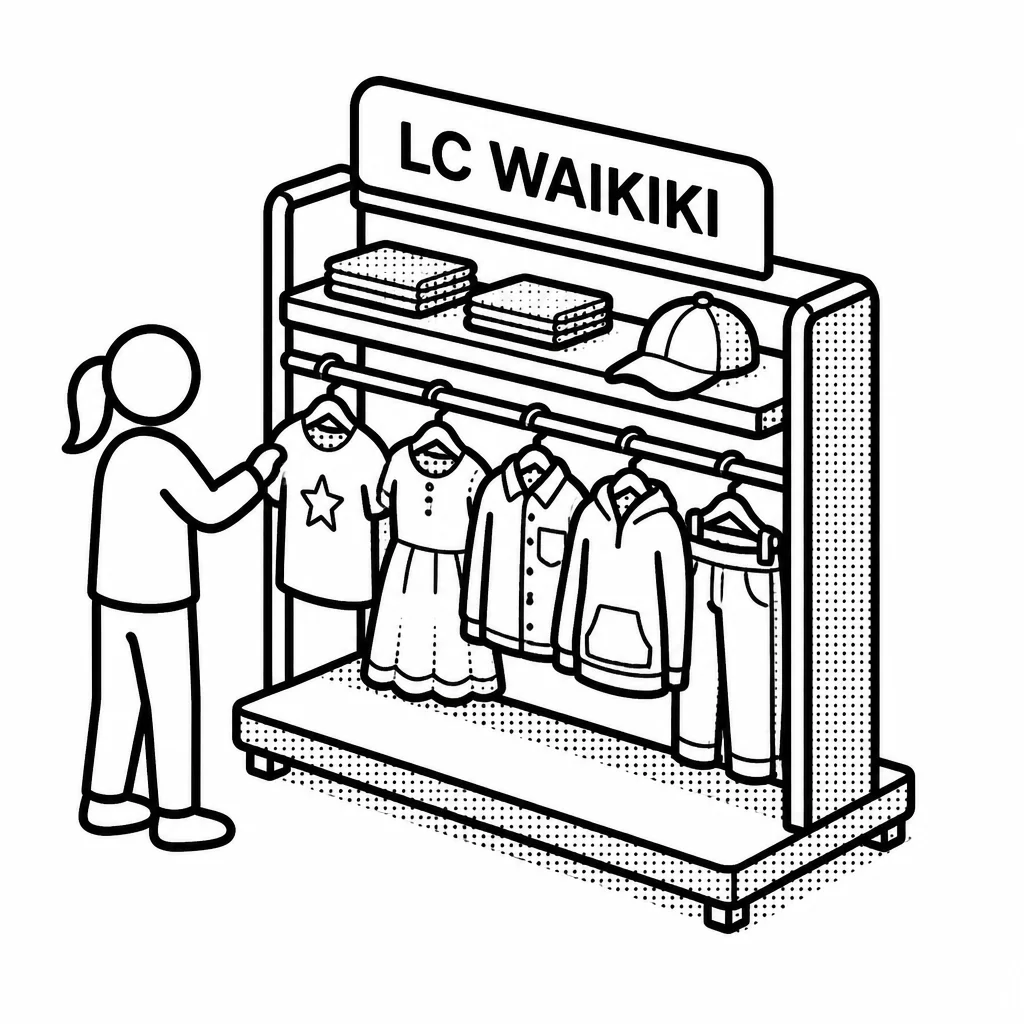
The company makes most of its money by buying clothes cheaply from factories, mostly in Türkiye and Asia, and selling them in its own stores at a markup. Because it runs its own shops rather than selling through other retailers, it keeps control of the price, the layout, and the brand. About half its stores are franchises, where local partners put up the money and share the risk while LC Waikiki supplies the clothes and the brand. That lets the company grow quickly in countries it does not want to invest in directly. Its scale is the real weapon: by ordering huge volumes, it can squeeze suppliers on price, and by turning inventory fast, it avoids getting stuck with unsold stock. The retail clothing business is brutally competitive, and LC Waikiki sits in the value segment, where it fights for the same budget shoppers as H&M, Inditex (the owner of Zara), Primark, and a long list of local rivals. Its edge is not trendy fashion; it is price and reach in markets that big Western chains have ignored or found hard to enter. That has made it a dominant force in countries like Romania, Kazakhstan, and Iraq. A large share of its clothes are made in Türkiye, which gives it shorter shipping times and more flexibility than rivals producing mostly in Asia.
The company is privately held and does not publish detailed financials, but it has grown fast and now operates several thousand stores across dozens of countries, with revenue in the billions of dollars. Growth has mostly come from opening new stores and expanding franchises rather than from acquisitions. The main risks are familiar for any value retailer: currency swings in emerging markets, rising costs for wages and shipping, and the constant pressure to keep prices low while still making money. For now, its bet is simple — sell a lot of cheap clothes to a lot of families in a lot of countries, and keep the machine turning.
Saved answer · last researched 10 Nov 2026