Understand any stock in simple English
Enter a ticker to learn what the company does and how it makes money.
Konga Online Shopping Limited
Konga is a Nigerian online marketplace that sells everything from phones and groceries to fashion, and also runs its own delivery and payment services.
Konga is one of Nigeria's biggest online shopping sites, a place where people go to buy a phone, a fridge, baby supplies, or a bag of rice and have it delivered to their door. It started in 2012 as a fashion and electronics store and grew into a full marketplace, meaning outside sellers list their own products on Konga's website and pay Konga a cut of each sale. Think of it as a digital mall: Konga owns the storefront, the checkout, and much of the delivery, but thousands of merchants stock the shelves.
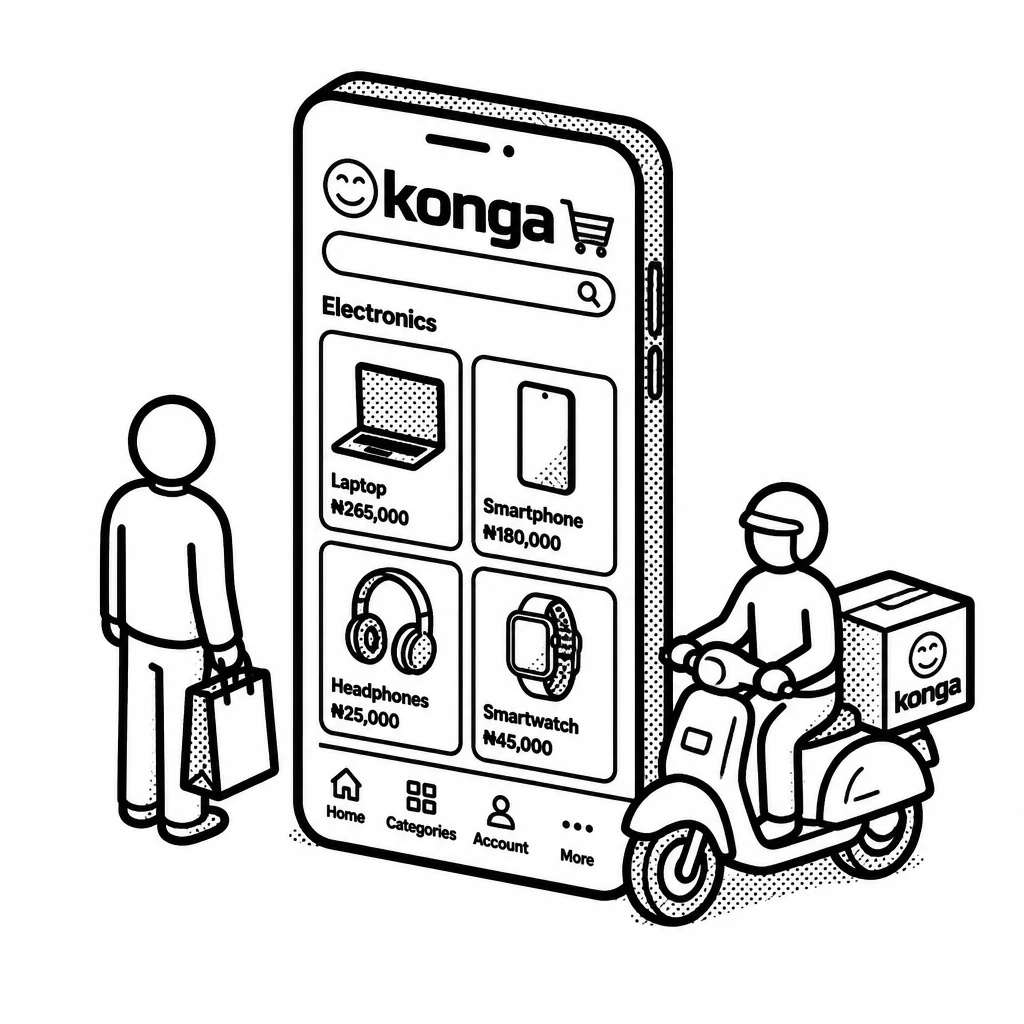
The company makes money in a few connected ways. It earns a commission when third-party sellers sell through the site, makes a margin on products it buys and resells itself, and charges for services like sponsored product listings and its KongaPay payment wallet. It also runs its own logistics arm, Konga Express, which handles deliveries for the marketplace and for other businesses too. That combination of shopping, payments, and delivery is deliberately bundled — the more it controls the whole journey from click to doorstep, the more customers trust it and come back. Konga's early years were a wild ride. It raised big venture money, burned through cash growing fast, and in 2018 was bought by Zinox Technologies, a Nigerian technology group, after struggling financially. Under Zinox it pulled back from money-losing expansion and focused on profitable growth, and the company has said it turned profitable in recent years, though as a private company it does not publish detailed audited accounts. Its main rival is Jumia Technologies, the pan-African e-commerce group, alongside brick-and-mortar retailers and informal markets that still dominate how most Nigerians shop.
The big prize and the big problem are the same: Nigeria has a huge young population and rising internet use, but many shoppers still prefer to see goods in person, and poor roads, patchy power, and cash-on-delivery habits make e-commerce expensive to run. Konga's bet is that owning logistics and payments lets it serve customers that rivals relying on third parties cannot reach as cheaply. For now it remains a private, Nigeria-focused business, so its real test is whether it can grow steadily and keep making money without the huge outside funding that once powered its rise.
Saved answer · last researched 10 Nov 2026