Understand any stock in simple English
Enter a ticker to learn what the company does and how it makes money.
Keenable.ai, Inc.
Keenable sells web search and page-fetching that AI agents and AI companies pay to use.
Keenable is a small startup that sells web search to AI agents instead of people. When a chatbot or coding agent needs fresh facts, it has to look things up online. Most search tools were built for humans reading ten blue links, and they are slow and costly for a machine that wants to search dozens of times per task. Keenable built its own index of more than 100 billion web pages, plus a fast search service, a tool that turns any page into clean text, and a product called SELECT that pulls facts from many pages into a table.
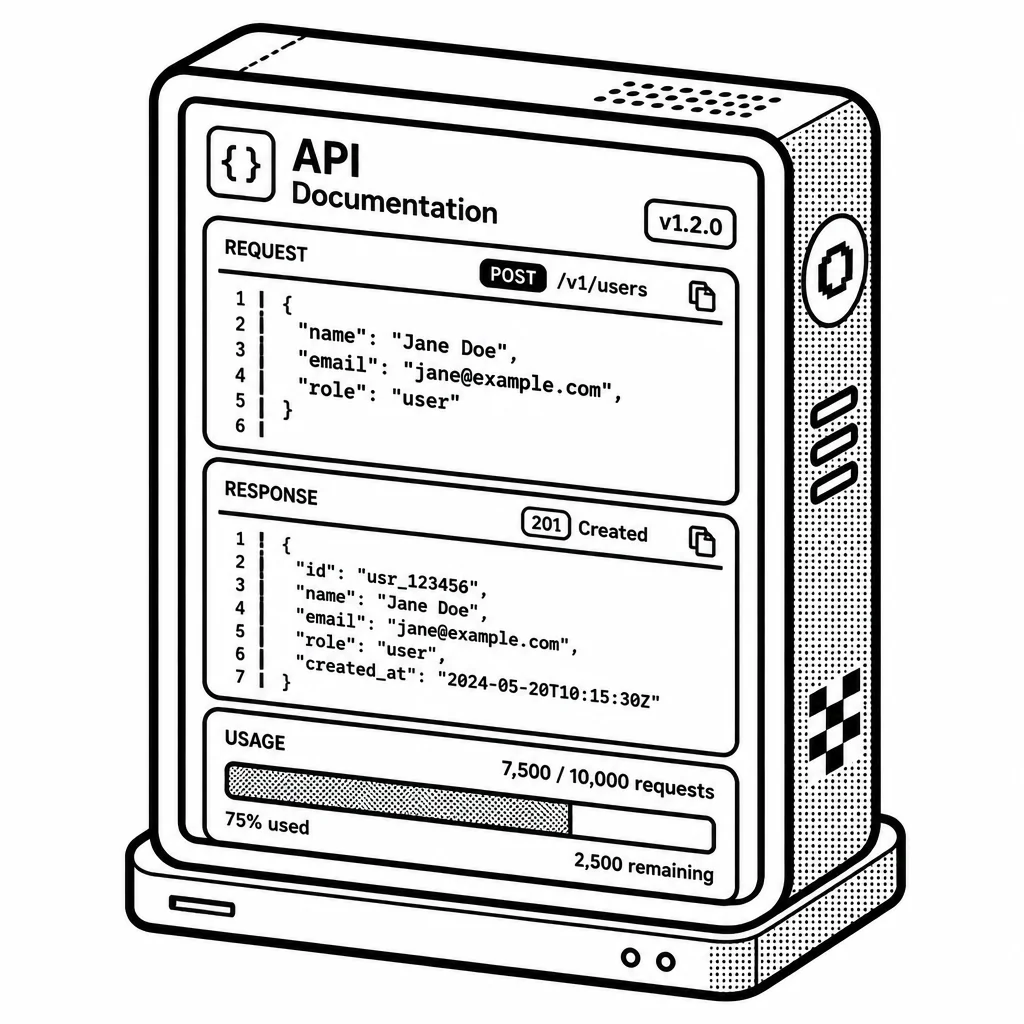
The customers are AI labs, companies that run AI models for others, and developers building agents. They connect through an API or a plug-in, and they pay for usage. A free account gives 100,000 requests a month, so the money comes from heavier users who need more. This matters now because Google and Microsoft have been closing their own search APIs, which left AI builders with fewer places to buy web access.
Keenable is private and early. It came out of hiding in August 2026 with $26 million from Accel and Conviction, and it does not publish its revenue. It competes with other search tools for AI such as Exa, Brave, and Parallel. The big question is whether it can stay cheaper and better than those rivals, and whether customers will keep paying for it once bigger companies offer similar search.
Saved answer · last researched 9 Nov 2026
BIG PICTURE
Keenable pulled useful content from 84% of freshly picked web pages in a daily scraping test
- 84.2% Pages where Keenable returned useful content
- 15.8% Pages where it did not
A live test grabs about 2,500 new web pages every day and asks several scraping services to pull clean content from them. On the November 6 sample, Keenable managed it on 84.2% of pages. That is the work it sells: AI agents pay per request to get readable page text, so every failed page is a customer's broken answer. Source: Context.dev (TRACE benchmark), data from 2026
Timeline
Two Veterans Start Keenable
Andrey Styskin, who once ran search, AI and cloud at Yandex, teamed up with German AI scientist Matthias Petri to build search for a new kind of customer: AI agents, not people. The idea came from their time at Amazon, working on web search for Alexa, where they noticed machines were fast becoming a huge share of search traffic, yet the tools were all built for human habits. The hard part was cost. Scanning the whole internet is wildly expensive, so Keenable fine-tunes its index structures to shrink the search space fast, a trick Styskin calls the company's core contribution.
Google and Microsoft Close Their Doors
Then the ground shifted. Google shut its Custom Search JSON API to new customers in February, and Microsoft retired the Bing Search APIs later that year, leaving AI labs scrambling for a reliable way to reach the live web. That gap was exactly the opening Keenable was built to fill with a web index of its own.
An Index of 100 Billion Documents
Keenable built an independent index of more than 100 billion documents, plus a fast Search API, page-content retrieval, and an MCP interface that agents can plug into. Several AI labs and inference providers were already using it in production, both to train models and to run them.
A Partnership with Gradium
In July, voice-AI company Gradium signed on to use Keenable for live retrieval, a sign that the search layer was spreading into real products beyond the lab.
Out of Stealth with $26 Million
Keenable stepped into the open with a $26 million seed round led by Accel, with Conviction Partners and angel investors joining in. The plan: roughly double its 15-person engineering team across the US and Europe by year's end and start building sales. It now faces rivals Brave and Exa in the young race for agentic search.
Keenable Launches Its Web Search API
Keenable released its Web Search API and a Web Query Language for AI, free through September, pitching itself as the next Google for AI agents. It followed with Keenable SELECT, an agent that treats the web like a database, and said traffic grew eightfold in a month, hitting a million search requests a day from Hermes agents. Its search also became native inside Baseten, Lightpanda and a web-fetch backend in cognee.