Understand any stock in simple English
Enter a ticker to learn what the company does and how it makes money.
Hostinger International Ltd.
Hostinger sells website hosting and the tools to build and run a website, mostly to budget-conscious people and small businesses around the world.
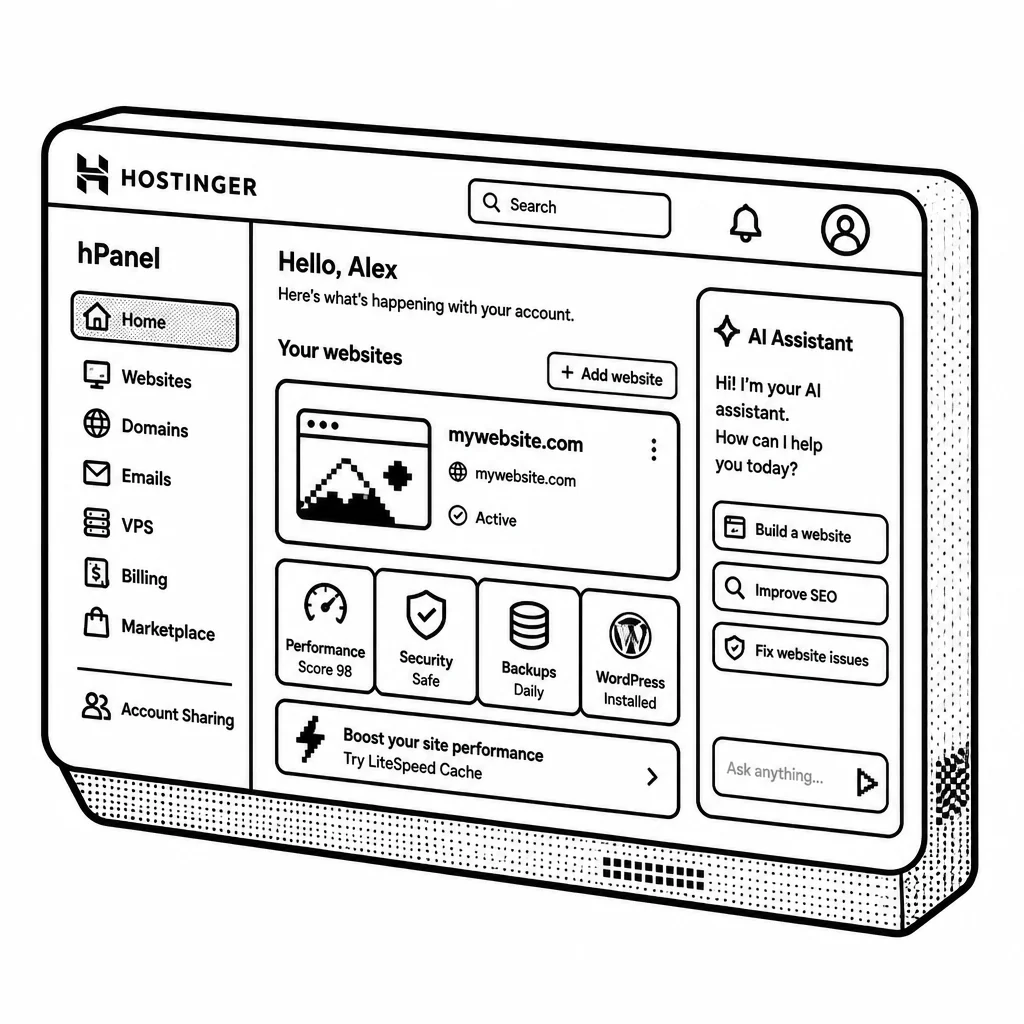
Hostinger is a web hosting company. If you want a website — a blog, an online store, a small business page — you need a computer somewhere that is always on and connected to the internet, holding your site's files and serving them to visitors. Hostinger rents you that computer, along with the software to set it up, for a few dollars a month. It also bundles in the pieces most beginners need: a domain name, a tool to build the site without writing code, email, and increasingly an AI helper that assembles a website from a short description.
The business runs on volume and price. Instead of chasing big corporate clients, Hostinger aims at the enormous global market of first-time website owners, students, freelancers and tiny shops in places like Brazil, India, Indonesia and Mexico, where it has pushed hard with local languages and local payment methods. Those customers sign up cheaply and, if they stay, renew year after year — which is where the money really comes from, since hosting costs little to keep running once the server is shared among many customers. Its main competitors in that budget space include GoDaddy and Newfold Digital brands, alongside Cloudflare, though Cloudflare mostly sells security and network services rather than beginner hosting. Hostinger was founded in Lithuania in 2004 by Balys Klišys and Arnas Stuopelis, who started it as a teenager-run side project and built it without much outside money — a rarity in a venture-funded industry. That self-funded style shaped the company: it stayed lean, automated heavily, and grew quietly into one of the world's largest hosting providers by customer count, claiming several million customers across roughly 150 countries. In 2024 it raised a secondary round that valued the company at around $1.5 billion, with investors buying shares from early holders rather than funding new growth — a sign of how far the scrappy Lithuanian outfit had come.
Hostinger's main weakness is that its customers are the cheapest and least loyal kind: beginners who may abandon a site within a year. That is why the company keeps adding services like email, VPS servers, and AI site-building, to sell more to the people it already has and to make leaving more annoying. Its strength is a low-cost machine built for the long tail of the internet — the millions of tiny sites that big hosting firms would rather ignore.
Saved answer · last researched 10 Nov 2026