Understand any stock in simple English
Enter a ticker to learn what the company does and how it makes money.
Honor Device Co., Ltd.
Honor makes and sells smartphones, laptops, tablets, and other consumer electronics, mostly to people who want good hardware without paying flagship prices.
Honor is a Chinese consumer electronics company that sells smartphones first and foremost, along with laptops, tablets, smartwatches, and earbuds. Most of its customers are ordinary people buying a phone in the mid-range to upper-mid-range, where Honor fights hardest against rivals like Xiaomi and Oppo (private) for shelf space and attention. It also sells through carriers and online, and it has been pushing hard into premium foldables and flagship phones to shed its old budget reputation.
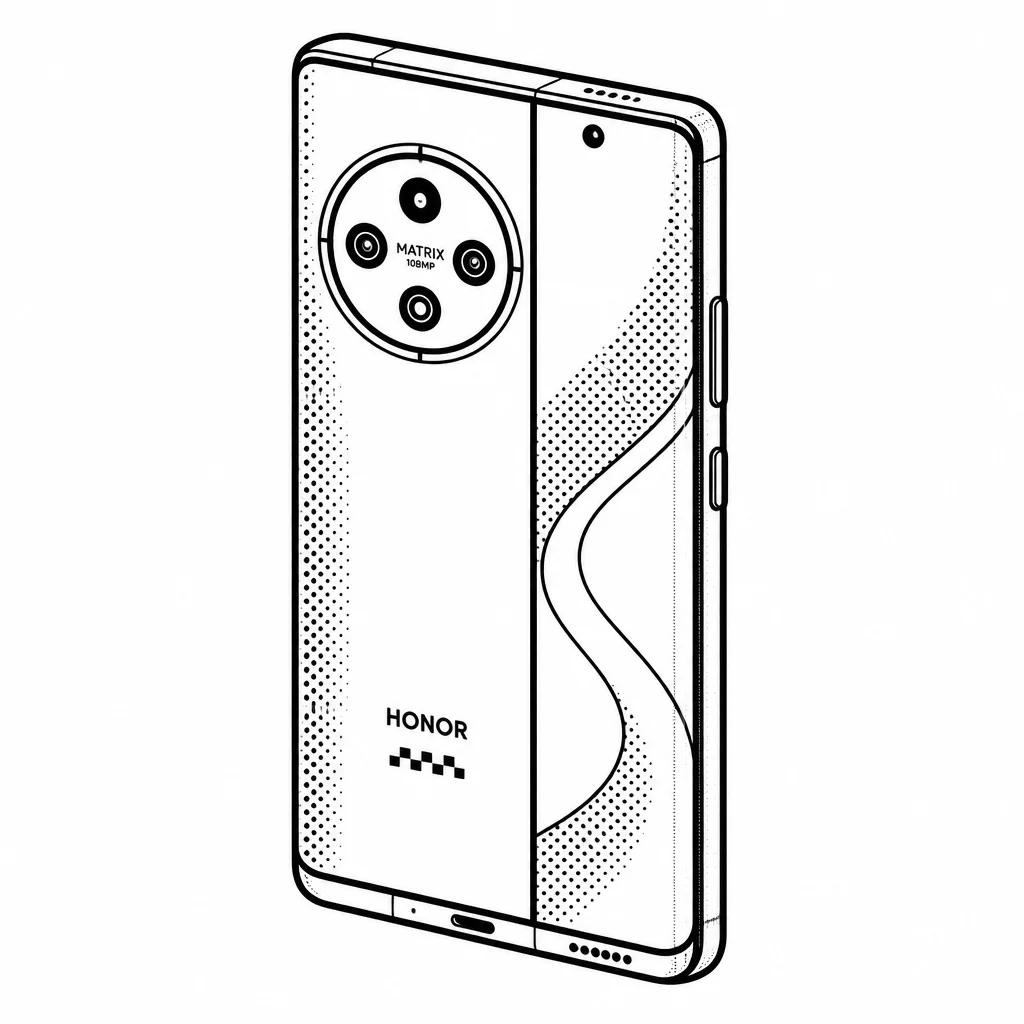
The company's story is unusual. It started in 2013 as a sub-brand of Huawei (private), built to sell affordable phones online and take on Xiaomi. In November 2020, under heavy US sanctions that crippled Huawei's ability to buy chips and software, Huawei sold Honor to a consortium of Chinese state-linked firms and distributors, and Honor became independent. That divorce mattered enormously: it let Honor buy Google's Android services and Qualcomm chips again, and it quickly rebuilt its business, at one point becoming the top-selling smartphone brand in China by shipment volume. Honor makes its money by selling hardware at a thin margin and making up for it with volume. The economics of phones are brutal: components like chips, displays, and cameras eat most of the retail price, and competition keeps profits slim. Honor's edge is partly cost — it can design and source aggressively — and partly distribution, since it inherited deep ties to Chinese retail channels. It has also leaned into software and ecosystem features, like AI tools and cross-device syncing, to keep buyers inside its product family. Lately it has been expanding overseas into Europe and Southeast Asia, where growth is harder but margins can be better.
The risks are real. Honor depends on Google's Android ecosystem and on chip suppliers it doesn't control, and it operates in a market where prices fall fast and brand loyalty is thin. It has also been reported to be preparing for an IPO, which would test whether investors believe an independent Honor can hold its ground against Apple Apple at the top and a swarm of cheap Chinese rivals below. For now, Honor is a hardware company that wins by making solid phones at prices that make people look twice.
Saved answer · last researched 10 Nov 2026
BIG PICTURE
Honor is now the Middle East's second-biggest phone brand, with 15% of the market
- 15% Honor
- 85% Other brands
In the Middle East, phone shipments fell 13% in the first half of 2026. Honor's rose 35%, and its slice of the market went from 10% to 15%, good for second place. That matters because Honor lost its grip at home in China, where its share slipped and it fell out of the top five. Buyers in the Gulf are helping make up the difference. Source: Omdia via HONOR, data from 2026
Timeline
Honor Starts as Huawei's Online Brand
Honor began in late 2013 as a sub-brand of Huawei, aimed at young buyers and sold mostly online in the cheap-to-mid-range part of the market. Huawei had a clear problem: fast-growing online phone brands like Xiaomi were winning those customers, and Huawei needed a weapon of its own. So Honor was born to fight that fight.
Honor Goes Global
A year later, Honor pushed outside China, and sales exploded from a tiny base to billions of dollars. It was shipping phones to dozens of countries and building a fan base in the millions.
Honor Becomes the Top Online Phone Brand
Soon Honor could call itself the world's leading smartphone e-brand, with products in more than 70 markets and sales in the billions.
Honor Bets on AI With the Magic
On its third birthday, Honor launched the Magic, billed as the first smartphone with artificial intelligence built in. It was a statement: AI would be a core direction for the brand, not a side experiment.
Honor Breaks Into the Global Top Five
Overseas sales more than doubled, and Honor became one of the five biggest smartphone brands in the world. From a scrappy online challenger, it had become a global player.
Huawei Sells Honor
Then came the shock. In late 2020, under US sanctions that threatened to smother the brand, Huawei sold Honor to a Chinese consortium, Shenzhen Zhixin New Information Technology. The point was survival: cutting Honor loose from Huawei was the only way to keep it alive. After years as a sub-brand, Honor was now on its own.
Honor Rebuilds as an Independent Company
Independence meant starting over in many ways. The first non-Huawei phone, the V40, arrived in early 2021, and by the end of the year the Honor 50 brought Google services back. Honor rebuilt its products, its supply chain and its sales systems, and clawed its way back to growth.
Honor Leads China, Briefly
In the third quarter of 2023, Honor hit the top of the China market for the first time, ahead of Apple and the big local rivals. Part of the reason was grim for Huawei: Huawei's troubles had left a vacuum, and Honor filled it. But the lead did not last; the slide began the very next quarter.
George Zhao Steps Down
In early 2025, CEO George Zhao resigned for personal reasons after a decade running Honor, including the leap into independence. Li Jian took over. The change came at a tense moment: Honor was getting ready for an IPO while its market share was shrinking.
Honor Announces the Alpha Plan
At Mobile World Congress in early 2025, Honor unveiled the HONOR ALPHA PLAN, a pledge to turn itself from a phone maker into a global AI device ecosystem company. By mid-year it had filed the paperwork to start the long road toward a mainland stock listing. With the phone business under pressure, AI became the next growth engine.
Honor Shows an Open AI Ecosystem
A year later at the same show, Honor laid out an open AI strategy built on its AI Connect Platform, meant to plug in tens of thousands of AI services. It also showed off a foldable Magic V6 and a Robot Phone that mixed smartphone tech with robotics. The message was clear: Honor wanted to be an AI device company, not just a phone seller.
Honor's IPO Slips and Its Value Falls
The path to going public was not smooth. Honor had finished its shareholding reform in late 2024 but missed its own one-year target for the IPO, and in 2026 it opened an employee share buyback at the original price. Its valuation had fallen sharply from the sale era, and in China its phone shipments had dropped for three straight years, knocked out of the top five as Huawei's comeback ate into its share. The company that survived by going independent still had to prove it could win on its own.