Understand any stock in simple English
Enter a ticker to learn what the company does and how it makes money.
Havan S.A.
Havan runs a chain of large, brightly colored department stores across Brazil that sell clothes, home goods, toys, electronics, and everyday items at low prices.
Havan is a Brazilian department store chain that sells a wide mix of everyday things — clothes, kitchenware, toys, electronics, tools, and home goods — mostly to middle- and working-class families. Its stores are impossible to miss: each one is crowned with a giant replica of the American Statue of Liberty, and the whole building is painted in loud red, white, and blue. Inside, shoppers walk through a big, simple warehouse-style layout where low prices are the main draw.
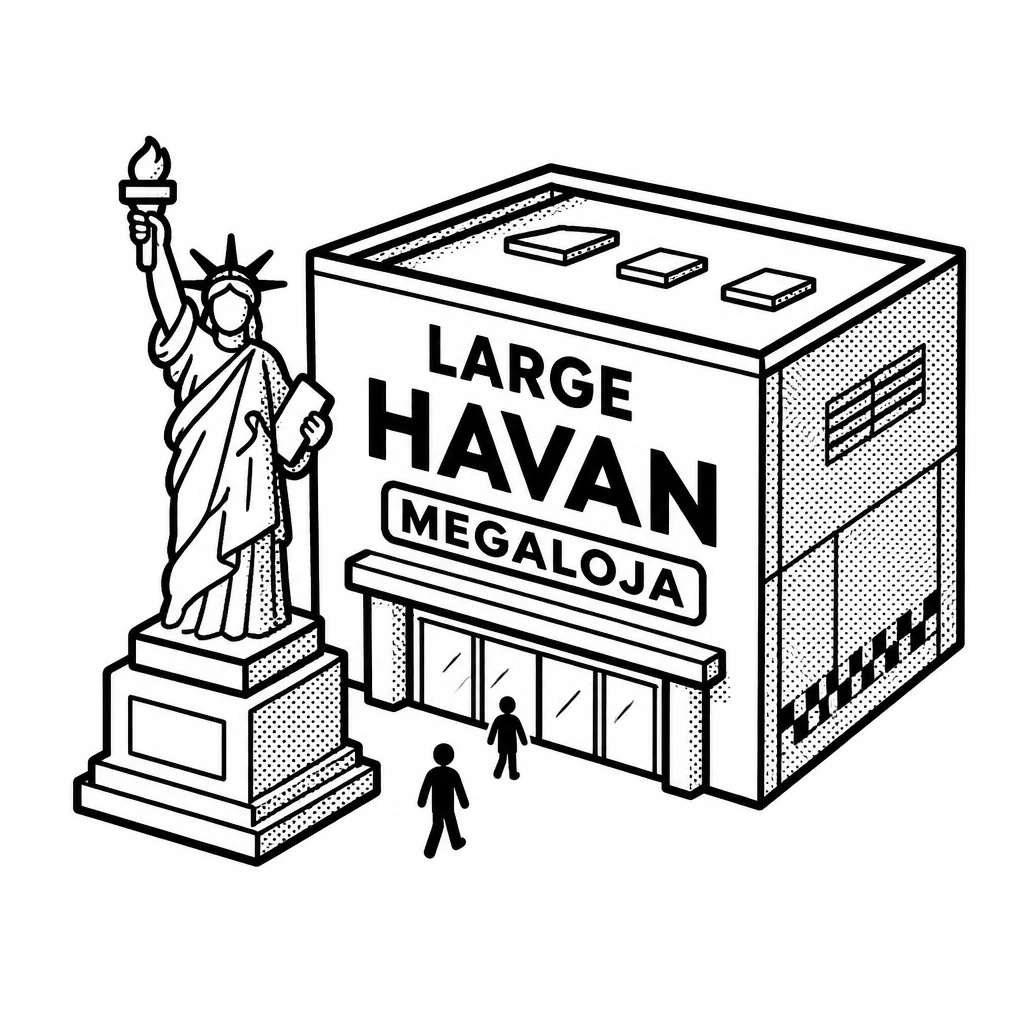
The business makes money the old-fashioned retail way: it buys goods in bulk, marks them up, and sells them in its own stores. What sets Havan apart is where it builds. Instead of fighting for space in crowded big cities, it often opens huge stores in smaller towns and on the edges of mid-sized cities, where big rivals like Magazine Luiza and Casas Bahia may be weaker. A family in a town of 100,000 people gets a giant one-stop shop that would normally exist only in a state capital. That mix of scale and location helps it win customers who value one big trip over many small ones. Havan also leans hard on spectacle and politics. The Statue of Liberty is a deliberate marketing stunt tied to the founder, Luciano Hang, a loud supporter of former president Jair Bolsonaro. The stores feel like an event, and Hang himself is a walking advertisement, posting videos and giving interviews. That strategy cuts both ways: it creates fierce loyalty among some shoppers and boycotts among others, and it has pulled the company into legal fights and investigations over political activity and its treatment of employees.
The company is privately held, owned largely by Hang and his family, so its finances are not fully public. It has grown into one of Brazil's largest retailers by revenue and keeps expanding, opening new stores and building out an online store to compete with e-commerce giants like MercadoLibre and Amazon. The bet is that Brazilians still want a big, cheap, entertaining place to shop in person — and that a statue, a flag, and a low price tag are enough to bring them through the door.
Saved answer · last researched 10 Nov 2026