Understand any stock in simple English
Golis Telecom Somalia
Golis Telecom sells mobile, internet, fixed-line, and mobile money services to people and businesses in Puntland, Somalia.
Golis Telecom is the phone company that much of Puntland actually uses. It sells mobile service, home and business internet, fixed-line connections, and a mobile money service, and it serves customers across the northeastern Somali region from its base in Bosaso. For many people there, Golis is not one choice among many — it is the network their phone connects to, the line their office runs on, and the wallet they use to send money.
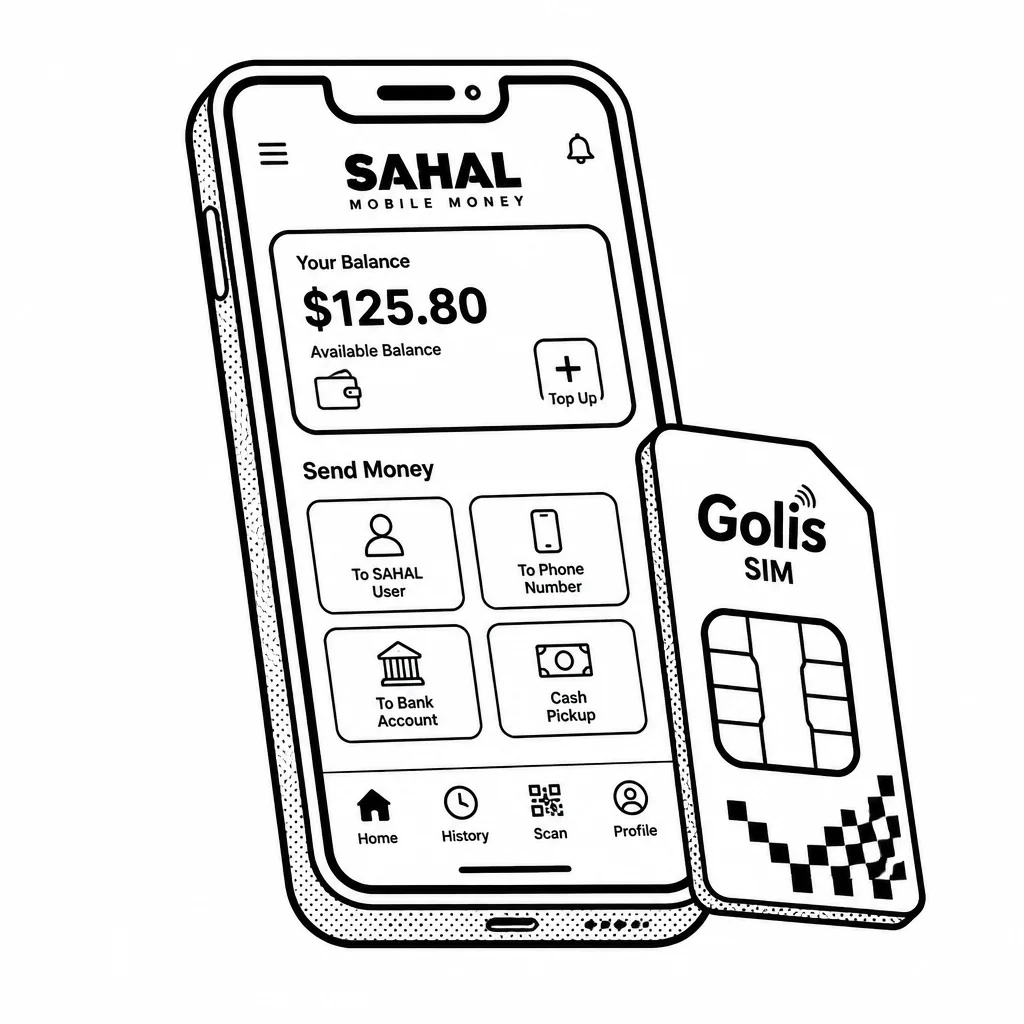
The business works like a classic telecom: customers pay for SIM cards, airtime, data plans, and monthly internet or fixed-line subscriptions, and the company keeps the money that's left after running its network and paying for equipment and bandwidth. Mobile money matters a lot here. Somalia is one of the most cashless places on earth, and phone-based payments are how ordinary people buy goods, pay bills, and send money to relatives. A telecom that also runs the wallet captures both the connection and the transaction. Golis is a private company, and it built its position in a hard place. Somalia has had no functioning nationwide regulator or stable national grid for years, so telecoms like Golis had to install their own infrastructure and generate their own power. That raises costs, but it also means the incumbent is whoever actually built the towers and kept them running. In Puntland, that has largely been Golis.
Its main rivals are the other Somali carriers, notably Hormuud, which dominates in the south, along with Telesom in Somaliland and Somtel. Competition is real, but it is regional rather than national, so Golis faces less pressure in its home market than a European carrier would. The flip side is the risk: heavy dependence on one region, security problems, and a market where customers have limited ability to pay. Golis remains a private, family-linked company with no public shares, so it funds growth from its own cash rather than markets.
Saved answer · last researched 20 Nov 2026
Timeline
Golis Starts in Bosaso
In 2002, Golis set out to give Somalia something basic that was missing: phone calls and internet that actually work. It started in Bosaso, in the Puntland region, selling mobile, fixed-line and internet service. The bet paid off — it grew into the biggest telecom operator in Puntland, reaching every major city and more than fifty districts.
The Bet That Paid Off Fast
Golis spent a few million dollars on Chinese equipment in 2005, and then did something remarkable: it earned the whole investment back in about two years. Profit that year was reported at over $40 million, and its call rates were among the cheapest anywhere in the world. Cheap calls plus fast profits is a hard combination to pull off — it meant Golis was running lean and reaching a lot of people.
Banking Comes to the Phone
A few years later, Golis paired up with Salaam Bank to launch Kaaftoon, a service that let people use their phones for financial services. The idea was simple but powerful: if the phone network already reaches people, why not let money travel over it too? This was the first sign that Golis was becoming more than a phone company.
Networks Learn to Talk
In 2022, Golis joined a national framework that let customers call people on other networks without hassle. For years, calling someone on a rival's network had been clunky and costly. This was part of a wider push to make the market more competitive and easier for ordinary users.
SAHAL Takes Off
The banking idea from years earlier grew into something much bigger. In 2023, Golis got licensed as a mobile money provider through its platform SAHAL, which went on to become one of the most used mobile money services in Puntland. It became a real engine for the region's digital economy — people moving money on their phones every day.
Global Stamps of Approval
In 2024, Golis picked up three ISO certifications covering quality management, mobile money and information security, and launched a partnership with Mastercard. Puntland's vice president showed up and called the certifications a sign of global trust in the company. For a homegrown operator, that kind of outside recognition mattered.
The 5G Question
Now Golis is looking at 5G, like other Somali operators such as Hormuud and Somtel. But there's a catch: it has not secured outside funding yet, and advanced technology and infrastructure cost serious money. The company that bootstrapped its way to the top now faces the question of whether it can keep pace without bringing in outside partners.