Understand any stock in simple English
Enter a ticker to learn what the company does and how it makes money.
Fidelity Investments
Fidelity runs one of the world's largest money-management and brokerage businesses, managing people's savings and retirement accounts and earning fees for doing it.
Fidelity is a giant money manager and brokerage. It runs mutual funds and exchange-traded funds, holds retirement accounts like 401(k)s and IRAs, and lets ordinary people buy and sell stocks and bonds through its platform. Most of its customers are everyday investors saving for retirement, plus the employers who hire it to run their workplace retirement plans.
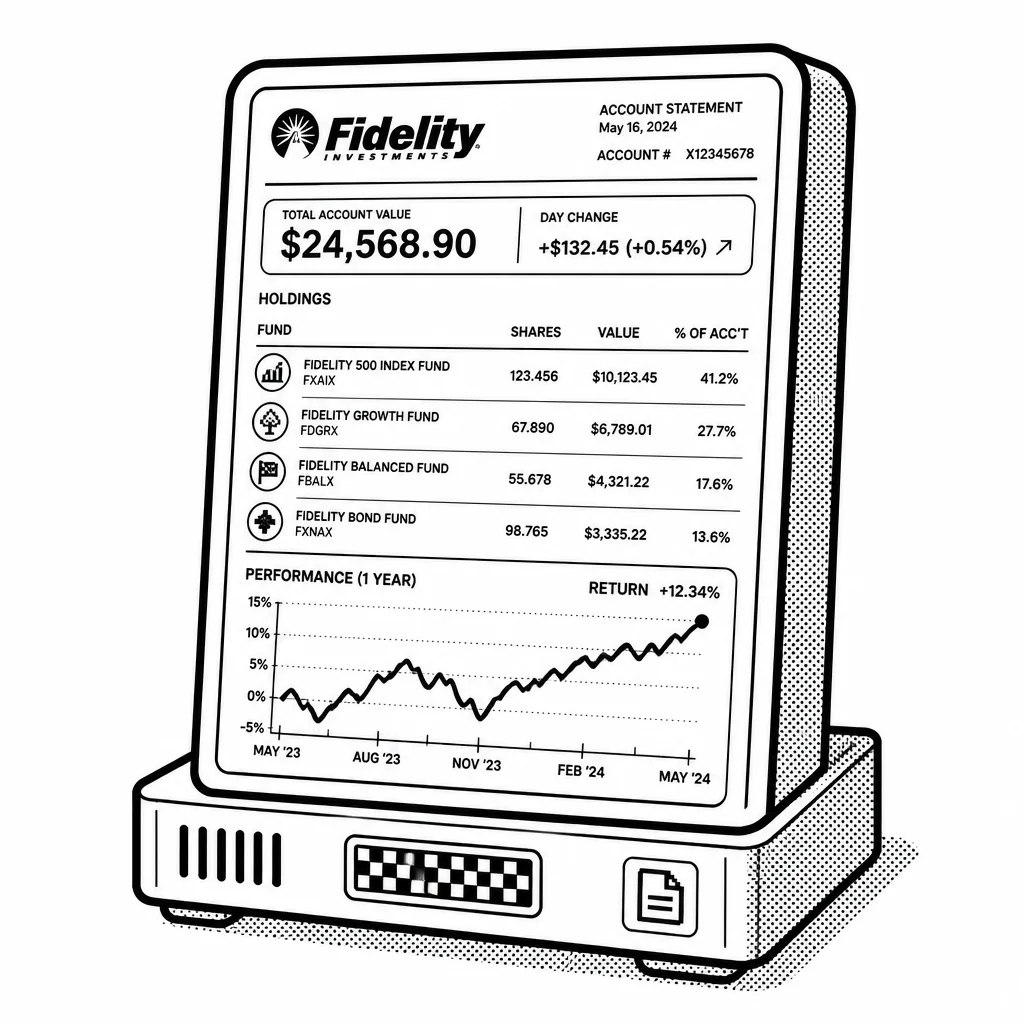
The core engine is simple. Fidelity takes money from savers, pools it into funds, and charges a small annual fee based on assets under management. It also earns money from trading commissions and from the cash sitting in customer accounts, which it can invest and earn interest on. That last piece has become a big deal: when interest rates rose in 2022 and 2023, Fidelity's revenue jumped because it was earning more on all that idle cash. The company is privately held, owned largely by the Johnson family and its employees, so it doesn't report earnings the way public firms do, but it is enormous — it manages trillions of dollars and serves tens of millions of customers. Fidelity's edge is scale and habit. It has been a household name in investing since the 1940s, it offers low-cost index funds that compete directly with Vanguard and BlackRock, and once your 401(k) lives there, switching is a hassle. That stickiness is the moat. The trade-off is that Fidelity faces pressure on fees — cheap index funds keep getting cheaper — so it leans harder on advice, wealth management for richer clients, and the cash it holds for customers.
It also spends heavily on technology and has pushed into new areas, but the boring truth is that its fortune mostly rises and falls with the stock market itself. When markets go up, the assets it manages swell and so do its fees. When markets fall, the opposite happens. That is the real vulnerability: Fidelity doesn't really control its own destiny so much as ride it.
Saved answer · last researched 4 Nov 2026
Timeline
Fidelity Management & Research Is Founded
Edward Johnson 2d had taken over the Fidelity Fund a few years earlier, and in 1946 he set up Fidelity Management & Research to be its only adviser. The company has stayed privately held ever since, built around one goal: making clients' financial lives better.
Selling Funds Over the Phone
For decades, buying a mutual fund meant going through a middleman. Fidelity cut him out by selling funds directly over a toll-free phone line, the first company to do it, and then let people write checks straight from their money market funds. Suddenly ordinary savers could reach their money without an office or a broker in the way.
Fidelity Moves Into Discount Brokerage
Not long after, Fidelity went further than funds: it began offering discount brokerage, letting customers trade on their own at low prices instead of paying a full-service broker.
Magellan Becomes the Flagship
Magellan grew into the largest equity fund in the world, and it became the engine of Fidelity's reputation as a serious stock picker.
Fidelity Bets on the 401(k)
Fidelity jumped into retirement planning by offering 401(k) products and services, turning workplace savings into a business of its own.
FundsNetwork Opens the Shelf
With FundsNetwork, Fidelity built an open platform where investors and financial institutions could buy both Fidelity and non-Fidelity funds. That meant letting customers choose rivals' products, a bold move that put client choice ahead of pushing only its own funds.
Abigail Johnson Takes the Top Job
Abigail Johnson became CEO in 2014 and chairman two years later, the third generation of the founding family to run the still-private company.
ZERO Funds and Digital Assets
Under Abigail Johnson, Fidelity launched ZERO Funds, which charge no expense at all, and also set up Fidelity Digital Assets to serve institutions interested in digital currencies.
Fidelity Crypto for Retail Investors
Fidelity Crypto then let ordinary investors trade cryptocurrency on a Fidelity platform, with the same institutional-grade custody the big players got.
Seven Trillion and Growing
By 2026, Fidelity managed $7.8 trillion and administered nearly $20 trillion in client assets, with more money steered toward alternatives like crypto since Abigail Johnson took over. Its retail managed household offering passed $1 trillion, and the firm kept expanding ETFs, showing just how far the phone-line fund seller had come.