Understand any stock in simple English
Enter a ticker to learn what the company does and how it makes money.
Médecins Sans Frontières USA, Inc. d/b/a Doctors Without Borders USA, Inc.
Doctors Without Borders is a medical humanitarian charity that sends doctors, nurses, and supplies to care for people caught in wars, disasters, and epidemics.
Doctors Without Borders is a medical emergency charity. When a war, earthquake, epidemic, or refugee crisis leaves people without basic health care, its teams of doctors, nurses, surgeons, and logistics experts fly in and start treating patients — often in places no one else will go. The group is part of the international Médecins Sans Frontières movement, and the US arm you're asking about is a fundraising and recruiting office based in New York that helps fund and staff that global work.
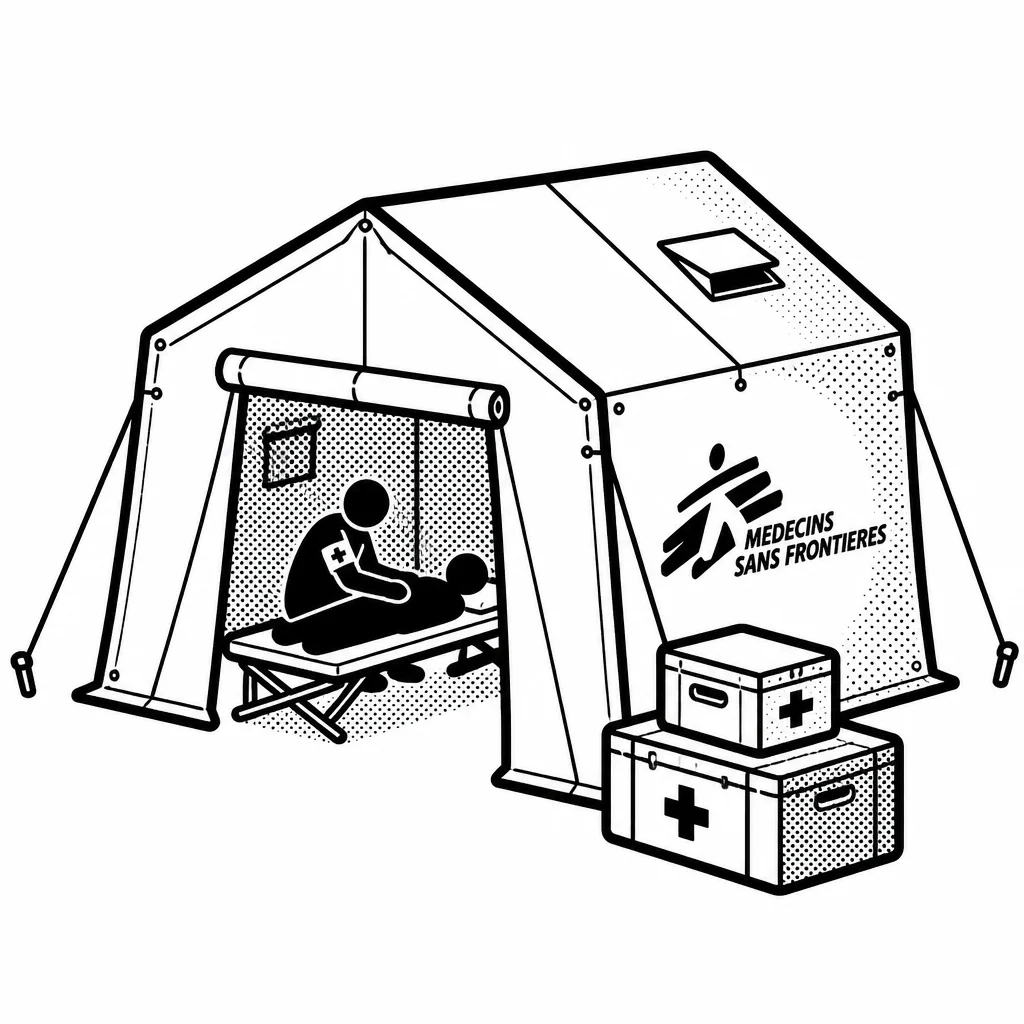
The money does not come from patients. It comes from ordinary donors, foundations, and institutional grants, and it is deliberately kept independent — the organization is famous for refusing to take funding that would force it to stay silent about what its teams witness. That independence is the whole point. In 1999 the international movement won the Nobel Peace Prize, in large part for showing that medical care and speaking out about the causes of suffering can go together. The operating model is a bit like a volunteer fire department for the world's worst places. Medical staff sign up for missions, get briefed and equipped, and deploy for months at a time to field hospitals, mobile clinics, and vaccination campaigns. Local staff are hired and trained on the ground, which is often the difference between a project that works and one that doesn't. Emergency response is the core, but teams also run longer programs for things like HIV, tuberculosis, and maternal care.
Running this is expensive and hard. Supply chains break, staff get kidnapped or killed, and hospitals get bombed — the organization has repeatedly documented attacks on medical facilities in conflict zones and pushed governments to protect them. Money raised goes overwhelmingly into field operations rather than buildings or endowments, which is why donors tend to trust it. In the US, the nonprofit files public financial reports, so anyone can check where the dollars land.
Saved answer · last researched 4 Nov 2026
BIG PICTURE
Doctors Without Borders USA spends 83.5 cents of every dollar on medical programs
- 83.5% Money spent on medical programs
- 16.5% Money spent on fundraising and administration
Of every dollar Doctors Without Borders USA spent in 2024, 83.5 cents went to medical programs. That matters because the group raises most of its money from private donors rather than governments, so each gift has to stretch further. Its fundraising costs were 14.9% of total expenses, far above the 1.9% median for similar charities. Source: donationx.org, data from 2024
Timeline
A Band of Doctors Forms
Young French doctors who volunteered in Biafra, Nigeria, saw civilians murdered and starved by blockading forces, and they criticized the Red Cross for going along with it. Raymond Borel and Philippe Bernier of the medical review Tonus called for a band of doctors ready for major disasters, and the Biafrans joined them. On December 22, 1971, Médecins Sans Frontières was officially created, built on a simple belief: all people have a right to medical care, no matter who they are or where they live, and needs should outweigh national boundaries.
The Guerilla Doctors Split
By the 1979 annual meeting, the founders faced a fight over what MSF should be: a loose band of guerilla doctors, or a more organized outfit. Most of the members voted to get organized, and Bernard Kouchner and his Biafran counterparts, who wanted to stay loose, left to start Médecins du Monde, or Doctors of the World. New leadership under Claude Malhuret and Rony Brauman then turned MSF into the professional organization it is today.
Fundraising by Mail
Malhuret and Rony Brauman started raising money by mail, which brought in more donations and, just as important, more financial independence for MSF.
MSF Opens a US Support Section
MSF-USA was set up as a support section, one of many such sections created in the early 1990s. Its job was to raise funds in the United States, recruit medical and other professionals, support medical-humanitarian projects, and speak up for populations at risk.
The Nobel Peace Prize
MSF won the 1999 Nobel Peace Prize for its members' continued efforts to provide medical care in acute crises and to raise international awareness of potential humanitarian disasters. James Orbinski, then president of the organization, accepted the prize on MSF's behalf.
A New Virus Goes Global
The year began with early warning signs of a mysterious new coronavirus spreading in Wuhan, China, and it soon reached New York City, where the US headquarters sits. The spread of COVID-19 triggered a global emergency response unlike anything MSF had faced before. With no proven treatment and no vaccine, teams focused on preparedness and on preventing and controlling infection.
A Change at the Top
At the end of September, Avril Benoît stepped down after six years at the helm of MSF USA, in line with the organization's custom of leadership turnover. Tirana Hassan, former executive director of Human Rights Watch, took over the role. Benoît had steered MSF USA through the COVID-19 pandemic, hiring shifts, and increasingly complex humanitarian crises, with unprecedented levels of fundraising during her tenure.