Understand any stock in simple English
Enter a ticker to learn what the company does and how it makes money.
CyberArk Software Ltd.
CyberArk sells software that protects companies' most powerful accounts and secrets from hackers.
CyberArk is an identity security company. Its core job is protecting the accounts that hold the keys to an organization's kingdom — the powerful "privileged" logins for administrators, servers, databases, and the systems that machines use to talk to each other.
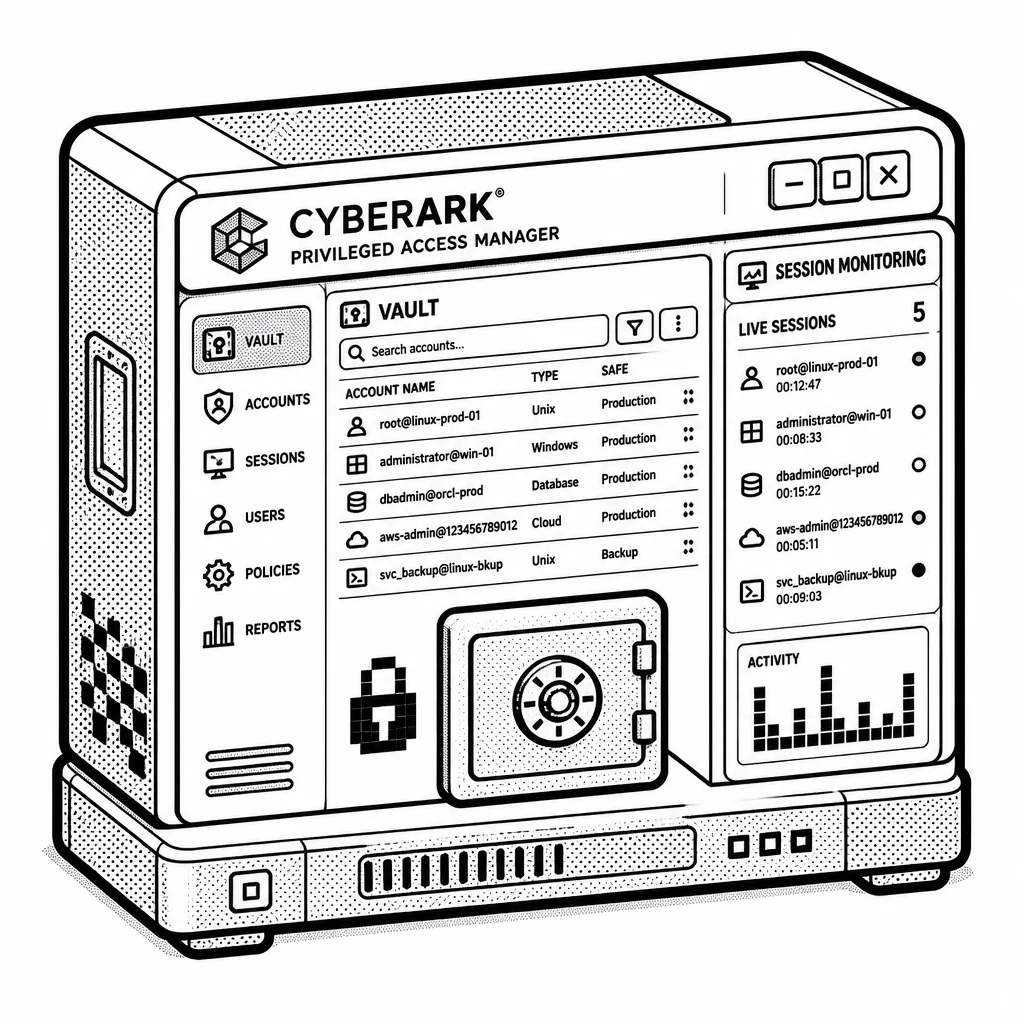
Here's the problem it solves. In most big companies, a small number of accounts have enormous power: they can change settings, move data, or switch off security. If a hacker steals one of those logins, they can quietly become the most powerful person in the building. CyberArk's software watches over these accounts, stores their passwords in a secure vault, requires extra checks before anyone uses them, and records what they do. It also manages "secrets" — the digital passwords that software programs use to identify themselves to each other — and uses AI to spot suspicious behavior. Customers choose it because buying a dedicated system built by specialists is safer than trying to protect the crown jewels with general-purpose tools. The company started in Israel in 1999 when a team of security experts saw how easily privileged accounts could be abused. It grew into a global business selling to large enterprises, government agencies, and banks, and it's a well-known name in the security world. In 2025, private-equity giant Palo Alto Networks's rival space was reshaped by a big move: CyberArk agreed to be acquired by Palo Alto Networks in a deal valued at roughly $25 billion, and its shares stopped trading as it became part of that company. So today CyberArk is a brand and product line inside Palo Alto Networks rather than an independent listed stock.
That deal tells you a lot about the business landscape. Palo Alto Networks, the cybersecurity giant, wanted CyberArk's identity expertise to round out its platform, and paying a premium was cheaper than building it from scratch. For investors, the lesson is that even strong, profitable security specialists can get folded into larger platforms when a bigger player decides identity is the next must-have battleground. Competitors in the space include Microsoft, which bundles identity protection into its cloud offerings, and other security vendors chasing the same customers.
Saved answer · last researched 15 Nov 2026