Understand any stock in simple English
Enter a ticker to learn what the company does and how it makes money.
Composio Inc.
Composio builds the plumbing that lets AI assistants actually use software tools, connecting them to apps like Gmail, Slack, and GitHub so they can take actions, not just talk.
Composio is a software company that sells the connector layer between artificial intelligence agents and the everyday apps people already use. An AI model on its own can write text, but it cannot send an email, create a calendar event, or open a pull request in GitHub. Composio's job is to close that gap: it gives developers a single set of tools so their AI agents can log into hundreds of apps and take real actions inside them.
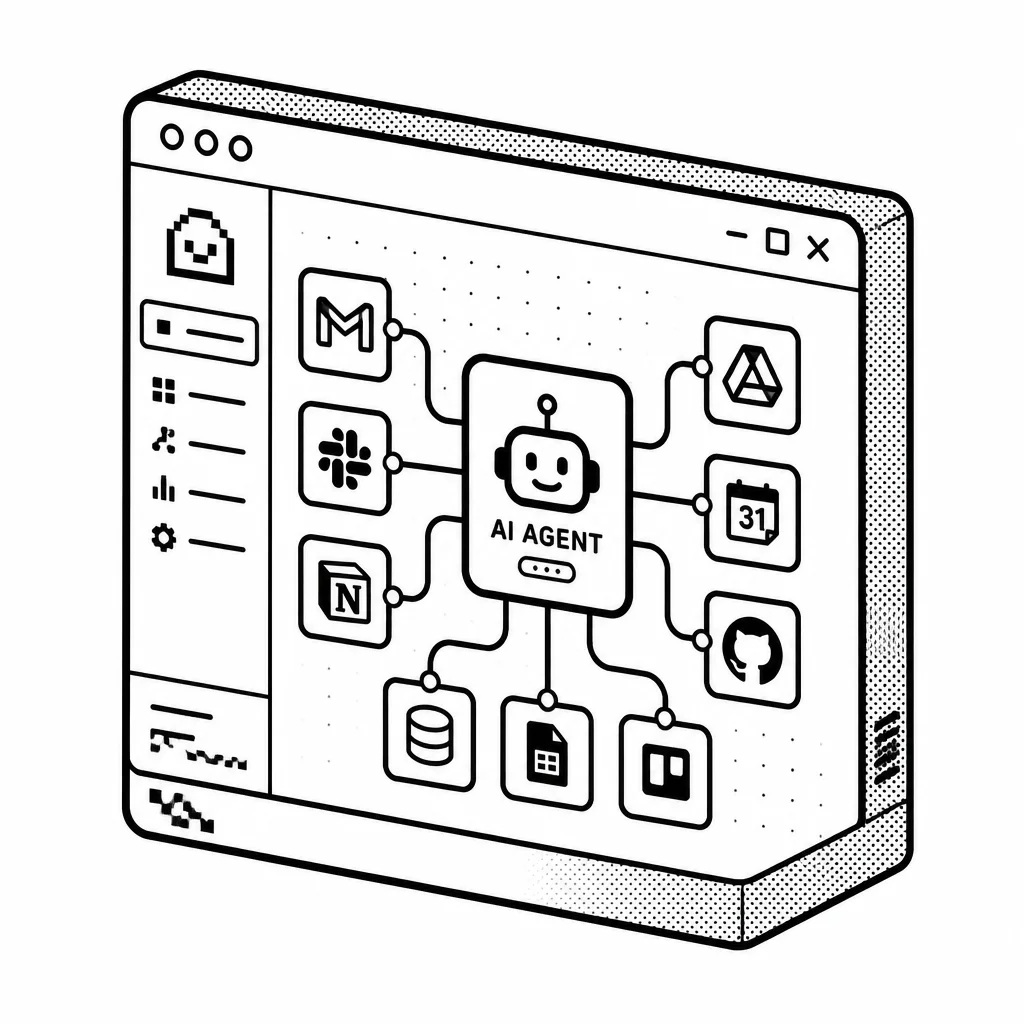
Normally, wiring an AI agent to one app is a small engineering project — dealing with login credentials, permissions, API quirks, and the endless ways a user's account can be set up. Doing that for a hundred apps is a nightmare. Composio handles the messy parts once, then sells that as a service. Developers plug in their agent, pick the apps they want it to touch, and Composio manages the authentication and the tool calls. Customers are mostly AI startups and engineering teams building agents, and they choose Composio because it saves months of grunt work rather than because it does anything they couldn't eventually build themselves.
The company is a young startup, and the market it sits in is crowded and moving fast. Rivals like Zapier and several well-funded agent-infrastructure startups are chasing the same idea, and the big AI labs keep adding their own tool-use features. That makes Composio's position both promising and precarious: if AI agents become the way most software gets used, a reliable connector layer becomes very valuable, but if the model makers absorb that job, the middleman gets squeezed. Composio has raised venture funding to grow, and its bet is essentially that connecting to hundreds of apps reliably is a durable, unglamorous business worth paying for.
Saved answer · last researched 9 Nov 2026
BIG PICTURE
One breach exposed just 0.3% of Composio's connections, yet forced every customer to reset keys
- 0.3% Active connections leaked in May 2026 breach
- 99.7% Connections not leaked
In May 2026, an attacker got into Composio's internal systems and reached about 0.3% of its active connections, including 5,001 GitHub accounts. The company then deleted every API key created before that night, so all customers had to make new ones. Composio makes money by holding the keys that let AI agents act inside Gmail, Slack and GitHub. Small leak or not, that trust is the product. Source: Okara, data from 2026
Timeline
Composio Starts With a Simple Frustration
At his last startup, Soham Ganatra watched his engineers burn nearly half their time just connecting software systems together — boring plumbing work that every company had to redo. Then code-generation models got good enough to make him think the problem was finally solvable, so he co-founded Composio with Karan Vaidya. Their idea: a developer-first platform that connects AI agents to outside apps and handles the messy parts, like logging in and setting up tools.
A Reddit Post Brings the First Users
Composio's first users showed up after a viral Reddit post about making AI tools call the right functions more accurately, plus some outreach in AI developer communities. Even with only ten integrations live, Ganatra ran 10 to 20 customer calls a day to turn that traffic into real product insight. It gave the young company steady feedback and its first base of developers.
Traffic Without Users, Then a Turning Point
For a while, Composio had visitors but few active users, because AI models simply weren't good enough to run agents that did real work. Growth only began in the second half of 2024, when model quality finally caught up and working production agents became possible. Another wave hit in early 2025 when a new standard called MCP set off a wave of developer excitement, and Composio made its platform compatible.
A $25M Series A From Lightspeed
With over 100,000 developers and more than 200 startups and enterprises using the platform, including Glean, Composio raised a $25M Series A led by Lightspeed Venture Partners, bringing total funding to $29M. The money was meant to build a learning layer so agents could improve from experience instead of staying frozen.
The Universal MCP Gateway
Composio launched a Universal MCP Gateway, a way for companies to give agents safe access to tools, with 1,000+ managed app integrations. It positioned the company as the layer enterprises use to deploy agent tool access with governance and security controls.
A Skill Layer for Learning Agents
Composio added a skill layer on top of its integration platform so agents learn from their tool interactions and share corrections with each other. The platform passed 200,000 developers and 100 million tool calls a month. Ganatra was blunt that the company is not profitable and doesn't plan to prioritize profit, preferring to pour money back into the product.
A Breach Forces a Hard Reset
Then came a serious test: an attacker got into Composio's internal systems and compromised customer credentials, including thousands of GitHub connections and API keys. The company deleted every API key created before the incident, forcing all customers to make new ones, and rebuilt its tool-building service. The leaked connections were only about 0.3% of active ones, but the company admitted its follow-up communication was too quiet.
Composio For You Goes Beyond Developers
Composio widened its reach beyond developers with Composio For You, which connects everyday assistants like Claude, ChatGPT and Cursor to more than 1,500 apps without any code. It also launched a Universal CLI and let agents sign themselves up for Composio. The logic was simple: coding agents already live inside developer tools, and Composio wanted to be the layer those agents act through.
Composio Instant Lets Agents Pay
In October 2026, Composio launched Composio Instant, letting agents get and pay for the tools they need on their own. More than $1M was loaded into agent wallets so they could start spending that same month. It pushed the platform past tool access into agents transacting for their own tools.