Understand any stock in simple English
Enter a ticker to learn what the company does and how it makes money.
CirrusMD Inc.
CirrusMD provides virtual care software and physician-first telehealth services to employers and health plans.
CirrusMD is a telehealth company that gives people a doctor in their pocket — but not the kind you book an appointment with two weeks out. It sells virtual care to employers and health plans, who then offer it to their workers and members as a benefit. The pitch is simple: when you feel sick or worried at 2 a.m., you open the app, tap a button, and within minutes you're texting or video-chatting with a real physician. No scheduling, no waiting room, no bill at the end.
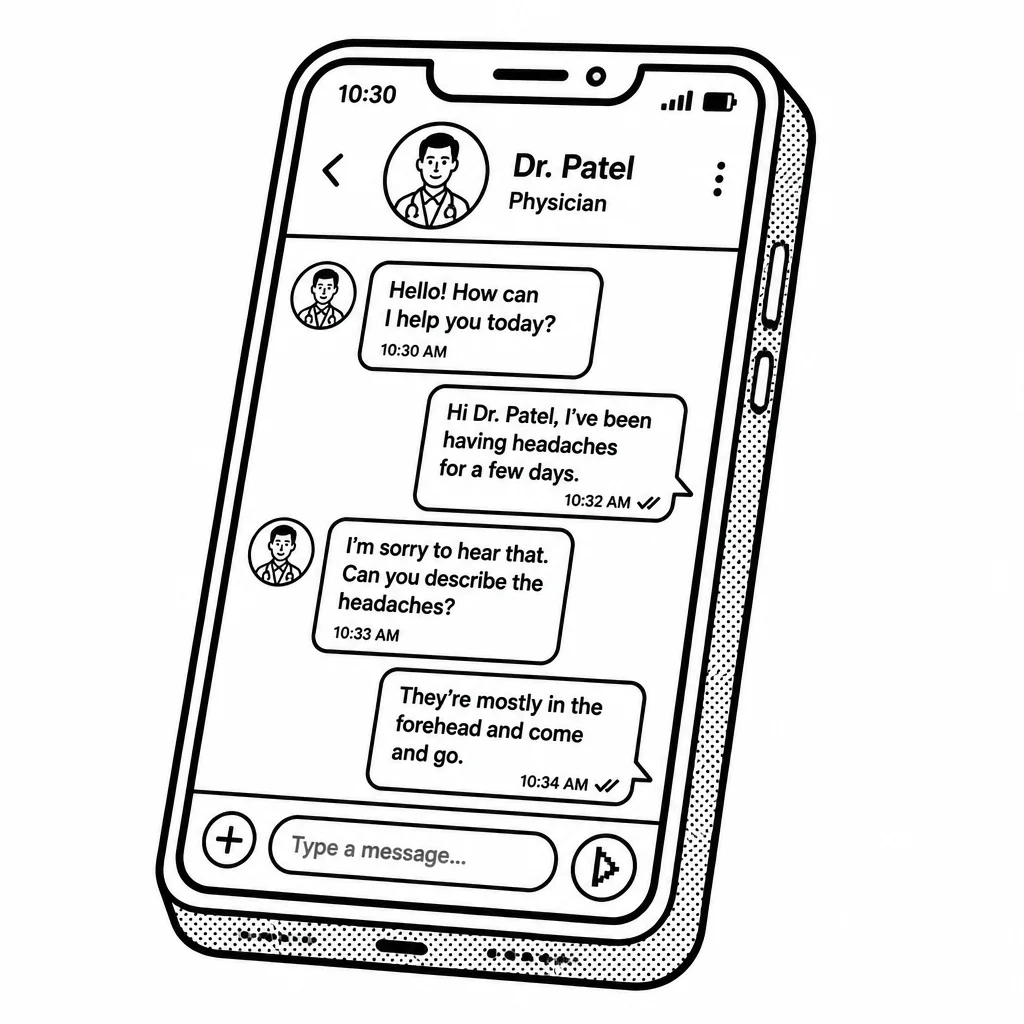
The "physician-first" part is the company's main selling point. Instead of routing people through chatbots or nurse triage lines that hand off to a doctor only when things get serious, CirrusMD connects patients directly with licensed doctors, who can diagnose, treat, and prescribe. That matters because the whole promise of telehealth falls apart if the experience feels like a maze. CirrusMD's doctors can handle the everyday stuff — sinus infections, rashes, mental health check-ins, prescription refills — and the company also wraps in software that lets employers and health plans plug the service into their own systems and track how it's being used. The people who pay are not the patients; they're the organizations. Employers buy it as a perk that keeps staff healthy and out of urgent care, and health plans buy it to give members faster access without the cost of a clinic visit. The economics make sense for both: a quick virtual visit is far cheaper than an emergency room trip, and catching a problem early is cheaper still. CirrusMD makes money on those contracts, typically priced per member per month.
CirrusMD competes in a crowded field of virtual care players — from giant telehealth platforms to the nurse lines that insurers already run. Its bet is that a real doctor, reachable in minutes, is a better product than a chatbot or a scheduled video call. The company is privately held and headquartered in Denver, Colorado, and it has spent years building out its network of physicians and its integrations with health plans, which are hard to replicate quickly. The risk is familiar to any health-tech company: selling into big employers and insurers is slow, and the market is getting noisier. But the core idea — make seeing a doctor as easy as sending a text — is easy to understand and easy to want.
Saved answer · last researched 14 Nov 2026
BIG PICTURE
CirrusMD says its patients report 93% to 96% satisfaction with chat-first doctor visits
- 93% Patients satisfied with CirrusMD care
- 7% Patients not counted as satisfied
Case studies cited for CirrusMD put patient satisfaction at 93% to 96%, far above what typical telehealth options report. That matters because employers and health plans pay a monthly fee for every covered person, then an extra charge each time someone opens a seven-day episode of unlimited doctor chats. Happy members come back and tell coworkers, which is how the benefit earns its keep. Source: rfp.wiki, data from 2026