Understand any stock in simple English
Enter a ticker to learn what the company does and how it makes money.
Cafe Bazaar (Bazaar)
Cafe Bazaar runs the biggest Iranian app store and a family of local services, letting people download Android apps and pay for things online without needing a foreign credit card.
Cafe Bazaar is Iran's homegrown answer to the Google Play Store. It's an Android app store where Iranians download games, social apps, and everyday tools, and where local developers publish and sell their work. The key reason it exists at all is that foreign payment systems and many foreign app stores are closed off to Iran, so a local store with local billing fills a hole that would otherwise be empty.
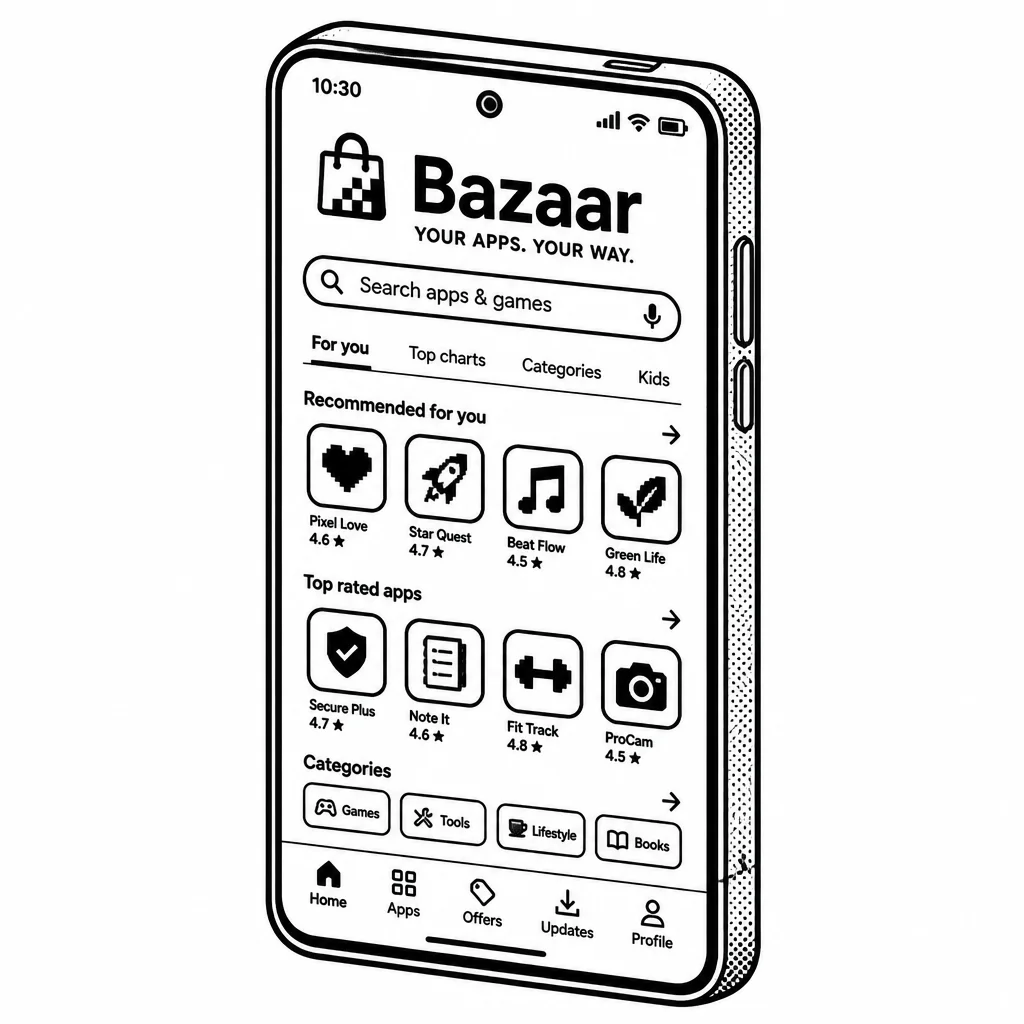
The company makes money mainly by taking a cut of what people spend inside the apps it distributes, plus payments it processes through its wallet. That wallet matters more than it sounds: because international card networks like Visa and Mastercard don't operate in Iran, Cafe Bazaar built its own way for people to top up and pay for digital goods, and that payment rail became a business in itself. It has also stretched into adjacent services, including a ride-hailing and delivery app, which keeps users inside its ecosystem beyond just downloading software. Its position is strong in the way a toll bridge is strong: it sits between a huge base of Iranian Android users and the local developers who need to reach them, and that two-sided grip is genuinely hard to dislodge. But the same forces that created it also cage it. Sanctions, restrictions on foreign app stores, and heavy government involvement in Iran's internet all shape what Cafe Bazaar can offer, and outages or policy shifts can hit usage directly. Its growth story is tied less to winning a global market than to how healthy and open Iran's domestic digital economy stays.
For a curious outsider, the simplest way to see Cafe Bazaar is as the plumbing of Iran's mobile internet: the place apps get discovered, the wallet that pays for them, and increasingly a gateway to services like rides and deliveries. It's a real, scaled business built on an unusual set of constraints, and those constraints are both its moat and its ceiling.
Saved answer · last researched 10 Nov 2026