Understand any stock in simple English
Enter a ticker to learn what the company does and how it makes money.
Amperity, Inc.
Amperity sells software that helps consumer brands pull together scattered customer data and use it to understand and reach their shoppers.
Amperity is a software company that helps big consumer brands figure out who their customers actually are. Most large companies have customer information scattered everywhere — in email lists, loyalty programs, online orders, store systems, and old databases. Amperity's platform pulls all of that messy data into one place, cleans it up, and uses AI to match records that belong to the same person, so a brand can see one clear picture of each shopper instead of a dozen conflicting ones.
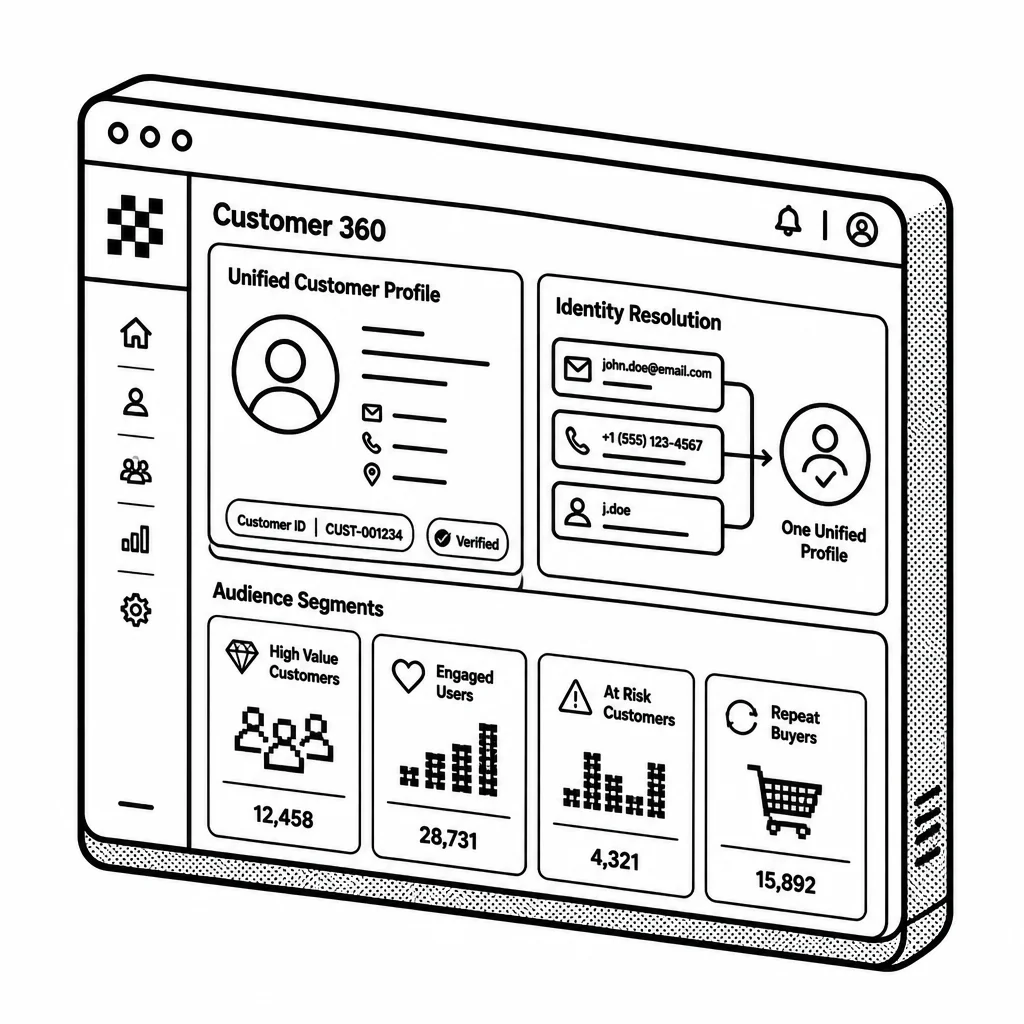
Its customers are the kinds of brands you'd recognize: retailers, airlines, hotels, restaurant chains, and other consumer businesses with millions of customers and years of tangled data. They pay Amperity a subscription fee, typically based on the size of their data and how much they use the platform. The pitch is simple: better data means better marketing, less wasted spending, and a clearer view of which customers are worth keeping. The company was founded in Seattle in 2016 by a team that had built a previous data business and sold it. Amperity has raised hundreds of millions in venture funding and reached a valuation over $1 billion, making it a so-called unicorn. It competes with parts of larger software suites like Salesforce and Adobe, as well as with a crowded field of customer data platform rivals, so its edge has to come from doing the messy identity-matching job better and faster than the alternatives.
Amperity is private, so it doesn't report public earnings, and its investors are betting that as brands drown in customer data, the company that makes sense of the mess becomes increasingly hard to replace. The risk is familiar for enterprise software: big incumbents can bundle similar features into tools customers already own, and growth depends on landing large brands and keeping them happy for years.
Saved answer · last researched 14 Nov 2026
BIG PICTURE
Only 23% of shoppers go straight to brands they know without checking AI advice
- 23% Go directly to known brands without AI recommendations
- 77% Consider AI recommendations before choosing a brand
Amperity sells software that helps brands gather scattered customer data and act on it. Its own survey of 1,000 U.S. consumers found that just 23% head straight to brands they already know without weighing AI suggestions. That leaves most shoppers open to being steered elsewhere, which makes clean, usable customer data the thing brands need to stay in the conversation. Source: The 2026 Consumer Priorities Report: The New Rules of Loyalty in the Age of AI (Amperity), data from 2026
Timeline
Two Founders Bet on Messy Data
Kabir Shahani and Derek Slager kept running into the same wall while building marketing software: brands were drowning in messy customer data, and cleaning it by hand ate up enormous effort. So they went to University of Washington data expert Dan Suciu and bet on a new approach—using machine learning to match records probabilistically, so raw data could come in without being cleaned or lined up first. After nearly two years in stealth, Amperity came out of hiding with its Intelligent Customer Data Platform.
Amperity Becomes a Unicorn
The quiet bet on messy data turned out to be a big business. A $100 million funding round led by HighSage Ventures valued Amperity at about a billion dollars, making it a unicorn.
Shahani Steps Down as CEO
Just months after that high point, Shahani abruptly left as CEO and the board, saying he was going voluntarily for personal reasons. The company handed the reins to Barry Padgett, a veteran of Concur and Stripe, to lead its next growth phase. Later reporting said an internal investigation had found Shahani violated company policies.
Amperity Cuts Staff Again
The economy turned, and Amperity laid off a tenth of its workforce—its second round of cuts in six months. Padgett insisted there were still tailwinds: stricter data-privacy rules and the slow death of third-party cookies were pushing brands toward exactly what Amperity sells.
Owens Takes the Top Job
To lead its next phase, Amperity brought in former Salesforce executive Tony Alika Owens as CEO, replacing Padgett, who had run the company since 2022.
The Founders Come Back
Owens departed in what the company called a planned mutual transition, and the original founders returned as co-CEOs. Their pitch: the rise of AI is a huge opportunity, because Amperity's customer data foundation is what the AI era runs on.
Amperity Launches Pér
With the founders back, Amperity launched Pér, an AI-powered digital teammate that turns customer data into recommended actions for marketers and analysts. The AI push is the company's bid to reinvent customer engagement as an AI-first business.