Understand any stock in simple English
Enter a ticker to learn what the company does and how it makes money.
Allan Gray Proprietary Limited
Allan Gray is a South African investment manager that runs mutual funds and manages money for individual savers and institutions.
Allan Gray is an investment manager. It takes money from ordinary South Africans saving for retirement, from wealthy families, and from big institutions like pension funds, and it invests that money in shares, bonds, and other assets. Its best-known products are unit trusts — pooled funds that anyone can buy into — sold through its own call centre and branches rather than through outside brokers. It also runs a retirement-fund administration business, selling the back-office plumbing that pension funds need to keep track of members and payouts.
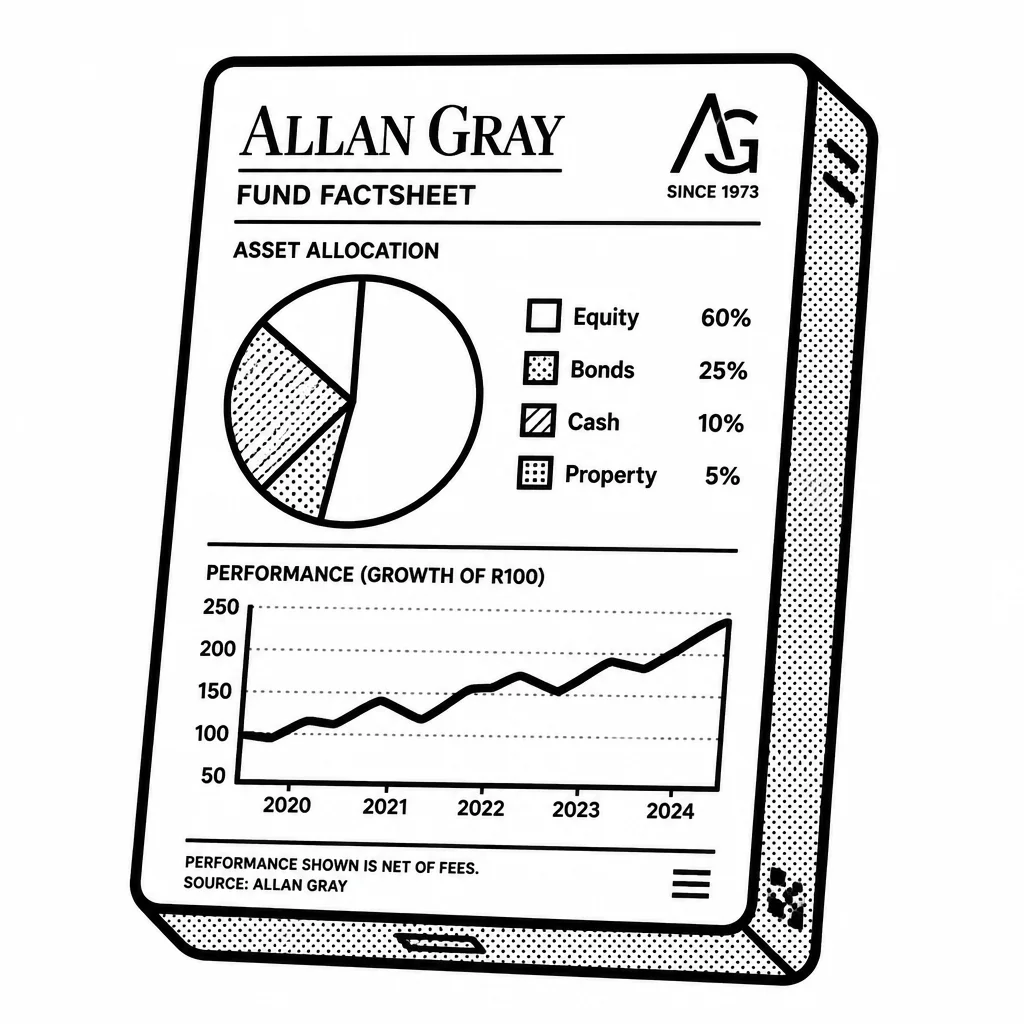
The firm is famous in South Africa for a single, stubborn investing style: it buys shares it thinks are cheap relative to what the business is actually worth, waits patiently, and refuses to chase whatever is fashionable. That patience is baked into its culture. The founder, Allan W. B. Gray, was a deep-value investor in the Benjamin Graham mould, and the company still leans on long holding periods and careful, contrarian stock picking. Customers choose it because of that track record and because the brand is trusted — in South Africa it is close to a household name among savers. It earns money mostly by charging a fee based on how much money it manages, plus performance fees on some funds when it beats a benchmark. That means its revenue rises and falls with the markets and with whether savers keep giving it money. The business is private, owned by the founding family and current and former employees, and headquartered in Cape Town. It is regulated by South Africa's Financial Sector Conduct Authority, and it has expanded over the years into Namibia and Botswana and into offshore funds for South Africans who want to invest abroad.
The awkward truth about the business is that recent performance has been rough. For much of the 2010s its value style badly lagged a global market dominated by expensive growth stocks like Microsoft and Amazon, and clients pulled money out. South Africa's own weak economy and a stagnant JSE haven't helped. Its main local rivals include Sanlam-owned managers and other South African asset managers, and it competes globally for the offshore rand. How well it does now depends on whether its value bets pay off and whether it can win back the confidence of savers who got tired of waiting.
Saved answer · last researched 10 Nov 2026