Understand any stock in simple English
Enter a ticker to learn what the company does and how it makes money.
Adverum Biotechnologies, Inc.
Adverum Biotechnologies develops gene therapies for serious eye diseases, including wet age-related macular degeneration.
Adverum Biotechnologies is a gene-therapy company that is trying to change how people with serious eye diseases get treated. Its main bet is a single, one-time injection into the eye that would replace the frequent shots patients with wet age-related macular degeneration (wet AMD) currently need. Wet AMD is a leading cause of vision loss in older adults, and the standard drugs — sold by companies like Regeneron and Roche — must be injected into the eye every month or two, indefinitely.
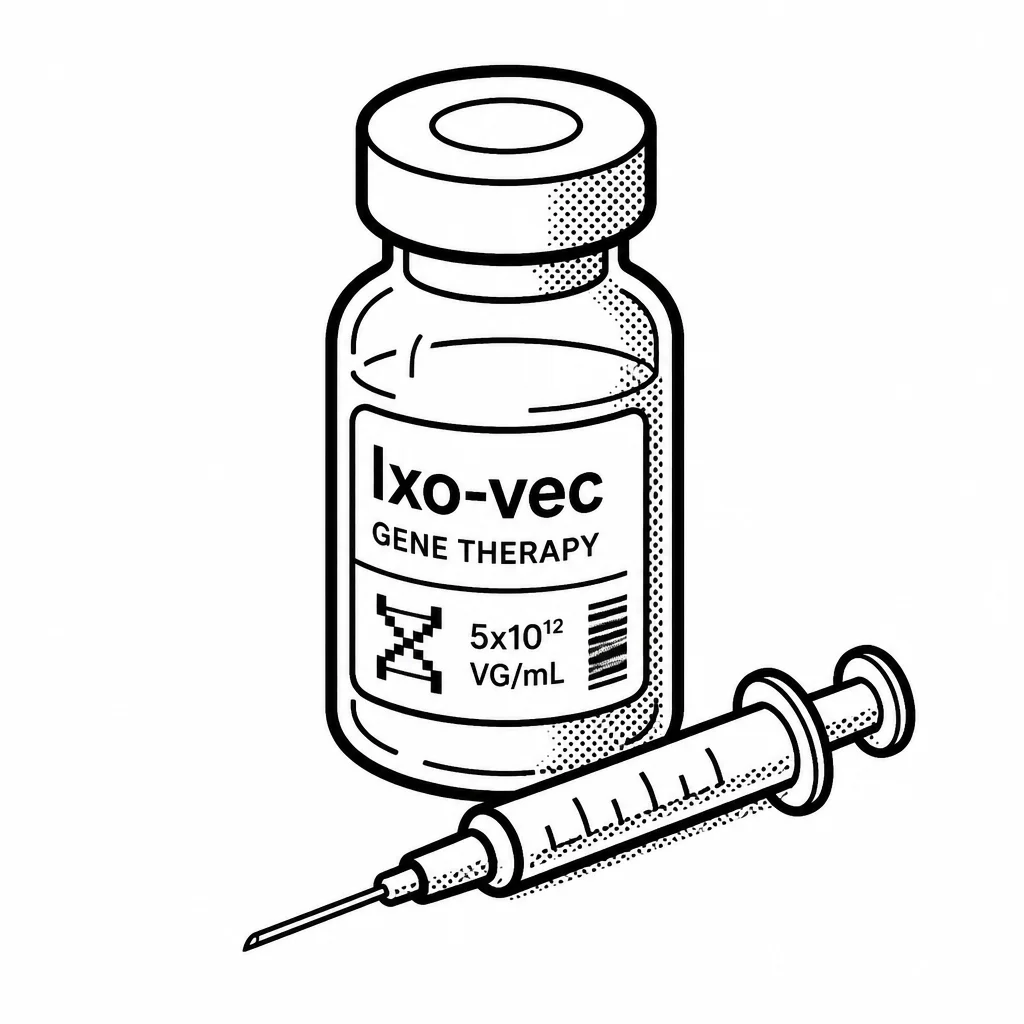
The science works like this: instead of injecting a drug that wears off, Adverum uses a harmless virus to deliver a gene into the eye's cells, turning those cells into tiny factories that keep making a protective protein on their own. If it works, patients could go much longer between treatments, or perhaps avoid repeat shots altogether. The company's lead candidate, ixoberogene soroparvovec (Ixo-vec), is in clinical testing for wet AMD, and the company has also explored gene therapies for rare eye diseases. The company is not currently a listed stock; its shares no longer trade publicly, and it has moved under private ownership. That makes it a high-risk, high-reward research outfit: the entire value hinges on whether its one-time eye injection proves safe and effective in trials, and whether regulators eventually approve it. Gene therapy is expensive to develop, and the field has had safety scares, so clinical results matter enormously.
For a sense of scale, Adverum has historically been a small company burning cash on research rather than earning revenue from products. Its story is a reminder that cutting-edge biotech is a bet on science, not on current sales: investors and owners are paying today for a treatment that might only reach patients years from now — or might not work at all.
Saved answer · last researched 16 Nov 2026