Understand any stock in simple English
Enter a ticker to learn what the company does and how it makes money.
The York Water Company
York Water collects water from rivers, cleans it, and pipes it to homes and businesses in Pennsylvania, charging them for every gallon they use.
York Water is a water utility. It takes water from rivers and streams, cleans it until it is safe to drink, and pushes it through thousands of miles of underground pipes to homes, businesses, and factories in south-central Pennsylvania. Most of its customers have no choice in the matter: when you turn on the tap, the water comes from whoever owns the pipes, and in York's territory that is York Water.
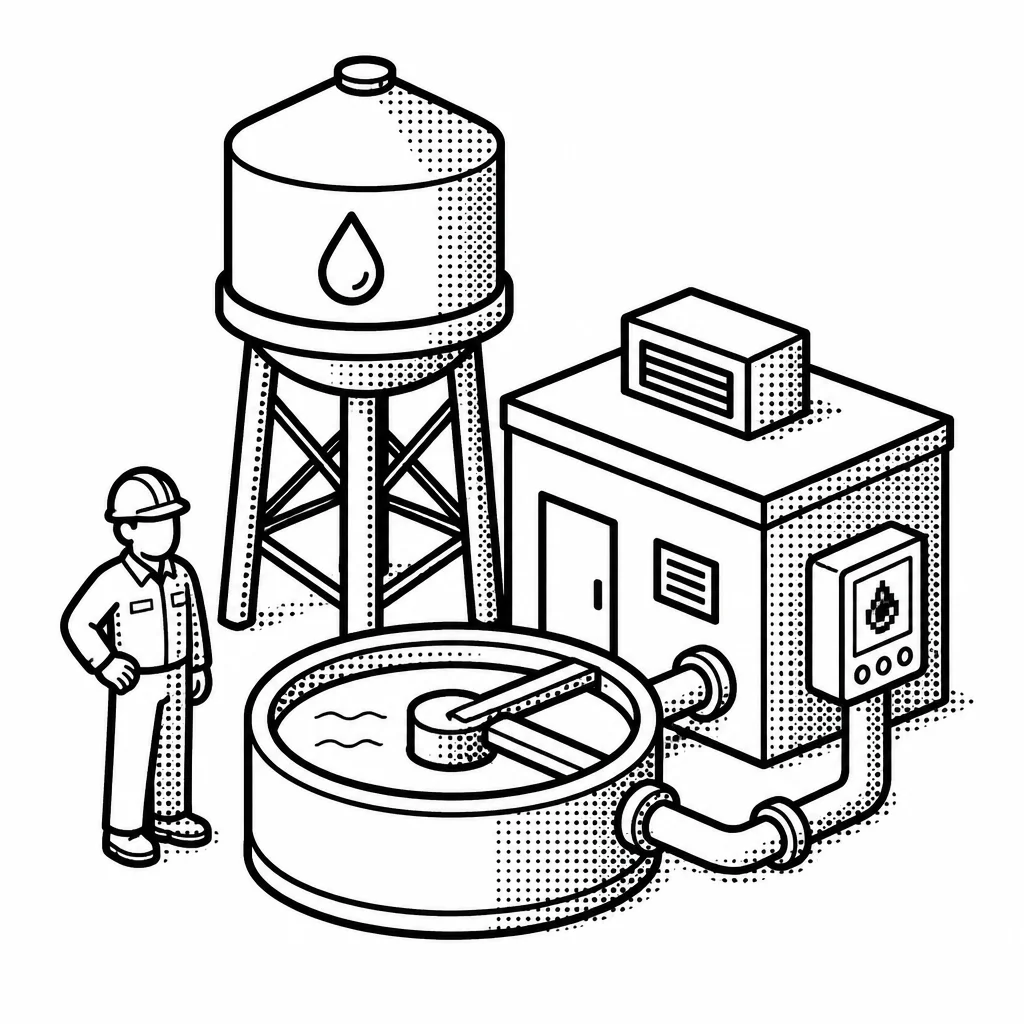
The business model is about as simple as it gets. The company spends money building and maintaining treatment plants and pipe networks, then bills customers monthly based on how much water they use. It has operated for more than two centuries — it was founded in 1816, making it one of the oldest publicly traded companies in America — and it holds long-term agreements with the municipalities it serves, which gives it a stable, predictable customer base. Regulators set the rates it can charge, so its profits depend on keeping costs low and spreading its fixed expenses across as many customers as possible. What makes York Water unusual is how dependable the business is. People need water every single day, rain or shine, boom or bust. That steady cash flow allows the company to do something rare for a small utility: it has paid a dividend without interruption since 1816 and has raised that dividend for over two decades straight. It also grows by acquiring smaller water systems nearby, expanding its pipe network one town at a time rather than trying to be a national giant.
York Water's strength is its scarcity — there are only so many water utilities, and each one controls its own local pipes. Its weakness is the flip side of that stability: growth is slow and mostly local, profits are capped by regulators, and big storms or environmental problems with its rivers can create expensive cleanup bills. It is not a business that will double in a year, but it is one that keeps collecting water bills while most other companies are worrying about the economy.
Saved answer · last researched 16 Nov 2026