Understand any stock in simple English
Enter a ticker to learn what the company does and how it makes money.
State Street Communication Services Select Sector SPDR ETF
It is an exchange-traded fund that holds a basket of large US communication services stocks, letting investors buy that whole slice of the market in one trade.
This is a fund, not a company that makes or sells things. It owns a basket of stocks chosen to represent the communication services part of the S&P 500 — the big American firms in telecom, media, entertainment, and social media. When you buy a share, you are buying a tiny slice of all of those businesses at once, rather than picking one stock.
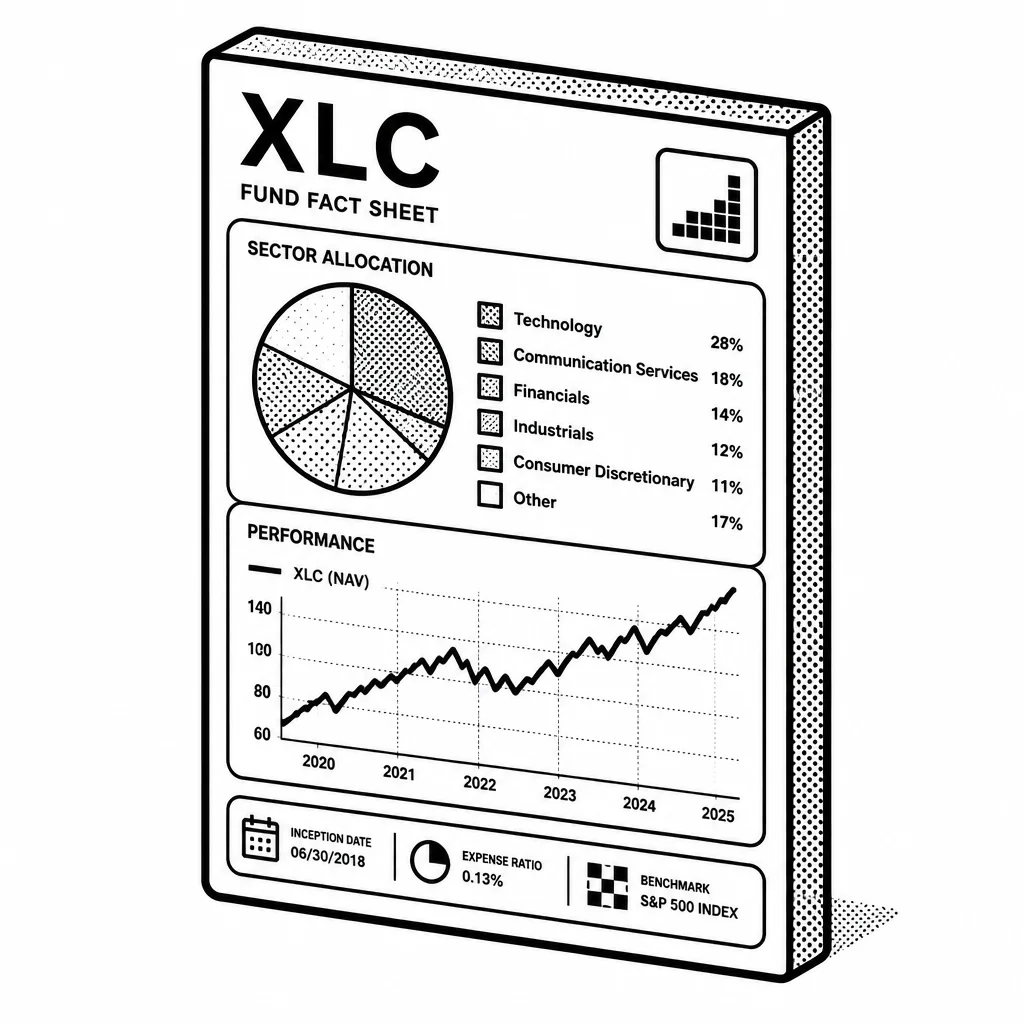
The fund is one of the "Select Sector" SPDRs, a family of ETFs that chop the S&P 500 into its eleven industry pieces. Each one tracks a matching index, so this fund simply holds the communication services names and rebalances when the index does. Investors use it to get broad exposure to the sector, or to tilt a portfolio toward media and telecom without researching individual names. It trades on an exchange all day like a stock, which is the main appeal of the ETF structure over a traditional mutual fund. The money works like this: the fund collects an annual fee, a small slice of assets, and that is the main way the issuer earns. The investor's return comes from the stocks themselves — their price changes and any dividends they pay. Because the fund is passive, there is no star manager making bets; the holdings are the index, full stop.
One thing worth knowing is how lumpy this sector is. A handful of giant names dominate the index, so the fund's fate is tied closely to a few platforms and media empires rather than spread evenly. That means owning it is a concentrated bet dressed up as diversification. It is a cheap, simple way to own that bet — but it is still a bet on a narrow group of very large companies.
Saved answer · last researched 16 Nov 2026