Understand any stock in simple English
Enter a ticker to learn what the company does and how it makes money.
Worthington Steel, Inc.
Worthington Steel processes flat-rolled steel into specialized shapes and coated products for automakers, builders, farmers, and industrial manufacturers.
Worthington Steel is a steel processor, not a steelmaker. It buys huge coils of flat-rolled steel from mills, then cuts, slits, stamps, coats, and shapes that steel into the specific pieces its customers need. The company serves automakers, construction firms, agricultural equipment makers, energy companies, and general industrial manufacturers.
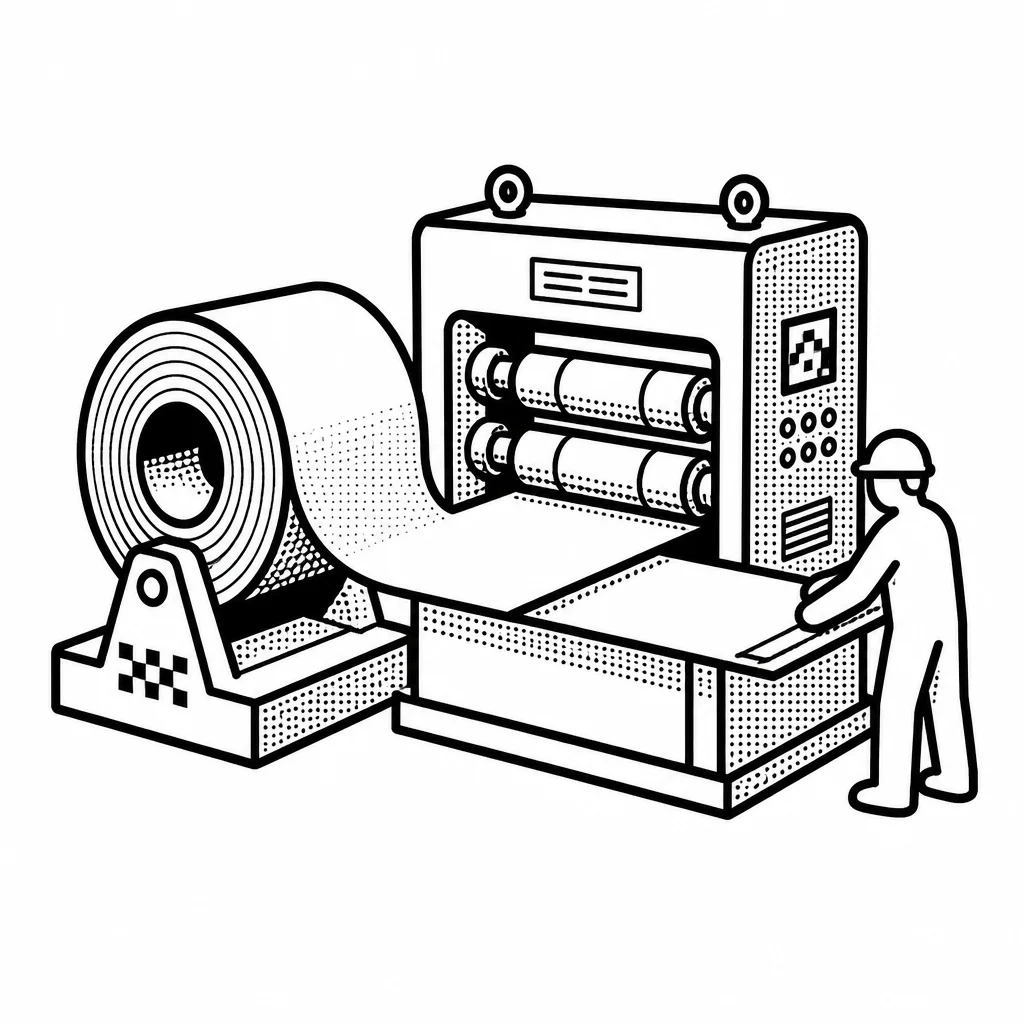
The business runs through a few main channels. Steel processing is the core: taking a master coil and turning it into blanks, slit strips, or stamped parts that fit directly into a customer's production line. The company also makes electrical steel laminations — thin, precisely cut layers used in motors, transformers, and EV drivetrains — through its Tempel business. And it produces coated and painted steel products for building panels and appliances. Customers choose Worthington because they don't want to buy a 20-ton coil and figure out how to cut it themselves. They want the right piece, at the right time, with the right properties, delivered to their factory. Worthington sits in the middle of the steel supply chain, adding precision and logistics rather than making the metal itself. That means its profits depend on processing spreads — the gap between what it pays for steel and what customers pay for finished pieces — and on keeping its plants running efficiently.
The company was spun off from Worthington Enterprises in December 2023, so it has a short history as a standalone public company. It is headquartered in Columbus, Ohio. Its main risk is cyclicality: when auto production slows or construction weakens, demand for processed steel falls quickly. Its main strength is deep customer relationships and the difficulty of switching processors once a part is designed into a production line.
Saved answer · last researched 16 Nov 2026