Understand any stock in simple English
Enter a ticker to learn what the company does and how it makes money.
World Acceptance Corporation
World Finance makes small installment loans to people who can't easily get credit from regular banks.
World Finance is a lender for people who need a few hundred to a few thousand dollars and can't walk into a normal bank and get it. Its customers often have spotty credit, no credit history, or an urgent bill to pay. The company writes small installment loans — money borrowed and paid back in fixed monthly chunks over a year or two — and offers related credit products. It operates through a large network of neighborhood branches, mostly in small and mid-sized towns across the southern and central United States, where customers can sit across a desk from a real person rather than apply through an app.
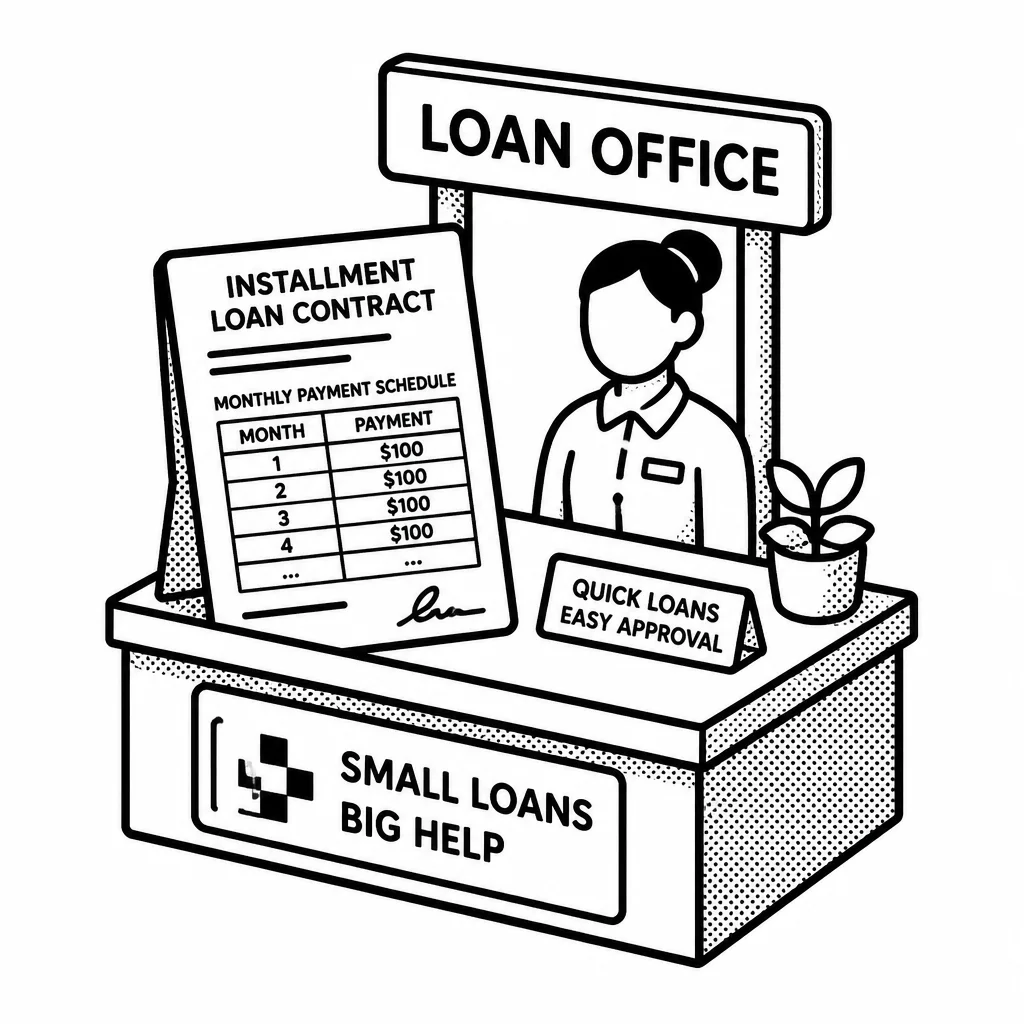
The money works like this: World Finance borrows money cheaply from banks and investors, lends it out at much higher interest rates, and keeps the spread. Because its customers are riskier, those rates are high — often well above what a mainstream bank would charge — which is the core of both the business and the controversy around it. Customers pay for speed, convenience, and a willingness to say yes when others say no. The trade-off is real: consumer advocates argue these loans can trap people in expensive debt, and the industry faces ongoing regulatory scrutiny, including federal rules over how lenders judge a borrower's ability to repay. The business lives and dies on tight branch-level math. Defaults are a normal cost of doing business, so the company must price loans high enough to cover losses, salaries, rent, and still leave a profit. That makes it sensitive to the economy: when gas and groceries get expensive, its customers feel it first, and missed payments tick up. World Finance runs hundreds of branches and has spent years buying back its own shares, a sign management sees the stock as cheap; the company has repurchased a large slice of its outstanding shares over the past decade.
It's a business that exists in the gap between what banks will do and what people need. That gap is durable — millions of Americans lack easy access to mainstream credit — but it's also a political lightning rod, so rule changes in Washington can move the stock sharply. The company makes money the old-fashioned way: hand out loans at a branch, collect payments every month, and manage the losses carefully.
Saved answer · last researched 15 Nov 2026