Understand any stock in simple English
Enter a ticker to learn what the company does and how it makes money.
W. P. Carey Inc.
W. P. Carey owns industrial, warehouse, and retail buildings and leases them to companies, mostly in the U.S. and Europe, collecting rent under long-term contracts.
W. P. Carey is a real estate investment trust, or REIT, which is a company that owns buildings and pays out most of its rental profits to shareholders. Its business is simple to describe: it buys properties — warehouses, factories, distribution centers, and some retail stores — and signs long leases with the companies that occupy them. The tenant runs its business inside the building and sends W. P. Carey a rent check every month, usually for many years.
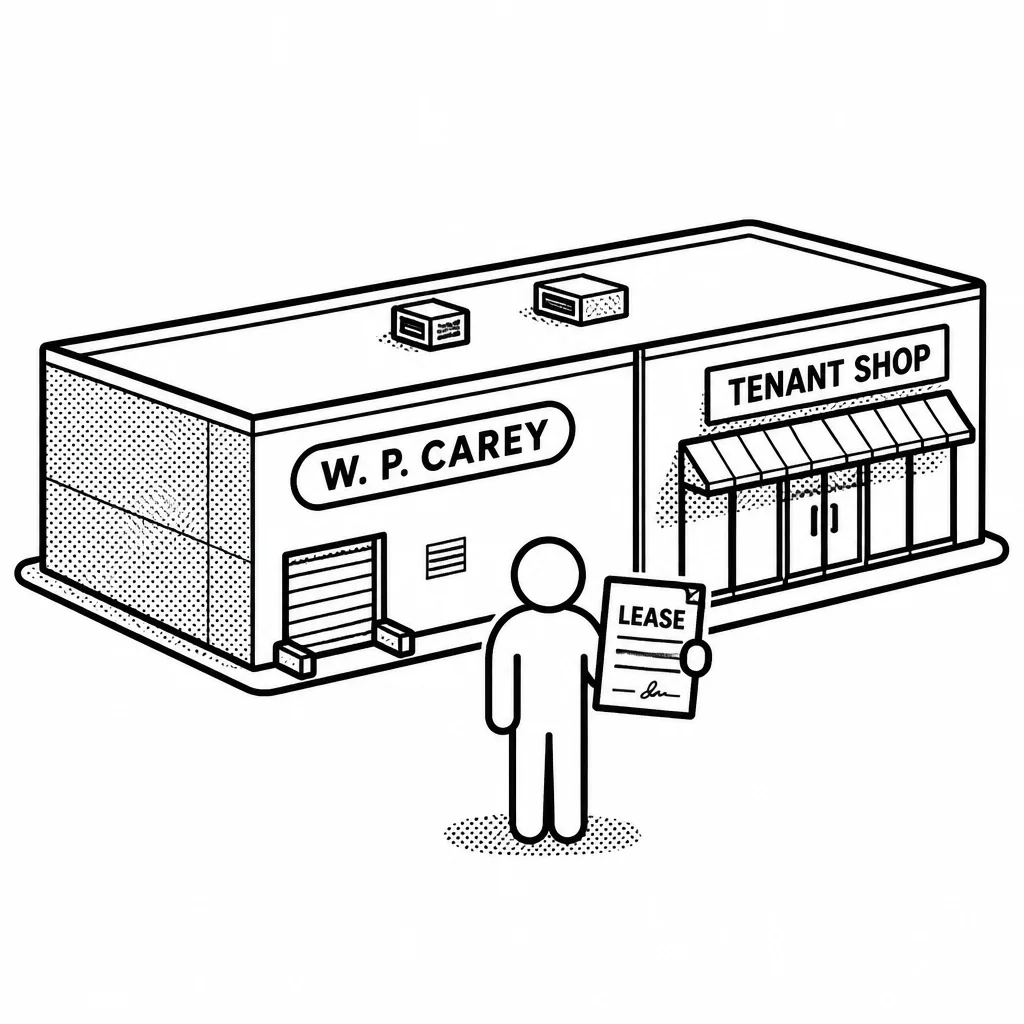
This is called a "net lease" business, and the "net" part matters. In a normal lease, the landlord pays for things like roof repairs, property taxes, and insurance. In a net lease, the tenant pays most of those costs directly. That makes W. P. Carey's job less about fixing leaky roofs and more about being a patient financier of buildings. It is effectively lending money to companies by buying the real estate they need, then collecting rent that behaves a lot like interest. The company is one of the largest net-lease REITs and is unusual for its reach into Europe, where it owns a big chunk of its portfolio. Its pitch to tenants is appealing: a company that wants cash out of its real estate without moving out can sell its building to W. P. Carey and sign a long lease to stay put. That frees up money for the tenant to invest in its actual business. In 2023 the company made a major shift, selling off or spinning off its office-heavy properties to focus on warehouses and industrial sites, which it sees as sturdier bets in an age of e-commerce.
The risks are real. W. P. Carey depends on tenants paying rent, so a bankruptcy or a big retail chain closing stores hurts. Its long leases are a strength in good times but can lock in below-market rents when prices rise. Like all REITs, it also leans on debt to buy buildings, so higher interest rates make borrowing costlier and can pressure the dividend that shareholders count on. It is a steady, income-focused landlord rather than a fast grower, and its fortunes rise and fall with the health of the companies renting its space.
Saved answer · last researched 15 Nov 2026