Understand any stock in simple English
World Liberty Financial, Inc.
World Liberty Financial runs a DeFi platform and issues the WLFI token tied to USD-based stablecoin lending and borrowing.
World Liberty Financial is a crypto finance company. It runs a platform where people can lend and borrow digital dollars — stablecoins pegged to the US dollar — without going through a traditional bank. The company also has its own token, WLFI, which is the piece most people encounter first.
The basic idea behind the lending side is simple. Crypto holders have dollars sitting idle, and other people want to borrow dollars without selling their crypto. World Liberty Financial connects the two through software rather than a bank branch, taking a cut of the activity. That model is the same one that made platforms like Aave and Compound big names in DeFi — code replaces the loan officer, and the token is the company's way of letting supporters buy into the project. World Liberty Financial is closely tied to the Trump family, which is the fact that shapes almost everything about how it is covered. The project launched in 2024 with Trump family members as prominent backers, and it became a lightning rod in Washington because the president's family stood to profit from a business the president's own regulators oversee. In 2025 the company sold a large stake to an Abu Dhabi-backed investment firm, a deal that drew fresh scrutiny over foreign money flowing into a venture connected to the White House.
The honest read is that WLFI is a young, heavily political, unproven business. It sells a token and a lending platform in a crowded DeFi market, and its biggest advantage is attention and connections rather than a technical edge. Its biggest risk is the same thing: regulators, critics, and investors are all watching it far more closely than they would watch an ordinary startup.
Saved answer · last researched 19 Nov 2026
BIG PICTURE
One exchange holds about 87% of World Liberty's dollar stablecoin
- 87% USD1 supply held on Binance
- 13% USD1 held everywhere else
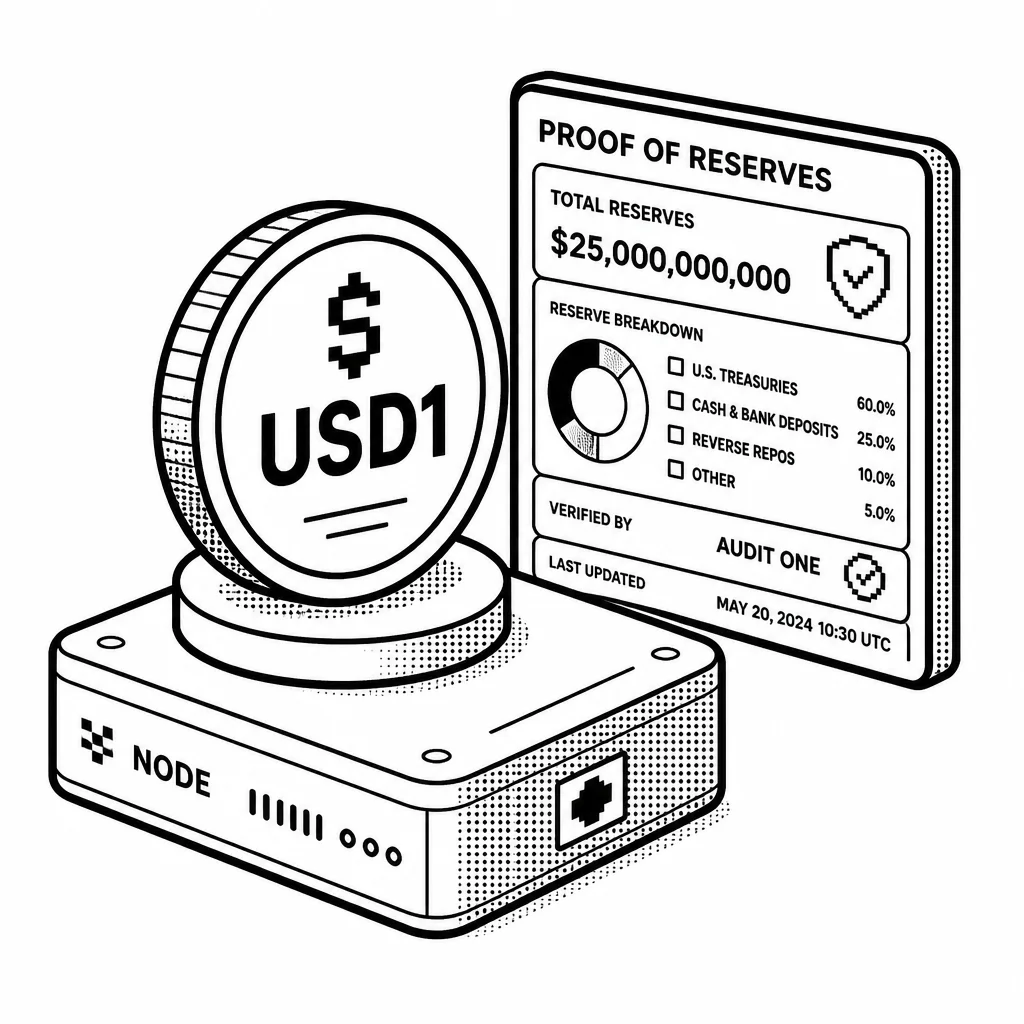
World Liberty Financial makes most of its money from USD1, the dollar-pegged coin it issues, by investing the cash and bonds that back it. About 87% of that coin's supply sits with a single exchange, Binance, which pushed it through a promotional partnership. One partner holding nearly the whole supply is a strength while the rewards flow and a fragility if they stop. Source: Pluang, data from 2026
Timeline
The Trump Family Starts a Crypto Bank
In September 2024, the families of Donald Trump and Steve Witkoff launched World Liberty Financial, a crypto lending venture. The idea was simple enough: they used open-source software called Aave as a blueprint, ran it on the Ethereum network, and sold a token called WLFI that gave holders a say in how the thing was governed. Day-to-day work fell to an in-house engineering team, with Trump family members and the Witkoff sons listed as co-founders. It was, from day one, a Trump-family crypto business.
Sales Jump After the Election
For the first month and a half, almost nobody wanted the token: by the end of October the company had sold only a few million dollars' worth. Then Trump won the 2024 presidential election, and demand exploded overnight. The result didn't just boost sales; it changed what the venture could become, because suddenly the Trump name was worth real money in crypto.
A Sheikh Buys 49%
Days before Trump's second inauguration, a group tied to Sheikh Tahnoun bin Zayed Al Nahyan agreed to buy 49% of the company for $500 million. That made the group, Aryam Investment 1, the largest shareholder and put two G42 executives on the board. Of the first $250 million instalment, $187 million went straight to Trump family entities, a detail that would later draw a lot of attention.
USD1 Becomes the Real Product
In March 2025 the company launched USD1, a stablecoin pegged to the dollar and backed by U.S. treasuries and cash-like assets. This, not the WLFI token, turned out to be the money-maker: most of its supply ended up held by Binance, and it grew into one of the top stablecoins. For a company that began as a token sale, the stablecoin became the actual business.
Abu Dhabi Pays Binance in USD1
In May 2025, MGX, an Abu Dhabi state-backed firm, used $2 billion of USD1 to fund its investment in Binance. In one move, a coin launched two months earlier was being used by a sovereign-level player, and USD1 jumped into the top ranks of stablecoins. The flip side was scrutiny: House Oversight opened a look at possible conflicts of interest.
Alt5 Sigma Buys $1.5 Billion of WLFI
Alt5 Sigma, a Nasdaq-listed company, signed a $1.5 billion deal to acquire WLFI tokens, with Trump-affiliated entities keeping 75% of the sales proceeds. Zachary Witkoff became chairman of Alt5's board and Eric Trump joined as a board observer. In plain terms, a public company's balance sheet was now tied to the token, and the family was on both sides of the table.
WLFI Markets Goes Live
In January 2026 the company launched WLFI Markets, its first live DeFi application, built on the Dolomite protocol. Users could supply and borrow digital assets, with USD1 as the main asset from the start. Management pitched it as the first of several products planned over the next year and a half.
Borrowing Against Its Own Token
Then came the move that changed the mood. WLFI borrowed roughly $75 million in stablecoins using its own WLFI governance tokens as collateral, which pushed the USD1 lending pool to nearly full use and left depositors unable to pull their money out. The token fell 12% to its lowest level since launch. Critics said the whole thing was exactly the self-serving behavior DeFi was supposed to prevent.
Justin Sun Sues
In April 2026, Justin Sun sued World Liberty, claiming extortion: he said he was denied promised voting rights and had his wallets frozen. He also alleged the company had quietly built a blacklisting function that let insiders freeze tokens without a vote. The founders called the suit extortion and meritless.
A National Trust Bank
In August 2026 the OCC gave preliminary conditional approval for World Liberty to set up a national trust bank to issue, redeem and safeguard USD1, which by then was worth about $4 billion. The bank's holding company was 49% held by Tahnoun-linked entities and 38% by a Trump-affiliated entity, with Zach Witkoff as board chair. The token sale had become a bank.