Understand any stock in simple English
Enter a ticker to learn what the company does and how it makes money.
Waystar Holding Corp.
Waystar sells cloud software that helps hospitals and doctors get paid by insurance companies faster and with fewer errors.
Waystar is a healthcare payments company. It sells cloud software that hospitals, doctors' offices, and other medical providers use to manage the money side of healthcare — figuring out what a patient's insurance will cover, sending the bill, and chasing down payment. In the US, that process is famously messy: doctors deal with hundreds of insurance plans, each with its own rules, and a huge share of claims get rejected on the first try for avoidable reasons. Waystar's software sits in the middle and tries to catch those problems before they cost anyone money.
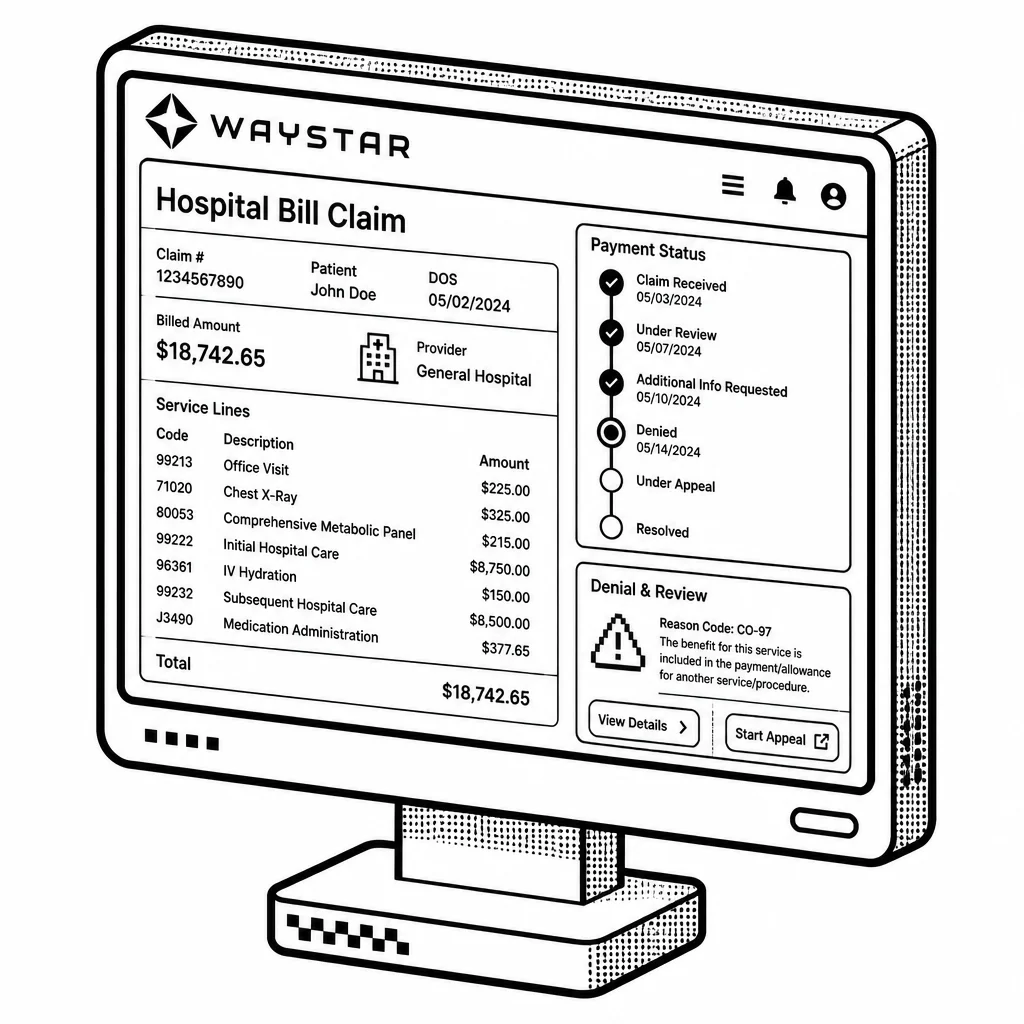
Here's the basic problem it solves. When you visit a doctor, the doctor doesn't usually know upfront exactly what your insurance will pay and what you'll owe. Get that wrong, and the claim bounces back denied, the provider waits months for cash, and the patient gets a confusing bill. Waystar's tools check a patient's coverage before the visit, help code the claim correctly, submit it electronically, and then track and appeal denials. It also handles the patient-facing side — online bills and payment plans — because patients now shoulder a bigger share of their healthcare costs. The company sells mainly to healthcare providers, and also to payers (insurers) and patients. Its customers are the people who feel the pain of slow payments most: large hospital systems, physician groups, and other care organizations. The pitch is straightforward — fewer denials, faster cash collection, less manual busywork. Waystar competes with a mix of big health-IT vendors and specialized rivals, and its scale matters: the more claims and payer connections it handles, the smarter its automation gets. It went public on Nasdaq in 2024, and it carries debt from its private-equity past, so paying that down is part of the story alongside growth.
The honest version: this is a steady, unglamorous plumbing business. Healthcare spending keeps rising, providers keep needing to get paid, and the US insurance system stays complicated — which is exactly why they pay for help. The risk is that hospitals tighten budgets, that rivals undercut on price, or that big EHR players like Epic Systems build more of this themselves. But as long as billing in American healthcare remains a headache, Waystar gets paid to be the aspirin.
Saved answer · last researched 15 Nov 2026