Understand any stock in simple English
Enter a ticker to learn what the company does and how it makes money.
Viper Energy, Inc.
Viper Energy owns oil and gas royalty interests in the Permian Basin and collects a cut of the oil and gas sold from that land.
Viper Energy is a company that owns a slice of the oil and gas underneath other people's land. It holds mineral and royalty interests in the Permian Basin, the big oil-producing region in West Texas and New Mexico. When companies drill on land where Viper owns a royalty, Viper gets a cut of the oil and gas sold — no drilling rigs, no crews, no well costs.
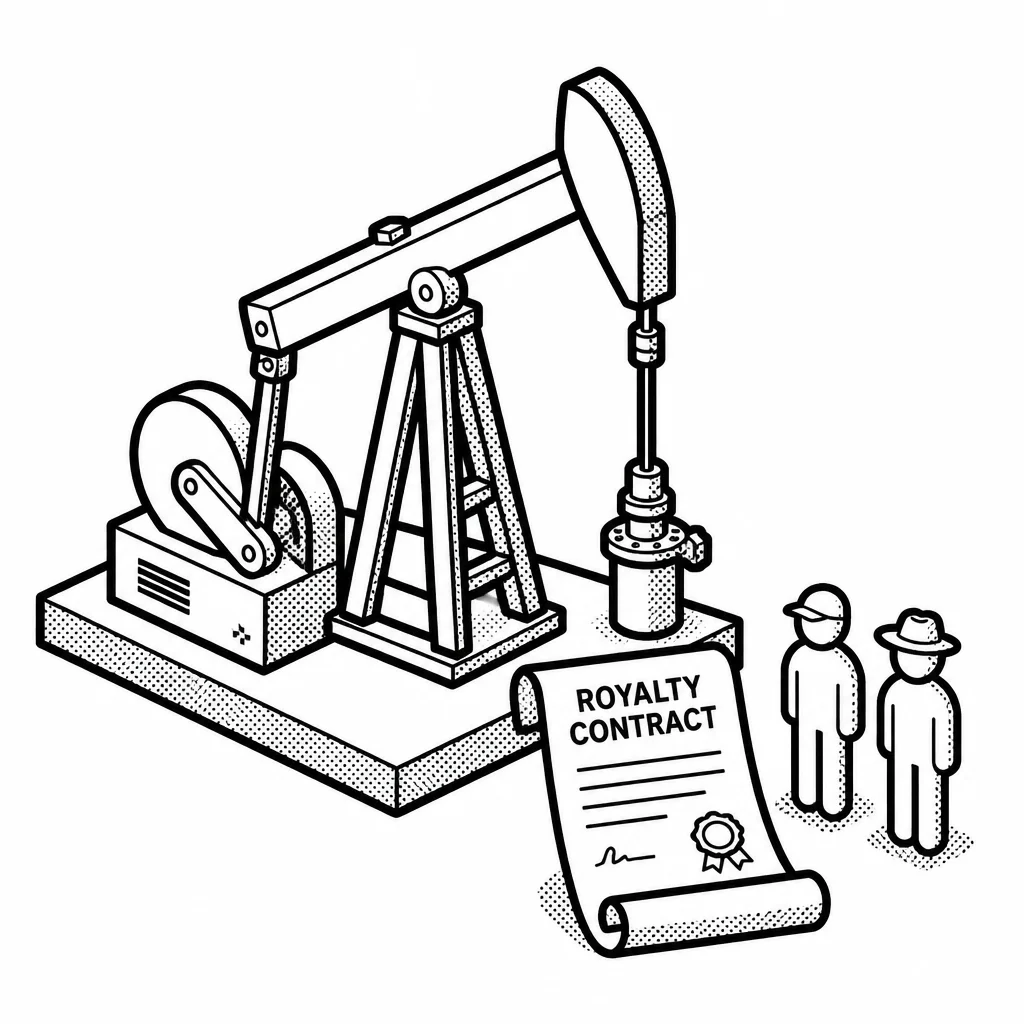
That is the whole engine. Viper doesn't operate wells; other companies do the work and send Viper its share of the money. Because it doesn't pay for drilling or equipment, a large chunk of each dollar it receives drops to the bottom line. The catch is that Viper has no control over the pace of drilling on its land — that is up to the operators — so its cash flow rises and falls with oil and gas prices and with how busy those operators are. Viper used to be a partnership called Viper Energy Partners LP, spun out of Diamondback Energy, which still owns a large stake and is closely tied to it. Owning royalty interests is a bit like owning a toll booth on a road someone else built and maintains: you collect a small fee on every barrel that passes, but you don't decide how much traffic there is. That is why Viper's revenue and cash flow swing with energy prices and drilling activity.
The business is simple and cash-generative, and Viper pays out much of that cash to shareholders through dividends and buybacks. The main risks are outside its hands: weaker oil prices, slower drilling by operators, or too many wells packed close together. Its strength is the flip side — low costs and steady royalty checks whenever the Permian is busy.
Saved answer · last researched 14 Nov 2026