Understand any stock in simple English
Enter a ticker to learn what the company does and how it makes money.
Vicor Corporation
Vicor designs and makes modular power components and power systems that convert electrical power for equipment makers.
Vicor makes the small, powerful gadgets that sit inside bigger machines and turn raw electricity into exactly the kind of power those machines need. Its customers are the companies building the machines — data center operators, defense contractors, industrial equipment makers, and automakers — and Vicor sells them power modules and systems rather than finished consumer products.
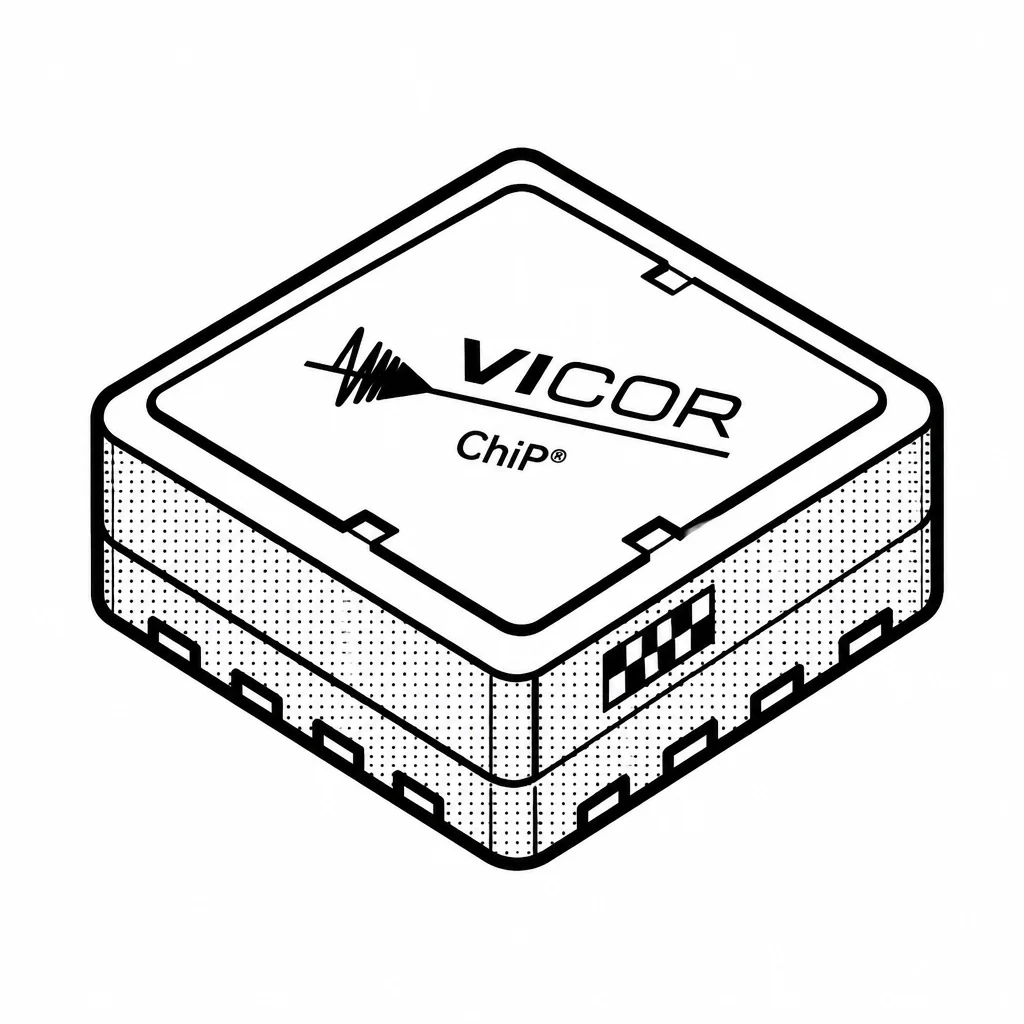
The core problem is that electronics want very specific voltages, and they want them delivered quickly, efficiently, and in as little space as possible. Vicor's specialty is high-density power conversion: its modules squeeze a lot of power handling into a tiny footprint, which matters most where space and heat are tight. Its recent push has centered on powering the racks of artificial intelligence data centers, where power delivery has become a real bottleneck as chips get hungrier. The company manufactures much of its own product in the United States, including at a facility in Andover, Massachusetts, its longtime base near Boston. That in-house manufacturing is a strength for quality and speed but also a vulnerability, since it ties up capital and leaves less flexibility if demand swings.
Vicor's technology has attracted attention from the defense and advanced-computing worlds, and its fortunes now hinge heavily on whether the AI data center boom keeps pulling demand for its power modules. It is a real, focused business with genuine engineering depth, though it is far smaller than the giants it supplies and depends on a handful of demanding markets.
Saved answer · last researched 14 Nov 2026
Timeline
A Physicist Leaves Academia
Patrizio Vinciarelli was a physicist who got frustrated watching progress in his field slow down, so he left research to build something real. His target was power conversion, the everyday job of turning electricity from one form into another, which back then was crude and didn't scale well. The accepted wisdom said you could switch power on and off only so fast; he decided to switch 10 to 15 times faster than that. Two Nobel physics laureates liked the idea enough to put up seed money.
First Product Beats Everything
About three years later, Vicor shipped its first product, packed 25 watts into a cubic inch of space. That was roughly 20 times denser than anything else on the market, and density became the number the company chased from then on, eventually reaching thousands of watts per cubic inch.
Vicor Goes Public
With its technology proven, Vicor listed on the stock market as VICR, giving it public capital to grow its modular power business. The company later grew into a business worth more than $2 billion.
Patented Modules Power the Boom
Decades in, Vicor's patented high-performance power modules were pulling in nearly $400 million a year, feeding AI systems, electric vehicles, solar, data centers and next-gen computing. And it kept every bit of manufacturing in the US, with over a thousand employees based in Andover, Massachusetts.
The First ChiP Fab
Vicor opened a 90,000-square-foot factory in Andover to build its ChiP power components, calling it the world's first ChiP fab. The nearly $100 million bet was aimed at fast-growing markets, and Vinciarelli projected it could eventually support about $1 billion in annual revenue.
The AI Deal That Wasn't
Then came trouble: a shareholder lawsuit claimed Vicor had misled investors about its AI platform and an expected deal with Nvidia's H100 chip. When weak end-of-year earnings hinted that new contracts were reversing, the stock fell from $46.84 to $35.67 in a single day.
Patents Hold Up at the ITC
A government trade court, the ITC, confirmed that Vicor's patents were valid and had been infringed, which barred imports of unlicensed computing systems using knockoff power modules. That ruling handed Vicor real leverage to license its technology rather than just sell products.
Licensing Becomes a Second Engine
Vicor leaned harder into licensing its intellectual property, pitching it as a way to give AI, automotive and industrial customers tough, scalable supply chains. Collecting high-margin royalties on its patents became a second growth engine alongside selling modules.
A Major AI License Signed
A big AI equipment maker signed a non-exclusive license to use Vicor's Vertical Power Delivery technology, and four major equipment makers and cloud giants already held licenses. Licensing lets customers buy modules from several suppliers while Vicor still collects royalties, and the deal pushed the company to raise its guidance.
Record Results, Crashing Stock
Even with record AI-era numbers, revenue up 78.5 percent and a $400 million backlog, the stock tumbled about 62 percent from its $382.65 peak. The cause wasn't the business: midterm election jitters over AI spending dragged down Nvidia and chip stocks across the board.