Understand any stock in simple English
Enter a ticker to learn what the company does and how it makes money.
Olam Group Limited
Olam is a giant food and farming supply chain company that buys crops from farmers, processes them, and sells them to food and industrial customers around the world.
Olam is one of the world's biggest traders and processors of everyday food ingredients. It buys crops like cocoa, coffee, cotton, rice, and edible nuts from farmers in growing regions, then cleans, processes, packages, and ships them to food companies, manufacturers, and industrial buyers worldwide. If you eat chocolate, drink coffee, or use a product made with cotton, there is a decent chance Olam touched part of that supply chain somewhere along the way.
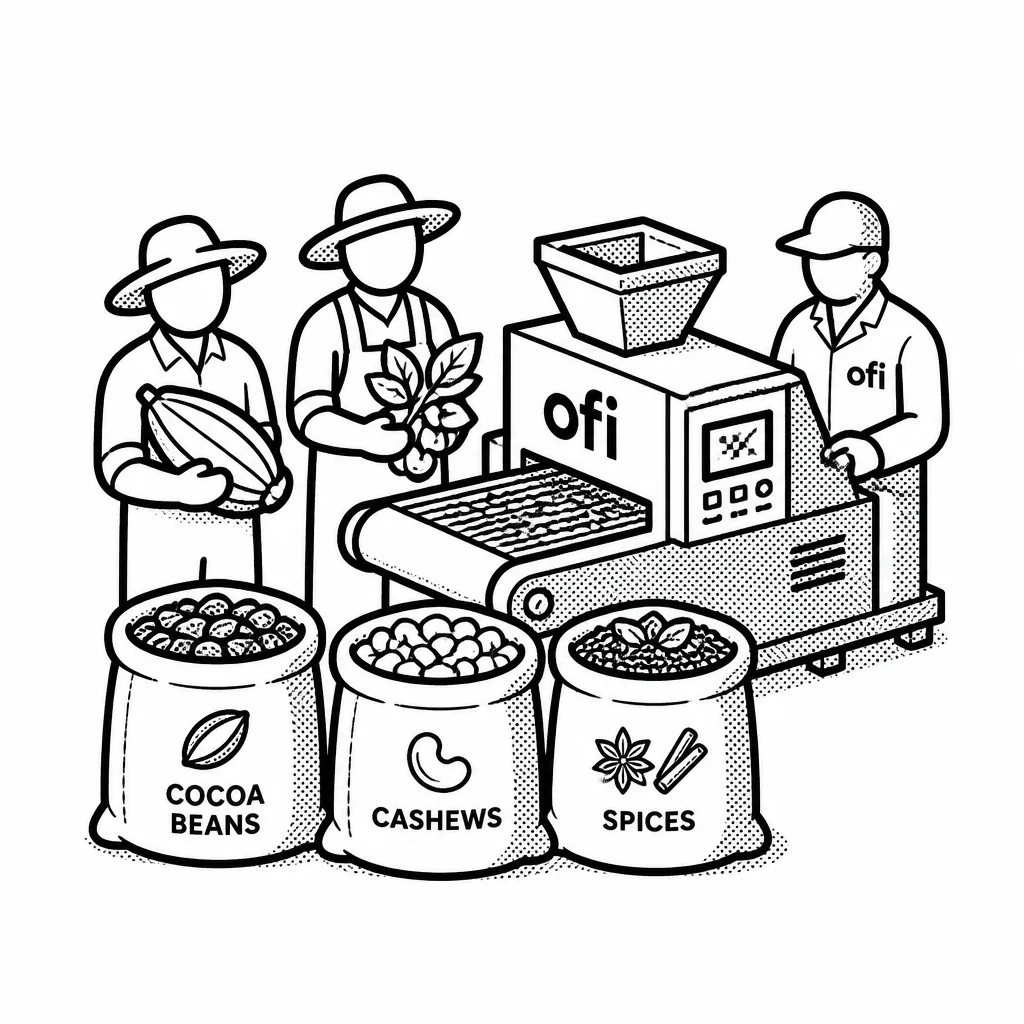
The business is really a middleman at enormous scale, and that middleman role is more valuable than it sounds. Farmers in remote places often have no easy way to reach big global buyers, and big buyers have no easy way to source from thousands of small farms. Olam bridges that gap. It runs farms, processing plants, warehouses, and logistics networks, and it takes on the risk of price swings, weather, and shipping so its customers don't have to. Customers pay for reliability and scale: they want the right quantity, quality, and timing, every time. Olam has two big pieces. One is its food ingredients business, called ofi (Olam Food Ingredients), which sells cocoa, coffee, dairy, nuts, and spices to brands and food makers. The other is its farming and commodity arm, which includes rice, cotton, and other crops, plus a large global trading operation. Olam is headquartered in Singapore and is majority-owned by Temasek, the Singapore state investment firm, which gives it deep pockets and a long-term owner. Its main competitors are other giant agricultural traders such as Cargill, though Cargill is private, and Archer-Daniels-Midland. The business is huge but thin-margined. Olam's revenue runs in the tens of billions of dollars a year, yet profit margins are slim because commodity trading is a volume game. That is why management has been reshaping the company: it has been separating ofi as a distinct business and has talked about listing it, a move meant to unlock value that the market wasn't giving the whole group. The company also carries a lot of debt from years of buying farms and processing assets, which is a real vulnerability when interest rates rise or crops disappoint.
The honest picture: Olam is a critical piece of the global food machine, and its scale and reach are genuine strengths. But it is a low-margin, capital-hungry business exposed to weather, commodity prices, and debt costs. Investors who own it are betting that the ofi separation and steady demand for food ingredients will eventually translate into better returns than the trading business alone has delivered.
Saved answer · last researched 12 Nov 2026