Understand any stock in simple English
Enter a ticker to learn what the company does and how it makes money.
Virgin Australia Holdings Limited
Virgin Australia is an airline that flies passengers around Australia and to a handful of overseas destinations.
Virgin Australia is an airline. It flies people where they need to go — mostly around Australia, plus a few short international hops to places like New Zealand and the Pacific islands. If you live in Sydney, Melbourne, Brisbane, or Perth and you want to get to another Australian city without spending two days in a car, Virgin Australia is one of the two big names you'll see at the airport alongside Qantas.
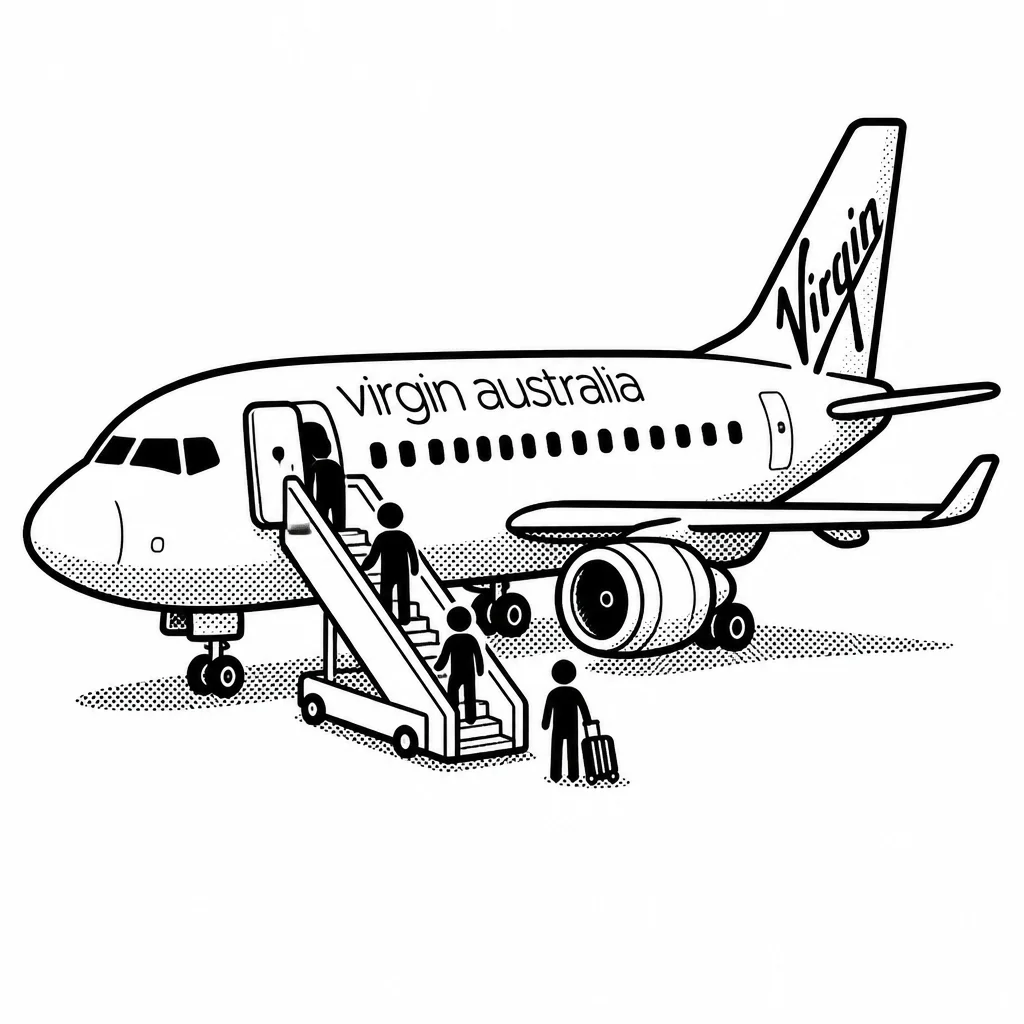
The airline makes money by selling tickets. Passengers pay for a seat, and many pay a bit more for checked bags, extra legroom, or food. Virgin Australia also runs a loyalty program called Velocity, which has millions of members who earn points from flights and from spending on partner credit cards and shopping. Those points become free flights and upgrades, and the program is a steady profit engine because partners pay for the points they hand out. There's also a freight business that carries cargo in the belly of passenger planes, plus a small charter operation for mining and corporate clients. Its history is unusually messy for a major airline. Virgin Australia started life as Virgin Blue in 2000, a cheeky low-cost challenger to Qantas that copied the Ryanair playbook — one type of plane, no frills, cheap fares. It later tried to move upmarket and compete with Qantas head-on for business travellers, which meant lounge access, business class, and higher costs. That strategy bled money. In April 2020, with the pandemic grounding fleets, the company collapsed into voluntary administration owing billions, and it was bought and recapitalised by private equity firm Bain Capital. It left the ASX in 2020 as part of that rescue and has been privately held since, so the old ticker is now a shell of the past.
Today Virgin Australia is the country's second-largest airline group, still chasing Qantas domestically but with a leaner cost base and a simpler fleet. It flies Boeing 737s on most routes and has been rebuilding its network and its brand, including a return to international flying and a push to win back corporate travellers. The industry is brutally competitive: fuel prices, pilot wages, airport fees, and price wars can wipe out a year's profit fast, and a pandemic or a volcano can stop the whole business overnight. That's the reality of airlines — great when the planes are full, terrifying when they're not.
Saved answer · last researched 15 Nov 2026