Understand any stock in simple English
Enter a ticker to learn what the company does and how it makes money.
Unipar Carbocloro S.A.
Unipar makes the basic industrial chemicals—chlorine, caustic soda, and PVC plastic—that factories need to make everyday products.
Unipar is one of South America's main makers of the chemical building blocks that factories run on. Its core products are chlorine and caustic soda, which come out of the same salt-and-electricity process, plus PVC, the white plastic used in pipes, window frames, and flooring. These are not consumer products you buy off a shelf; Unipar sells them in bulk to industrial customers who use them to make other things.
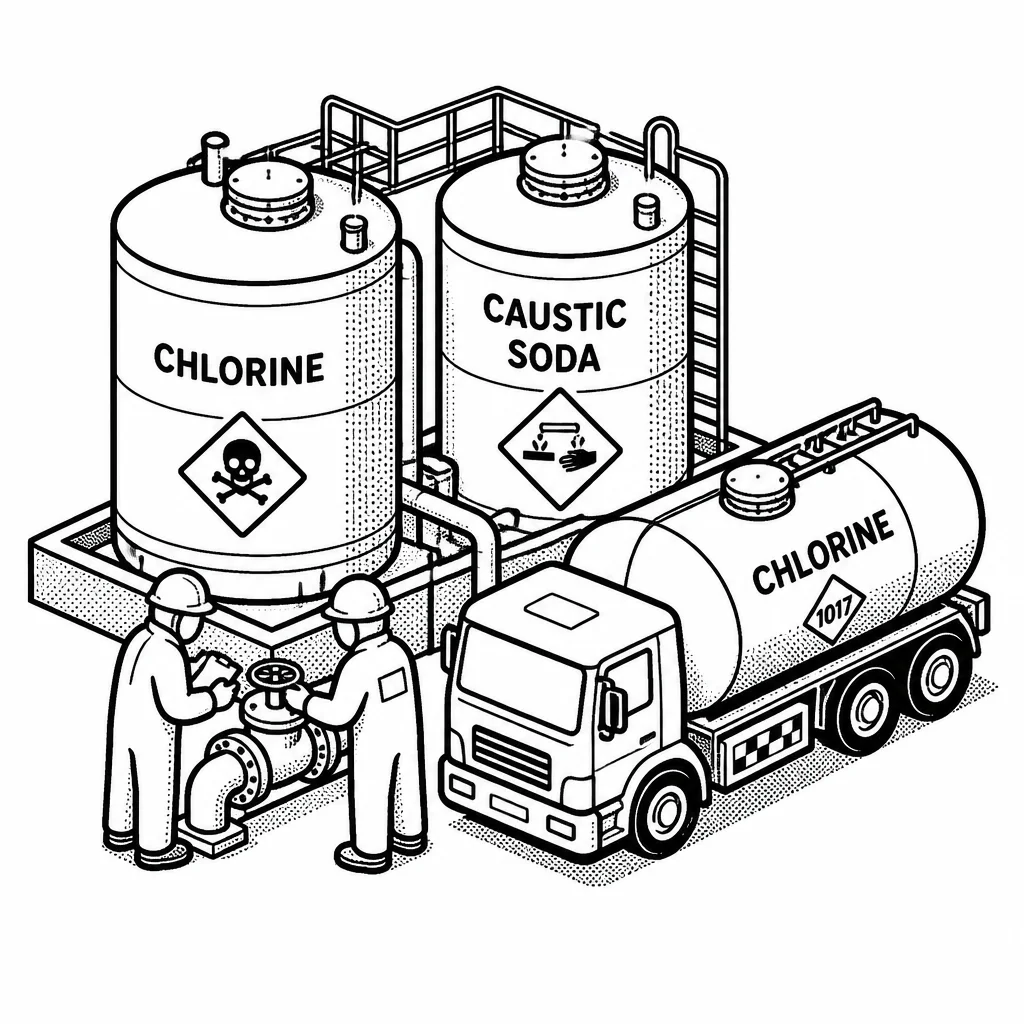
The business rests on one basic chemistry trick. Run an electric current through salty water and you split it into chlorine and caustic soda—two chemicals that are useless apart but essential together, because they come out in fixed proportions whether you want them or not. Chlorine goes into water treatment, disinfectants, and the making of PVC. Caustic soda is used everywhere from alumina refining to soap and paper. Unipar's customers pay for reliable supply and quality, and being one of the few large producers in the region gives it real pricing power. It runs major plants in Brazil and Argentina, so local manufacturers often prefer buying nearby rather than importing from the Gulf or Asia. Making these chemicals is energy-hungry and capital-heavy. You need big electrolysis plants, and electricity can be a huge share of your costs, so cheap power is a competitive advantage. Chlor-alkali chemicals are also a commodity: when a rival adds capacity or demand slumps, prices can fall fast. The industry's dirty secret is that chlorine and caustic soda are made together, so a glut in one can drag down the whole economics. Unipar has dealt with this over the years by expanding capacity and buying smaller competitors—it absorbed the PVC maker Carbocloro, which is where the current name comes from, and it picked up a plant in Argentina to widen its reach.
The company trades on the Brazilian stock exchange and has a history of returning money to shareholders through dividends when cash is flush. Its fortunes swing with Brazilian and Argentine industrial demand, construction activity (PVC rides on building), and electricity prices. It is a cyclical, unglamorous business—but a strategic one, since you can't make a lot of modern products without the chemicals Unipar produces.
Saved answer · last researched 12 Nov 2026