Understand any stock in simple English
Enter a ticker to learn what the company does and how it makes money.
Frontier Group Holdings, Inc.
Frontier Airlines is a budget airline that sells cheap flights to leisure travelers, charging extra for almost everything beyond the basic seat.
Frontier Airlines is an ultra-low-cost carrier, which is a fancy way of saying it sells tickets so cheap they sometimes cost less than a sandwich, then makes its money back by charging you for everything else. The base fare gets you a seat and a small personal item. Want to bring a carry-on bag? That costs extra. Check a bag, pick your seat, or buy a drink on board? Extra, extra, extra. This à la carte model is the whole business, and it works because leisure travelers — families visiting relatives, people heading to Florida or Vegas for a weekend — care more about the total price than about legroom or free pretzels.
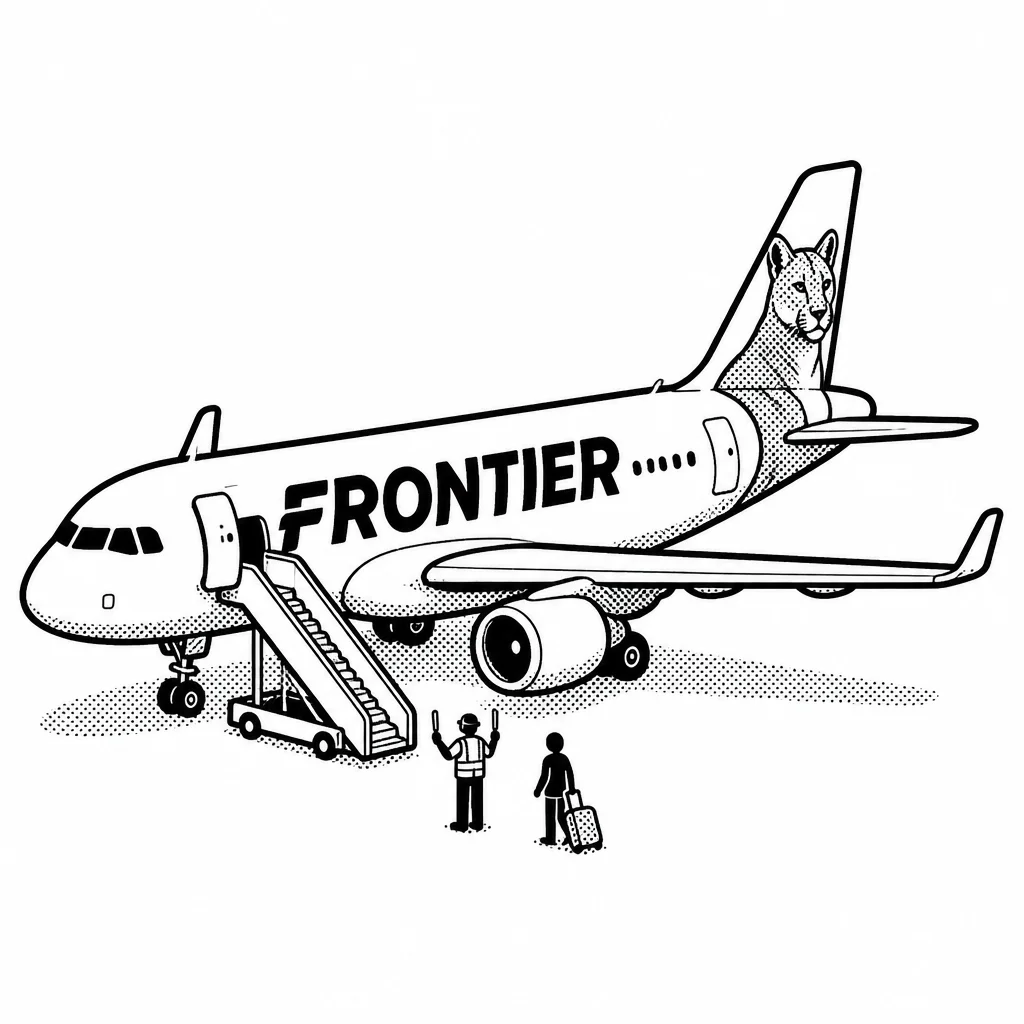
The airline flies a single type of plane, the Airbus A320 family, which keeps maintenance and training simple and cheap. It packs a lot of seats onto each aircraft and flies them hard, squeezing more hours of flying out of each plane per day than a typical network carrier. Its route map is built around connecting leisure destinations rather than big business hubs, with a heavy presence in places like Denver, Orlando, and Las Vegas, plus growing service to Latin America and the Caribbean. Frontier competes most directly with Spirit Airlines and Allegiant Travel in the budget space, and on price with everyone else, including Southwest Airlines and the big three carriers. The economics of this business are brutal and honest. Ultra-low-cost airlines run on razor-thin margins, so a small swing in fuel prices, labor costs, or demand can flip a profit into a loss. Frontier has spent recent years wrestling with exactly that: aircraft engine problems that grounded planes, soft domestic demand, and a failed attempt to merge with Spirit, which regulators blocked in 2024. The blocked deal mattered because scale is everything in this game — bigger airlines spread fixed costs over more seats. Frontier has responded by cutting unprofitable routes, tweaking its network toward more premium leisure destinations, and leaning harder on its loyalty program and co-branded credit card to bring in higher-margin revenue that doesn't depend on filling a seat.
The basic appeal to customers is simple: Frontier gets you from point A to point B for less money than almost anyone else, as long as you travel light and don't mind paying for the frills. The risk is equally simple. When a cheap ticket is the entire product, customers will switch the moment a competitor undercuts you, and there is very little cushion when costs rise. Frontier's bet is that a lean operation, a young fleet, and add-on fees can keep it profitable through the cycle — a bet that has been tested hard in recent years.
Saved answer · last researched 16 Nov 2026