Understand any stock in simple English
Enter a ticker to learn what the company does and how it makes money.
ProShares Ultra Bloomberg Crude Oil
It is a fund that aims to deliver twice the daily price move of a specific crude oil futures index, letting traders make short-term bets on oil prices.
ProShares Ultra Bloomberg Crude Oil is an exchange-traded fund, a basket of investments that trades on a stock exchange like a single share. This one is built for a very specific job: it tries to give investors two times the daily gain or loss of the Bloomberg WTI Crude Oil Subindex, a benchmark that tracks the price of West Texas Intermediate crude oil futures. It is a tool for traders who want a leveraged, short-term bet that oil is going up — or a way to hedge other positions.
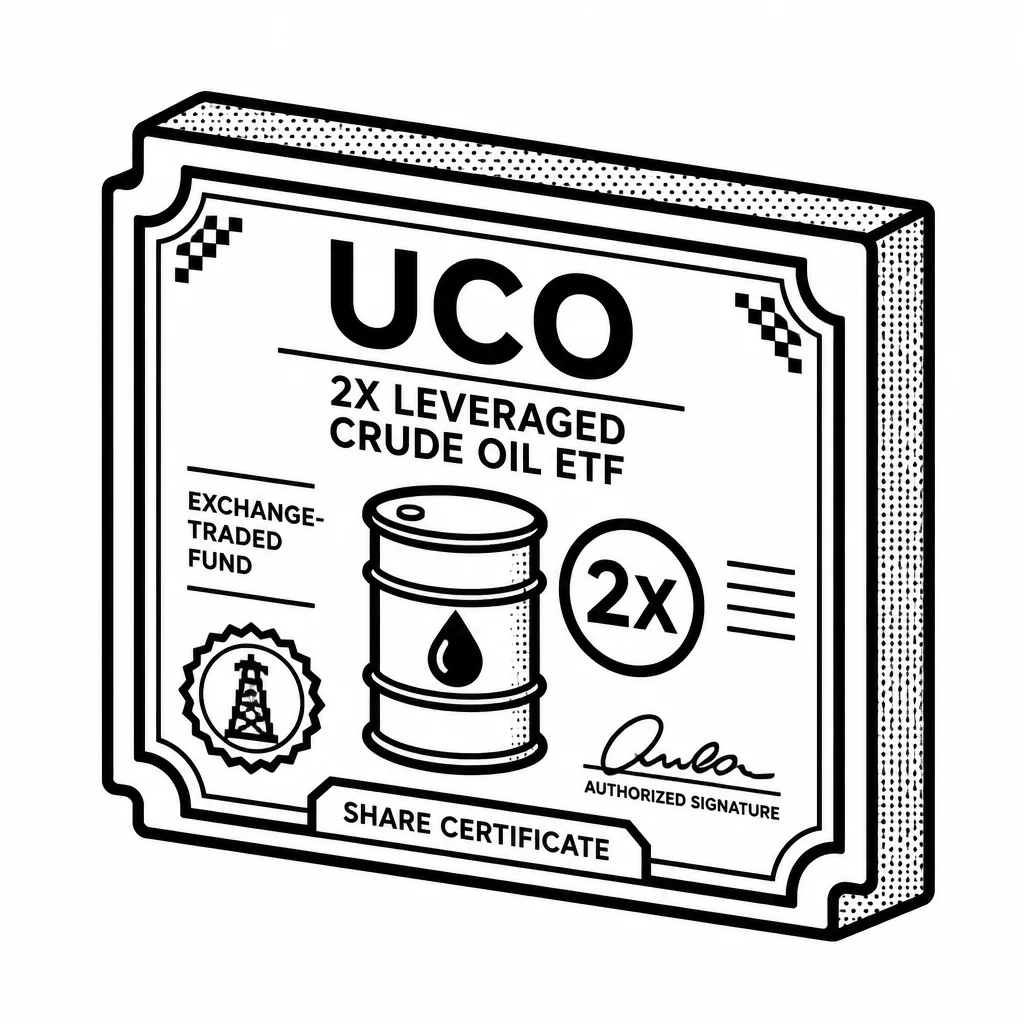
The key word here is "daily." The fund rebalances every day to keep its leverage at roughly 2x. That means it is not a simple "buy and hold for years" product. If oil zigzags, the math of daily rebalancing can chew up returns over time, so the fund's long-run performance can drift far from "twice the oil price." The issuer, ProShares, spells this out plainly because it matters a lot. It holds crude oil futures contracts rather than barrels of oil itself, so there's no physical barrel sitting in a warehouse. That keeps the mechanics cleaner, but it also exposes investors to the quirks of the futures market, like the cost of rolling contracts from one month to the next. Options traders and tactical investors pay a management fee for the convenience of getting leveraged exposure in a single ticker, without opening a margin account or managing futures themselves. The fund is a specialist instrument, not a core holding for a retirement account, and the documentation says as much. It earns its keep for people who understand leverage and time their moves carefully.
The bigger picture: this fund sits in ProShares' family of leveraged and inverse products, a business built on giving traders precise, packaged exposure to all kinds of markets. It is a niche machine with one clear purpose, and it works best for exactly the kind of short-horizon investor it was designed for.
Saved answer · last researched 16 Nov 2026