Understand any stock in simple English
Enter a ticker to learn what the company does and how it makes money.
Twin Disc, Incorporated
Twin Disc makes heavy-duty gearboxes and power-transmission equipment that connect engines to the propellers, wheels, and machinery that do the actual work.
Twin Disc builds the heavy metal middleman between an engine and the thing it needs to move. Put a diesel engine in a tugboat, a fishing trawler, a fire truck, or a piece of oilfield equipment, and you need a way to take that engine's spinning power and hand it to a propeller or a wheel in a controlled, reliable way. That is what Twin Disc makes: marine transmissions and propellers, off-highway power-shift transmissions, torque converters, and industrial clutches. Its customers are boat builders, oil and gas service companies, the military, and makers of heavy equipment, and these buyers pay for one main reason — when a boat is miles offshore or a rig is in the field, the gearbox has to work.
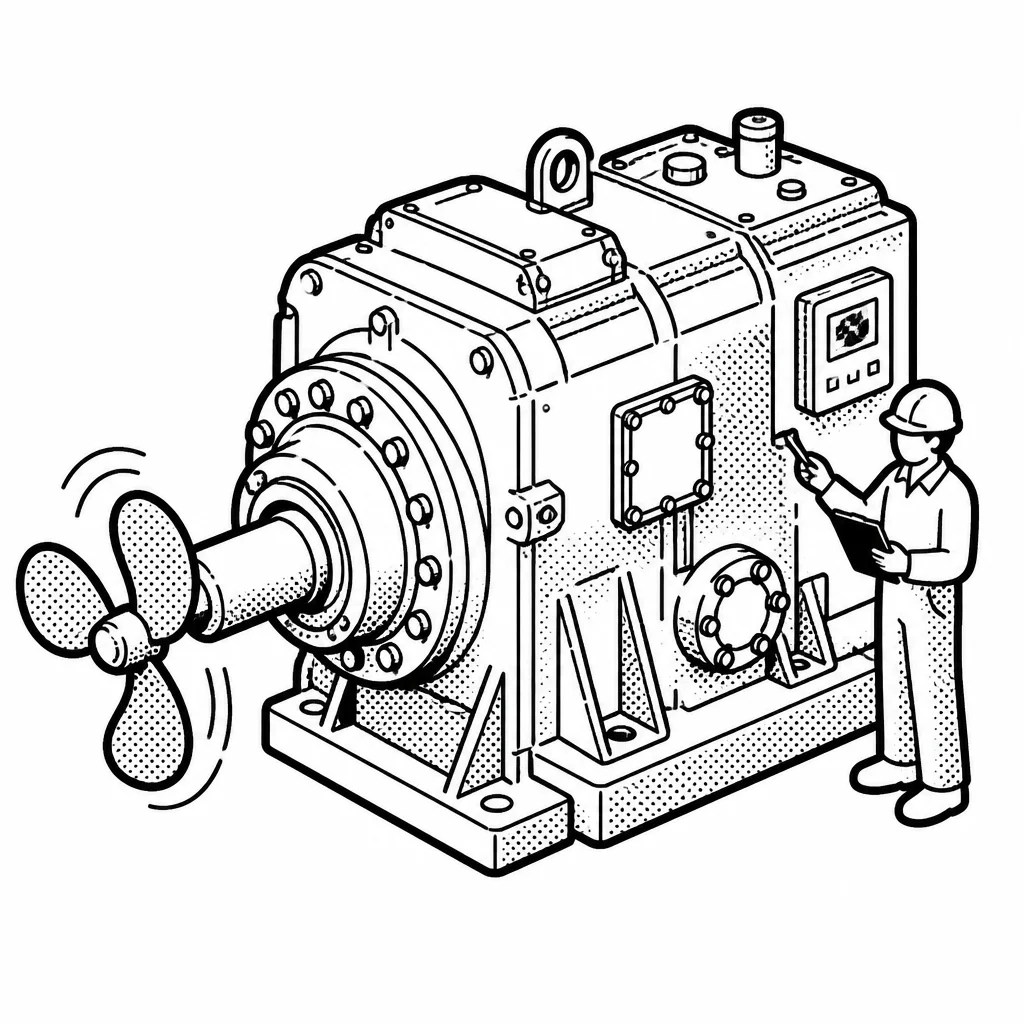
The business splits into a few pieces. Marine is the one most people would recognize: Twin Disc supplies propulsion systems for commercial boats, workboats, and pleasure craft, plus the surface-piercing propellers used on fast patrol boats and other vessels where speed matters. The land side sells into oil and gas, where its transmissions and power take-offs drive drilling and well-service equipment, and into industrial and government applications. That mix matters because marine and energy demand rise and fall for different reasons, which smooths the ride a little. Twin Disc is a small company with a long history. It is based in Racine, Wisconsin, and has been making gears and clutches since 1918, when it started out supplying clutches for trucks. Today it competes in a niche where the field is narrow: big industrial players like Dana and Caterpillar operate in adjacent parts of the power-transmission world, and Twin Disc's edge comes from specializing in hard-to-engineer marine and off-highway gearboxes rather than trying to be everything to everyone. That focus cuts both ways. Its customers are loyal and its products are critical, but when the oil patch slows or boat orders dry up, there is not much else to lean on.
The company is small enough that its numbers swing sharply with the cycle. It has worked through a rough stretch of weak demand in recent years and has focused on cutting costs, paying down debt, and improving its margins rather than chasing growth at any price. For a business like this, the real question is not whether it can grow fast — it probably cannot — but whether it can keep earning steady money on the installed base of equipment it has already sold, since every transmission eventually needs parts and service. That aftermarket stream is the quieter, more dependable part of the story.
Saved answer · last researched 15 Nov 2026