Understand any stock in simple English
Enter a ticker to learn what the company does and how it makes money.
TKH Group N.V.
TKH Group makes smart cable, sensor and vision systems that help factories, power grids and infrastructure run safely and efficiently.
TKH Group is a Dutch technology company that makes the physical and digital plumbing behind modern industry. Its products are the kind of things you never notice until they fail: specialty cables that carry power and data, sensors that measure what's happening on a factory floor or along a pipeline, and vision systems — cameras paired with software — that let machines "see" well enough to inspect products or guide robots.
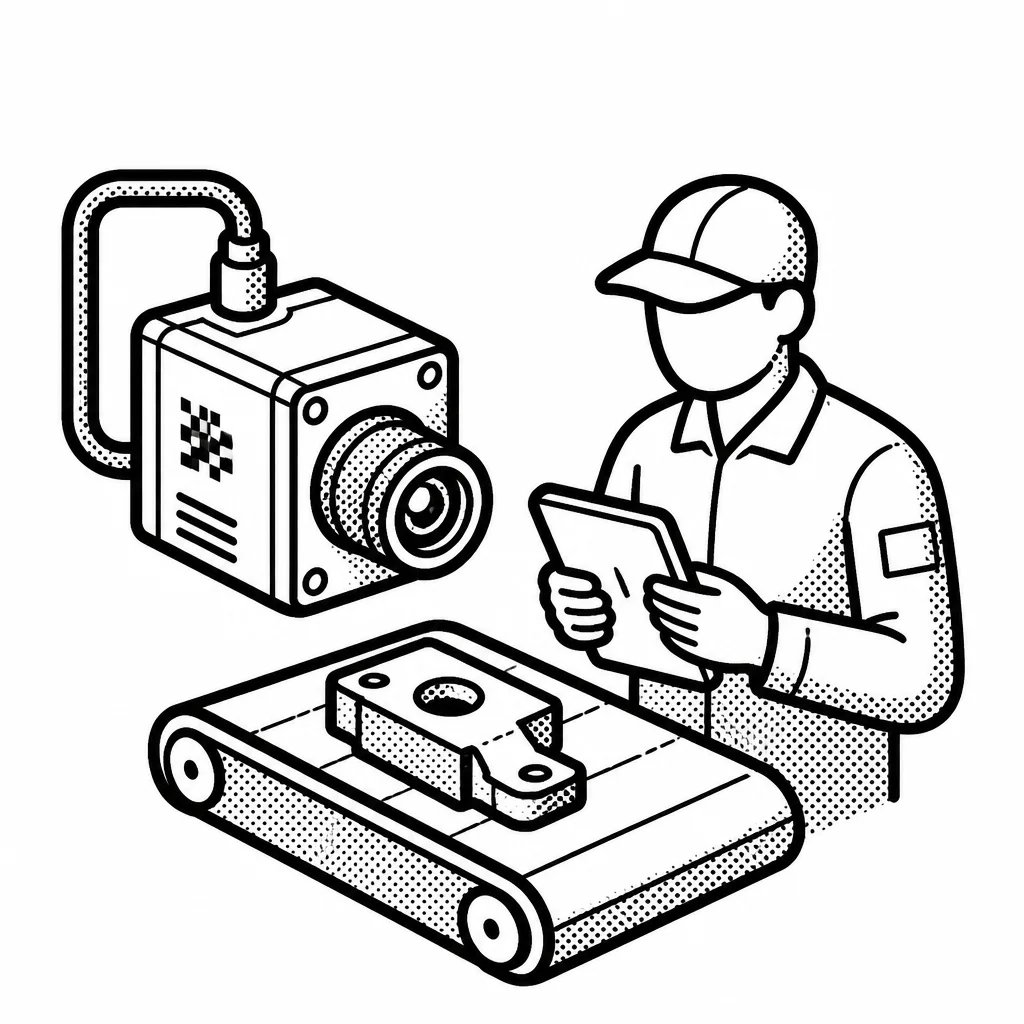
The company organizes itself around three broad areas. Its industrial systems business sells cables, connectors and vision technology used in factories and robotics. Its infrastructure arm supplies the cable networks that telecom and energy operators rely on, and its building and energy systems business makes the smarter, connected technology inside buildings and power networks. Put simply, whenever a customer needs to move electricity or data reliably, or needs equipment to sense and react to the world, TKH wants to supply the parts that make that happen. Customers are mostly other businesses rather than everyday consumers: machine builders, telecom and utility companies, and firms automating their factories. They pay TKH because the equipment has to work for years in tough conditions — a failed cable or a blind sensor can halt a production line or knock out a network — and because TKH can bundle the cable, the sensor and the software that ties them together. That combination is a big part of why it wins work over firms selling only one piece. Its roots run back to a Twente cable maker, which is why it was long known as NV Twentsche Kabel Holding before becoming TKH Group.
The company is headquartered in the Netherlands and listed on Euronext Amsterdam. It sits in a useful spot: the world keeps adding sensors, robots and renewable power, all of which need exactly the connectivity and vision technology TKH sells. The flip side is that its fortunes are tied to industrial and construction spending, which rises and falls with the economy, so demand can be lumpy. It is a solid, unglamorous supplier whose products quietly hold up a lot of the automated world.
Saved answer · last researched 14 Nov 2026
Timeline
Two Men and a Cable Factory
In 1930, Johannes Cornelis van der Lof and Jan Derk Odink started a cable factory called Twentsche Kabelfabriek, or TKF, inside an empty textile building in Haaksbergen. The idea was simple: make the cables that carry power and signals, the veins of a modern world that was wiring itself up fast.
TKF Goes Public
By 1953, the cable maker wanted to grow beyond the Netherlands, so it listed its shares on the Amsterdam stock exchange to raise money for that expansion. That step turned a hometown factory into a company with public backing and bigger ambitions.
A Holding Company Takes Shape
A few decades later, after buying up other businesses, the company pulled everything together under one roof and formed N.V. Twentsche Kabel Holding, or TKH. This was the structure that would eventually become TKH Group.
Into Fiber Optics
In 1987, TKH started making fiber optic cables, the hair-thin strands of glass that carry data with light. That move pushed the company past plain copper cabling and into the wider world of connectivity technology.
A New Name for a New Company
By 2005, plain old Twentsche Kabel Holding no longer described what the business had become, so it renamed itself TKH Group N.V. The new name was a signal: this was no longer just a cable producer, but an international technology company.
The Eemshaven Cable Factory Opens
In 2024, TKH opened a brand new TKF cable factory in Eemshaven after a large investment of about 150 million euros. Its job was to make submarine cables, the heavy underwater lines that connect offshore wind turbines, with the capacity to produce over a thousand kilometers of cable a year.
TKH Wants Out of Cables
Then came the twist. In 2025, TKH announced it wanted to sell its cable division and bet its future on automation instead: smart cameras, tire-building machines and artificial intelligence. The cable side had hit setbacks, while the remaining vision and manufacturing businesses looked stronger and needed less money to grow. The company that began as a cable factory was now thinking about leaving cables behind.
A New CEO for a Split Company
As that split took shape, Guido Grandi was nominated to join the executive board and take over as CEO from the start of 2027, or sooner if the separation finished early. Alexander van der Lof, who had led the company since 2001, would move over to run the carved-out cable business, keeping continuity there.
Shareholders Back the Split
On 3 September 2026, shareholders approved the plan to sell or list the cable and electrification activities. That completed TKH's shift into a focused automation company built on smart vision and smart manufacturing, and it set the original cable business, nearly a century old, on its own separate path.